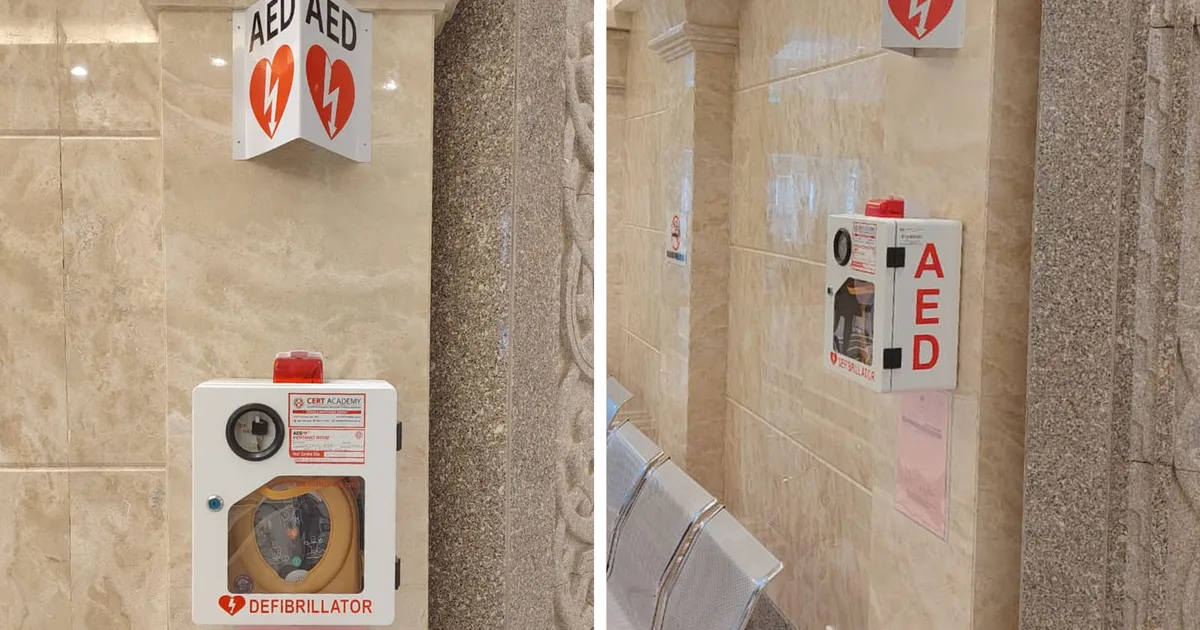
The Malaysian legal profession is calling for comprehensive emergency medical equipment installations across the country's major court complexes, prompted by the death of a court litigant from cardiac arrest at the Kuala Lumpur High Court. The incident has triggered an urgent conversation about safety preparedness in judicial facilities, which host thousands of people daily but may lack essential life-saving equipment during medical emergencies.
Automated external defibrillators, commonly known as AEDs, are portable electronic devices that detect abnormal heart rhythms and deliver corrective electrical shocks to restore normal cardiac function. The devices are relatively inexpensive, user-friendly enough for untrained bystanders, and significantly increase survival rates when deployed within the critical minutes following cardiac arrest. Legal practitioners argue that these devices should be standard fixtures in any facility where large numbers of people gather for extended periods, particularly spaces where individuals may experience elevated stress levels.
Court complexes represent uniquely vulnerable environments for cardiac incidents. Litigants, witnesses, and family members often arrive already anxious or emotionally distraught about their cases, while the courtroom setting itself can provoke acute stress responses. Judges, lawyers, court staff, and visitors spend hours in these buildings daily, and the age demographics of court users skew older, a population at higher risk of cardiac events. The absence of readily available defibrillators in such settings creates an unacceptable gap in emergency response capacity.
The response time following cardiac arrest is critical—survival rates decline rapidly with each passing minute when proper intervention is absent. In many developed jurisdictions, AEDs are considered as fundamental to public safety infrastructure as fire extinguishers or first-aid kits. The Malaysian legal fraternity's advocacy suggests that local courts have not adequately prioritized this dimension of workplace and public safety. A systematic audit of medical emergency facilities across all major court premises has likely never been conducted.
Beyond the immediate installation of defibrillators, the call from lawyers implicitly raises broader questions about comprehensive emergency preparedness in judicial institutions. This includes staff training in cardiopulmonary resuscitation, clearly marked and accessible emergency equipment, regular maintenance schedules, and integration with external emergency medical services. The Federal Court, Court of Appeal, and High Courts in major cities would require the most attention, given their volume of daily users and complexity of operations.
The financial cost of equipping Malaysia's major court complexes with AEDs remains modest compared to other infrastructure investments. A single device typically costs between RM3,000 and RM8,000, with ongoing maintenance requirements minimal. When spread across the courts in Kuala Lumpur, Putrajaya, and major state capitals, the aggregate investment would be negligible relative to judicial system budgets. The Ministry of Law or respective state authorities could implement such a programme within existing financial allocations.
Implementation, however, requires coordination among multiple agencies. The Judiciary, the Ministry of Law, the Malaysian Bar Council, and possibly the Ministry of Health would need to collaborate on standards, procurement, placement protocols, and staff training. Without clear leadership and accountability, such initiatives often languish in bureaucratic channels. The tragic incident at the KL High Court provides a compelling impetus for decisive action rather than prolonged departmental consultation.
This advocacy also reflects growing recognition within the legal profession that courts must function as modern, responsive institutions that prioritize user safety alongside justice delivery. The physical infrastructure of courts—security systems, accessibility features, sanitation, and now emergency medical capability—communicates institutional values and affects how the public experiences the justice system. Dated or inadequate facilities undermine public confidence and signal that judicial authorities are disconnected from contemporary standards of duty of care.
Regional context matters here as well. Jurisdictions such as Singapore, which shares Malaysia's developmental trajectory and legal traditions, maintain comprehensive emergency medical equipment policies across all government facilities including courts. The absence of equivalent provision in Malaysia suggests a gap that regional peer comparison can help highlight and justify for remedial action.
The lawyers' intervention represents an important check on institutional complacency. While courts are protected spaces governed by established procedures and hierarchies, they remain public institutions accountable to the people they serve. When medical emergencies occur—whether sudden cardiac events, injuries, or other acute conditions—institutional responsibility extends beyond legal procedures to encompassing basic safeguarding measures. The death that triggered this advocacy serves as a stark reminder that such measures cannot be indefinitely postponed.

