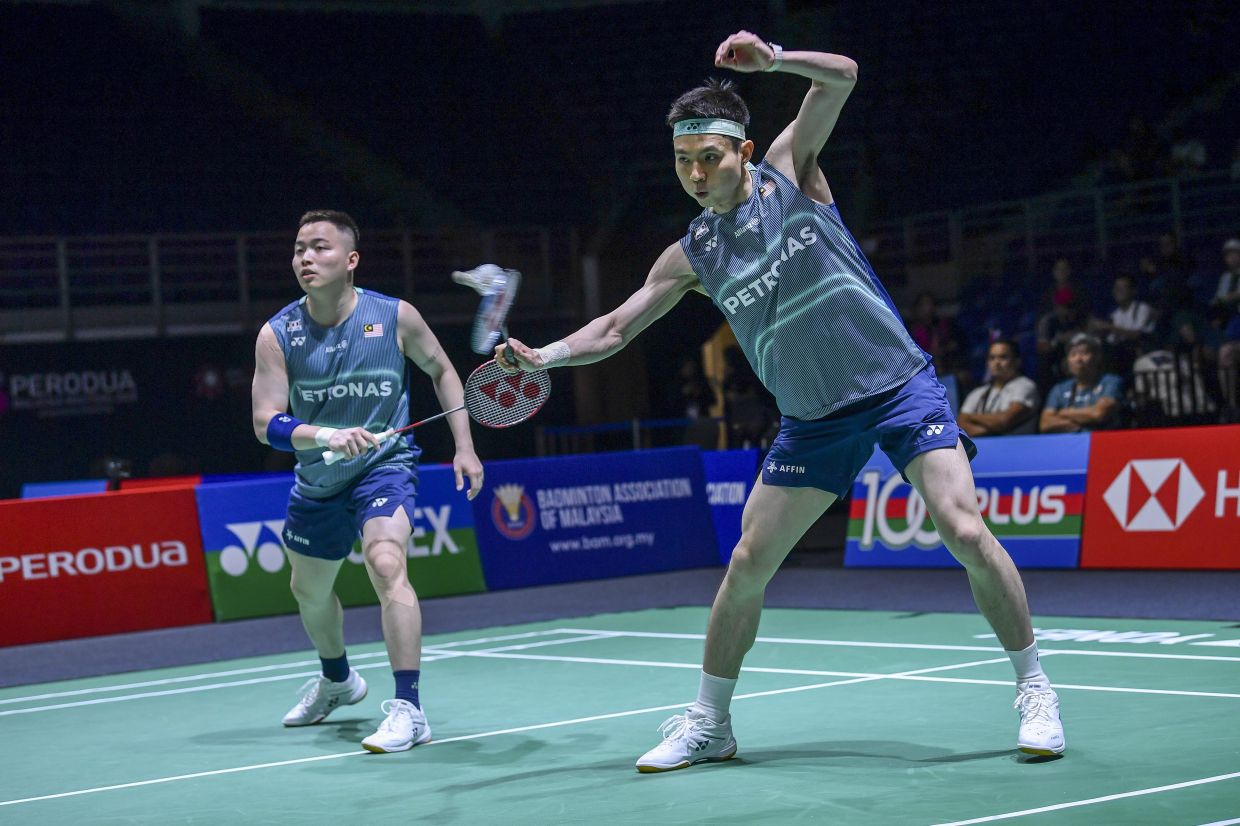
The Badminton Association of Malaysia's performance committee chairman Datuk Seri Lee Chong Wei delivered a firm message to the national team on Wednesday: no individual athlete transcends the collective interests of the federation, and leverage tactics will not sway policy decisions. The stern warning emerged in the context of recent public statements by men's doubles player Soh Wooi Yik, who indicated his willingness to explore alternative arrangements if the BAM hierarchy did not facilitate his continued partnership with Aaron Chia through to the 2028 Los Angeles Olympics.
Lee's intervention reflects an increasingly assertive management approach within Malaysian badminton's highest administrative levels. Speaking from the BAM headquarters in Petaling Jaya, the former world champion underscored that while the association remained receptive to genuine dialogue with its athletes, the institution would not capitulate to ultimatums or threats of departure. His comments suggest a deliberate shift in how BAM intends to handle player grievances, moving away from what he characterized as earlier practices of accommodation that may have inadvertently encouraged such pressure tactics.
The crux of Lee's argument rests on institutional gratitude and reciprocal obligation. He emphasized that Malaysian badminton's premier players emerged from BAM's development pipeline, benefiting from coaching infrastructure, financial support, and organizational machinery that enabled their ascent to world-class status. When these same athletes subsequently achieve international recognition and tournament success, Lee contended, they must acknowledge the foundational role played by the national body. This framing casts player demands not as negotiable requests between equal parties, but as potential ingratitude toward the institution that made their success possible.
The backdrop to this dispute involves Aaron Chia and Soh Wooi Yik's silver medal finish at the World Championships in New Delhi the previous week, a result that underscored their continued dominance in Malaysia's men's doubles contingent. The pair have made their preference for remaining together explicit, viewing their partnership as the nation's strongest asset in this category heading toward the Olympic cycle. However, BAM's coaching directorate has pursued a different strategic vision, continuously experimenting with alternative pairings to optimize performance across the Olympic quadrennial.
This divergence between player preference and coaching strategy has created friction. Over the preceding two months, Aaron Chia competed alongside Aaron Tai, culminating in a runners-up finish at the Taiwan Open, while Soh Wooi Yik initially struggled when paired with Man Wei Chong before recovering to reach the final of the Korean Masters alongside a different partner. The coaching team's sequential reshuffling reflects institutional conviction that flexibility in pairing arrangements serves long-term competitive interests better than accommodating player preferences for stability. The forthcoming China Masters tournament starting September 1 promises yet another reconfiguration, with Aaron Chia now scheduled to partner Man Wei Chong while Soh Wooi Yik combines with Aaron Tai.
Lee's warning carries considerable practical weight, grounded in contractual and regulatory realities that substantially constrain athlete autonomy. Both Aaron Chia and Soh Wooi Yik remain bound by BAM contracts extending through 2028, the Olympic year in question. Should either player attempt to pursue an independent career or seek arrangements outside BAM's framework, they would confront substantial financial penalties derived from these contractual obligations. Beyond monetary compensation, BAM possesses regulatory authority to restrict their participation in internationally sanctioned tournaments—a consequence that would devastate their capacity to accumulate the ranking points essential for Olympic qualification.
These structural constraints reveal the asymmetrical power dynamics inherent in athlete-federation relationships within Malaysian sport. While players possess marketable talent and public visibility, the federation controls institutional pathways to international competition, funding, and career progression. Lee's public statement essentially reminded athletes of this fundamental imbalance, signaling that the current BAM leadership would not hesitate to deploy these mechanisms against players who pursued confrontational strategies.
The episode illuminates broader tensions within Malaysian badminton's governance architecture. Lee's repeated emphasis that "the current management is not afraid to make difficult decisions" suggests consciousness that prior administrations may have developed reputations for capitulating to player pressure. By explicitly disavowing deference to athlete complaints, the present leadership projects an image of institutional assertiveness and decisional autonomy. This stance may be calibrated to establish clear boundaries early, preventing future disputes from escalating into the kind of public acrimony that damages both athletic morale and federation credibility.
Yet Lee's approach also reveals potential vulnerabilities in BAM's human resources management. Rather than framing institutional constraints as mutual commitments serving shared objectives, his rhetoric positions the federation's interests against player aspirations, creating an adversarial framing that could undermine the collaborative spirit essential to elite sports environments. Athletes motivated by coercion rather than genuine alignment with institutional goals often deliver suboptimal performances when facing adversity or psychological pressure during major competitions.
For Malaysian badminton enthusiasts and stakeholders, the resolution of this dispute carries implications extending beyond the immediate personalities involved. The manner in which BAM navigates the Aaron-Wooi Yik situation will signal whether the federation can sustain both institutional authority and athlete motivation simultaneously—a balance critical to maintaining Malaysia's competitive standing in a increasingly demanding international badminton landscape where funding, coaching sophistication, and athlete retention all influence outcomes at major tournaments and Olympic cycles.

