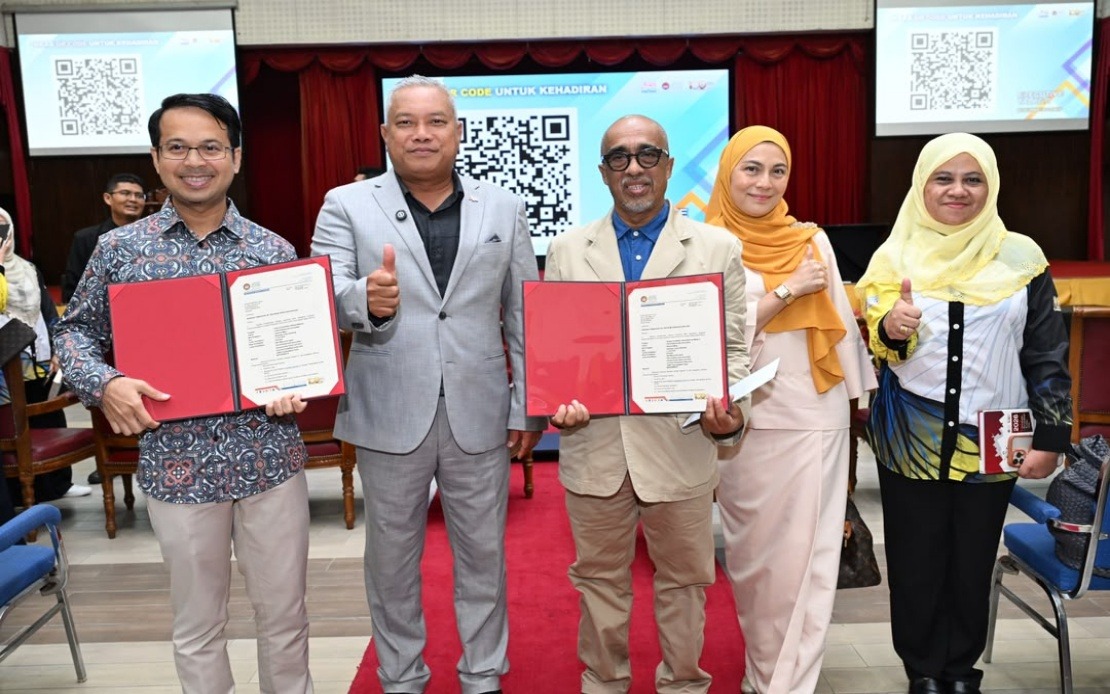
Universiti Pendidikan Sultan Idris has welcomed two prominent Malaysian personalities into its postgraduate community, marking a significant moment for the institution's emerging recognition of career experience as academic credentials. Actor and filmmaker Mohd Sabri Yunus, aged 65, and television presenter Ahmad Fedtri Yahya, 45, have both secured admission to separate Master's programmes through the Accreditation of Prior Experiential Learning for Award of Qualifications framework—a pathway designed to acknowledge substantive professional accomplishment outside traditional university settings.
Mohd Sabri's journey to formal higher education has taken half a lifetime to realise. After joining Dewan Bahasa dan Pustaka as an illustrator in 1982, the decorated performer made two determined efforts to enrol at university during the following decade, only to find his work commitments incompatible with full-time study. The passage of over four decades has not dimmed his intellectual ambition, and his acceptance into UPSI's Master of Education programme focusing on Malay Literature represents both a personal vindication and validation of his decades-long dedication to cultural and linguistic scholarship. His entry into academia arrives during a transitional phase in his career, one where accumulated wisdom and professional credibility can be channelled into formal research contribution.
Ahmad Fedtri's selection into the parallel Master of Education pathway emphasising Malay Language reflects a growing institutional recognition that broadcasting and media professionals possess sophisticated knowledge of linguistic communication and cultural transmission. The presenter's rationale for pursuing postgraduate studies reveals broader concerns about language standards and social cohesion. His observation that linguistic patterns reflect societal development—and conversely, that language decay signals cultural decline—resonates with anxieties increasingly voiced by education policymakers across Malaysia and the wider Southeast Asian region. By positioning language study as intertwined with civilisational health rather than mere technical competence, Fedtri situates his academic trajectory within a nationalist intellectual tradition.
The APEL.Q mechanism through which both candidates gained entry represents a structural innovation in Malaysian higher education. Rather than insisting that mature professionals abandon careers to pursue conventional undergraduate prerequisite pathways, the framework permits universities to evaluate substantial professional experience as evidence of subject readiness. This approach addresses a demographic reality: Malaysia's cultural sector contains numerous practitioners—artists, writers, journalists, performers—whose intellectual contributions far exceed their formal qualifications. The UPSI initiative thus represents not merely credential recognition but implicit acknowledgment that experience-based knowledge constitutes legitimate academic foundation.
For UPSI's Faculty of Languages and Communication, the enrollment of these public figures carries institutional marketing dimensions alongside pedagogical merit. Both Sabri and Fedtri bring substantial public recognition to the university's postgraduate offerings, potentially encouraging other accomplished professionals to reconsider advanced study as feasible regardless of prior educational trajectory. Their presence on campus creates symbolic value: the institution visibly validates mature-age entry and alternative pathways at a moment when Malaysian universities face persistent questions about curriculum relevance and connection to professional practice.
Mohd Sabri's intended research focus on pantun—the classical Malay verse form—situates his studies within the humanities' broader struggle to maintain scholarly attention on traditional cultural forms. Pantun represents a particularly vulnerable knowledge domain, its composition and transmission increasingly marginalised by digital communication and entertainment consumption patterns. By pursuing formal research at postgraduate level, Sabri transforms personal cultural interest into documented academic contribution, potentially establishing frameworks through which other practitioners might document and systematise traditional knowledge.
Fedtri's emphasis on younger generation language use reflects heightened concern among Malaysian language advocates about erosion patterns accelerated by social media adoption. His observation that contemporary youth experience fundamentally altered communication contexts due to digital technology challenges educators and policymakers to reconceptualise language instruction. Rather than positioning traditional Malay language studies as preservation activity for historical forms, Fedtri implicitly argues for understanding contemporary language practice as legitimate object of academic scrutiny. This reframing potentially permits educational discourse to move beyond decline narratives toward analysis of how linguistic forms evolve within technological transformation.
UPSI Vice-Chancellor Prof Datuk Dr Md Amin Md Taff's comments regarding cultural identity reconstruction through teacher education underscores how postgraduate studies intersect with national institution-building priorities. Malaysia's teacher population, numbering hundreds of thousands, mediates between formal curriculum and student consciousness. By incorporating established cultural practitioners into universities training these educators, UPSI theoretically enhances transmission pathways for cultural values and linguistic sophistication. The presence of respected public figures within student populations creates informal mentorship opportunities and demonstrates commitment to fields often positioned as economically marginal within competitive university resource allocation frameworks.
The timing of these enrollments coincides with broader Southeast Asian trends toward recognising informal learning and professional expertise. Thailand, Indonesia, and Vietnam have similarly developed qualification frameworks acknowledging career-based competence, responding to demographic pressures and skills gaps that traditional university systems alone cannot address. Malaysia's APEL.Q pathway thus positions the nation within regional education reform movements emphasising flexibility and recognition of diverse knowledge sources.
For Mohd Sabri personally, this opportunity represents delayed but meaningful actualization of educational aspirations that institutional constraints repeatedly deferred. His entry into postgraduate study at 65 challenges conventional assumptions about tertiary education timing and career trajectory sequencing. Similarly, Fedtri's enrollment demonstrates that media professional expertise constitutes legitimate foundation for advanced academic work, potentially encouraging other broadcasters and journalists to formalise their knowledge through higher qualification. Both enrollments model alternatives to linear educational pathways, suggesting that significant career achievement need not preclude subsequent formal credentialing.
The UPSI programmes develop within the specific context of Malaysian education policy emphasising Malay language and culture as national foundation. These Master's tracks occupy particular institutional and political significance, neither purely academic nor purely vocational but positioned at their intersection. As both students progress through their studies, their research contributions and classroom interactions will illuminate how experienced practitioners engage with academic frameworks and whether formal study augments or modifies their existing professional perspectives. Their journey will reveal whether recognition of prior learning constitutes genuine structural accommodation or rhetorical gesture toward alternative pathways that remain peripheral to institutional core missions.

