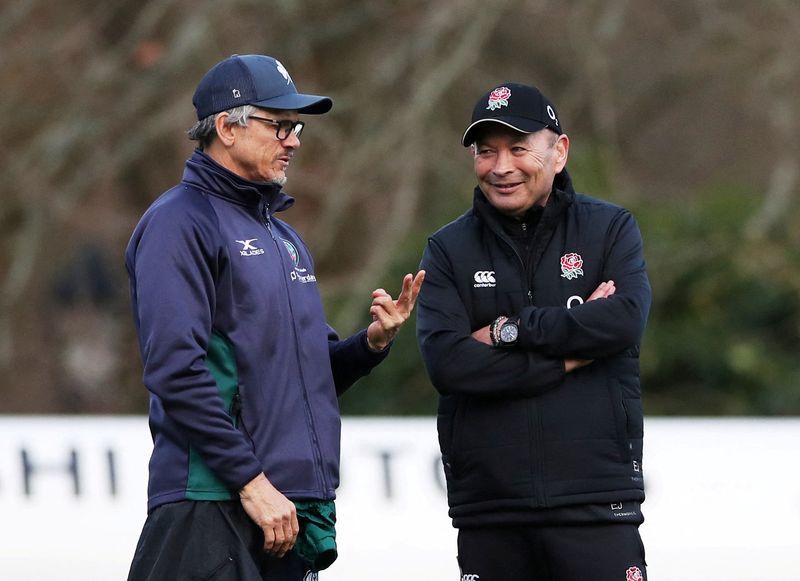
Australia's newly appointed Wallabies coach Les Kiss has flagged a willingness to cast his net internationally when assembling squads for upcoming fixtures, adopting a philosophy that prioritises winning credentials over the traditional preference for domestically-based players. Speaking at his inaugural press conference in Sydney on Thursday following the announcement of his first squad for an upcoming two-test series against Japan, Kiss emphasised that merit and competitive advantage would drive his selection decisions rather than administrative convention.
The structural constraints governing Wallabies team selection have historically discouraged coaches from drawing on the growing pool of Australian rugby talent competing abroad. Rugby Australia's standing policy restricts overseas-based player selection to incentivise competitors to maintain their careers within the domestic Super Rugby competition. Kiss's predecessor Joe Schmidt adhered closely to this framework during his two-year tenure, exercising his discretionary picks with considerable restraint even when international opportunities might have presented tactical advantages. The departing coach's conservative approach reflected both institutional expectations and a commitment to supporting the local professional ecosystem.
Kiss, however, has signalled an inclination to navigate these restrictions with greater flexibility. His inaugural squad announcement largely maintained continuity with Schmidt's recent selections, retaining substantially all fit players deployed during the Nations Championship campaign. Yet the messaging surrounding these decisions carried distinct undertones. Kiss indicated he had already initiated conversations with several players operating in overseas competitions, demonstrating proactive engagement with international talent pools. This approach suggests a coaching philosophy oriented toward identifying competitive solutions wherever they might emerge, constrained only by the institutional frameworks governing eligibility.
The Wallabies enter this transitional period facing considerable pressure to reverse recent momentum. The team currently languishes in eighth position on the world rankings following a concerning sequence of nine defeats across their last eleven test matches. The Nations Championship campaign that Schmidt supervised delivered mixed results—a narrow loss to Ireland, a comprehensive defeat by France, and a dominant performance against an evidently fatigued Italy. This inconsistent record creates an obvious imperative for Kiss to identify tactical and personnel innovations capable of generating improvement.
Jordan Petaia exemplifies the type of overseas-based talent Kiss appears willing to consider. The outside back and centre, currently recovering from injury whilst based in Japan, has already featured in preliminary discussions with the new coaching regime. Kiss's explicit mention of these conversations signals that geographic location represents only one variable within a broader evaluation framework. As the Wallabies prepare for World Cup competition, particularly with matches contested on their home soil, coaching staff decisions regarding player availability will carry heightened strategic significance.
The financial commitment underpinning the squad provides additional context for Kiss's pragmatic selection philosophy. Rugby Australia invested approximately A$5 million to recruit Joseph Suaalii from the National Rugby League, representing a substantial institutional investment in a single player. Suaalii, now twenty-two years old, generated considerable excitement during the 2024 Northern Hemisphere tour with several standout performances, though subsequent displays in the gold jersey have proven more erratic. The high-profile acquisition demonstrates Rugby Australia's willingness to pursue unconventional talent recruitment strategies, creating organisational pressure to maximise this significant investment through appropriate selection decisions.
The positional debate surrounding Suaalii's deployment illustrates the tactical refinement Kiss must navigate. While the player possesses the athletic capacity to perform effectively at fullback, Kiss has confirmed continuity with Schmidt's approach by positioning Suaalii in the outside centre role. This decision reflects an assessment that Suaalii's skill set and developmental trajectory favour the midfield position, even whilst acknowledging his versatility. The chosen positioning carries implications for squad construction, requiring Kiss to identify alternative solutions for the fullback position through other available talent.
Kiss has articulated a commitment to cultivating what he describes as an authentically Australian playing identity, grounded in creativity, innovation, and competitive spirit. Most incoming Wallabies coaches invoke similar rhetoric regarding restoration of the distinctive Australian style that generated World Cup victories throughout the 1990s. This traditional approach emphasised ball-in-hand attacking rugby, relatively unfettered attacking principles, and creative decision-making under pressure. However, the sustained underperformance of Australian rugby over the past decade suggests that stylistic identity alone cannot substitute for the consistent availability of world-class player talent and sophisticated tactical systems.
The tension between institutional orthodoxy and pragmatic selection realities will likely define Kiss's early tenure. The standing Rugby Australia policy designed to promote domestic competition now coexists with a coaching appointment demonstrating openness to overseas alternatives. Kiss's framing suggests he will respect both the domestic player base and institutional structures whilst maintaining flexibility to pursue competitive advantage. This balancing act reflects the genuine constraints confronting Australian rugby—the domestic competition generates substantial talent but cannot compete with the financial and competitive resources available in premier international leagues.
The upcoming Japan series provides Kiss with an early opportunity to establish selection patterns and test tactical frameworks. Japan's Eddie Jones, himself a former Wallabies coach with detailed knowledge of Australian rugby capabilities and limitations, will provide a familiar calibre of opposition. The two matches offer Kiss a relatively low-stakes environment to evaluate squad combinations and develop operational familiarity with his coaching group. Results will carry significance for establishing momentum and credibility with both the playing group and the broader Australian rugby community.
As Kiss settles into his role during the crucial period preceding World Cup competition, his stated openness to overseas selection will almost certainly be tested. Injury patterns, emerging form from unexpected sources, and tactical requirements may all force genuine decisions regarding whether to utilise discretionary picks in pursuit of competitive advantage. The coach's early messaging suggests willingness to make such decisions without excessive institutional deference, positioning himself as results-oriented rather than bound by tradition. For Malaysian and broader Southeast Asian rugby observers, Kiss's approach offers an interesting contrast to more conservative coaching philosophies, demonstrating how institutional constraints and pragmatic competitive realities can create evolutionary pressure on established sporting governance structures.

