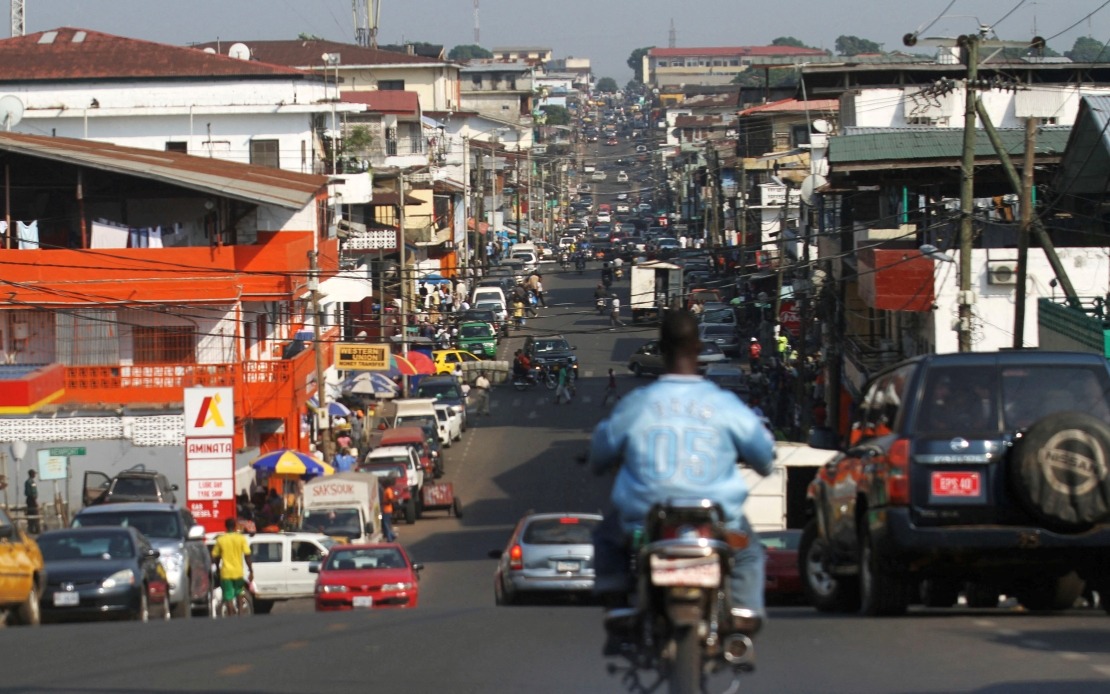
Liberia stands ready to become a receiving nation for thousands of third-country deportees sent by the United States, a role that distinguishes it among African states and underscores shifting immigration dynamics in the region. The West African nation is expecting to take in 1,200 nationals initially deported by American authorities, with the first group of 20 individuals scheduled to arrive in Monrovia on Thursday at Roberts International Airport, where government officials will formally receive them. This arrangement, forged between Monrovia and Washington last year, represents one of the most substantial deportation-cooperation agreements the continent has witnessed in recent years.
The demographics of those being transferred reveal the global nature of migration pressures currently challenging American immigration enforcement. Rather than being citizens of Liberia itself, the deportees include nationals from various African countries alongside those from Western Hemisphere nations—a distinction that has prompted Liberia to characterise the transfer as a humanitarian initiative rather than a simple border-control mechanism. According to official statements, all individuals receiving clearance for travel have passed medical screenings, and some may pursue asylum applications upon arrival in Monrovia, suggesting the programme accommodates multiple pathways for the relocated migrants.
Liberia's willingness to participate in this scheme reflects its historical positioning as a refuge destination with deep roots in migration acceptance. Established initially as a settlement for freed American slaves in the nineteenth century, the nation maintains institutional memory of receiving displaced populations fleeing political turmoil and humanitarian crises. Monrovia's officials framed participation in the deportation programme as consistent with these foundational values, emphasising that the decision carries no quid pro quo dimension. Government statements explicitly denied that Liberia extracted financial compensation or other concessions in exchange for accepting the deportees, though the nation will receive technical and financial support to manage the programme while simultaneously strengthening its broader migration infrastructure.
The arrangement highlights fault lines within the African continent regarding cooperation with American immigration enforcement. Several major nations, most prominently Nigeria, declined Washington's overtures when the proposal circulated last year, apparently viewing third-country deportation schemes as incompatible with national sovereignty or as imposing unfair burdens on developing economies. This resistance from West Africa's largest economy signals that accepting deportees remains politically contentious even for countries facing similar migration challenges.
Conversely, a coalition of nations spanning West, Central, and East Africa determined that participation served their interests or aligned with their values. Ghana and Sierra Leone, both neighbours or near-neighbours of Liberia, joined the arrangement, as did larger Central African players including Cameroon and the Democratic Republic of the Congo. The Central African Republic, Equatorial Guinea, and Liberia completed a geographical spread suggesting that American diplomatic pressure combined with promised technical support overcame initial hesitations among diverse governments.
For Malaysia and other Southeast Asian nations observing these developments, the Liberia agreement offers a cautionary case study in how wealthy destination countries increasingly externalize migration challenges to less-developed nations. The programme effectively transforms Liberia into a processing hub for migrants whom Washington considers deportable, yet who possess insufficient connections to designated return countries. This mechanism mirrors emerging patterns whereby developed economies negotiate burden-sharing arrangements with developing nations, often leveraging aid promises and technical assistance to secure compliance.
The implications extend beyond bilateral US-African relations into broader questions about migration governance and the responsibilities of wealthy nations. Rather than addressing root causes driving people toward the United States, the third-country deportation model simply redistributes migrants to nations ill-equipped to absorb them. Liberia's acceptance of 1,200 individuals represents a significant addition to its migrant population, particularly given that these individuals often lack employment prospects, local language skills, or family networks upon arrival.
The programme also underscores how migration has become a tool of statecraft, deployed to manage domestic political pressures in the United States while seemingly offering African governments modest financial and technical benefits. By accepting deportees, Liberia gains support strengthening its migration systems—infrastructure that will ostensibly serve national interests long after the immediate deportation wave concludes. However, this framing glosses over the immediate humanitarian challenges of absorbing thousands of people without deep local connections.
Regional observers in Southeast Asia should note that similar arrangements may soon target countries in their own sphere. As American immigration enforcement intensifies, developing nations from the Philippines to Indonesia may face comparable pressure to accept third-country deportees. The Liberian precedent demonstrates how international aid leverage and diplomatic engagement can overcome initial resistance, making it a model that wealthy nations may seek to replicate globally.
The first deportees arriving Thursday will test Liberia's actual capacity to implement the arrangement. Administrative challenges, housing shortages, and employment integration will quickly determine whether the theoretical humanitarian framing matches practical outcomes. The coming months will reveal whether Monrovia can sustain its commitment to the programme as tangible challenges materialise, potentially affecting the willingness of other African nations to enter similar arrangements with Washington or other developed countries.

