The town of Serian is operating under a veil of haze that has pushed air quality into unhealthy territory, yet its residents are largely persisting with their normal activities rather than retreating indoors. The Air Pollutant Index reading of 178 recorded at 4 pm on August 13 signals genuine concern for public health, but the determination to maintain livelihoods and meet daily needs appears to be outweighing hesitation. This pattern reflects a broader reality across Southeast Asia, where haze episodes routinely test the balance between protecting health and sustaining economic activity in communities dependent on daily trade.
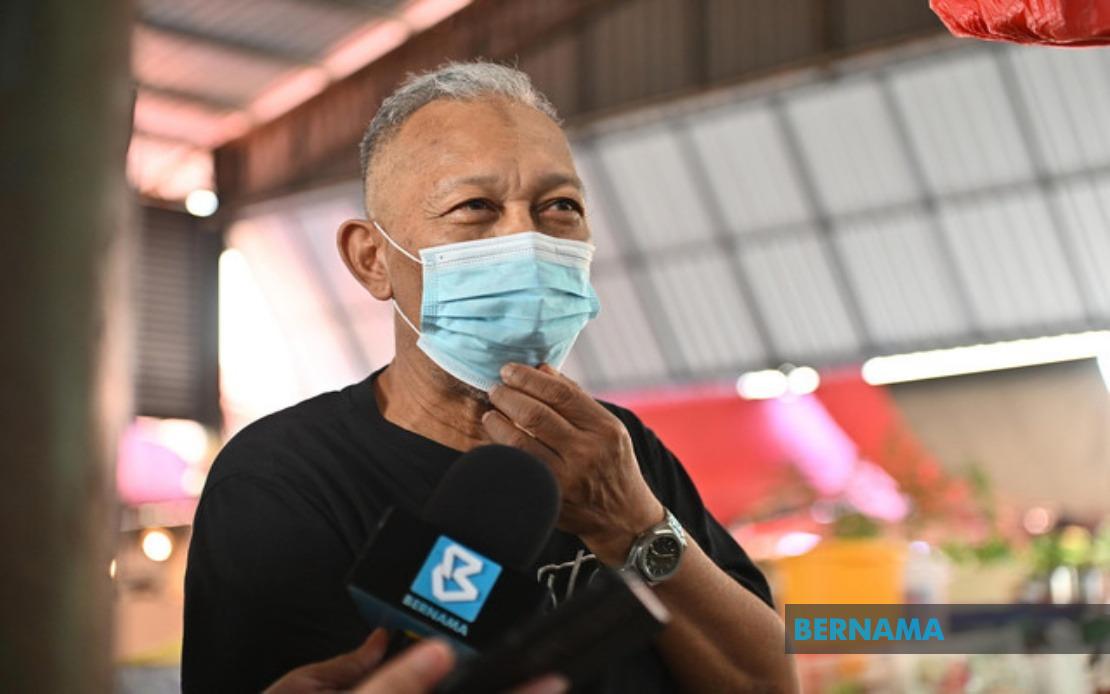
The impact on commerce is unmistakable, even if not severe enough to halt operations entirely. A survey of activity at Serian Tamu Market revealed traders wearing protective face masks as they attended to customers, a practical acknowledgment of the compromised air they were breathing. The economic toll is being felt unevenly across the business community. Some vendors, like Asmail Kipli, have absorbed what amounts to a significant revenue shock—a 30 percent drop in customer footfall and corresponding decline in income—while still choosing to keep their stalls open. The 62-year-old vegetable seller from Gedong illustrated the difficult calculus facing small traders in towns like Serian: the mathematics of stall rental payments and living expenses make voluntary closure impractical, even when air quality poses genuine health risks. His assessment that the haze remains manageable for conducting business reveals less confidence in the situation than resignation to economic necessity.
Other traders are taking a more cautious approach by reducing their market hours. Marina Latong, a 53-year-old fruit seller, has compressed her operating day to end by 3 pm, a move that sacrifices potential evening sales in exchange for reduced exposure to polluted air. Her willingness to consider temporary closure if conditions deteriorate suggests that while current conditions are tolerable, a further deterioration could force harder decisions about health versus income. This tiered response—full operation, reduced hours, or potential closure—demonstrates how small business owners in the region calibrate risk in real time, adjusting their behavior as pollution levels shift.
Beyond the market district, the broader population in Serian and surrounding villages is modifying behavior in ways that reflect heightened awareness without wholesale disruption. Residents continue their essential errands—purchasing groceries and other necessities—but appear noticeably more selective about unnecessary outdoor activities. This cautionary approach is rational; the API reading of 178 sits firmly in the unhealthy range, meaning vulnerable groups including children, elderly people, and those with respiratory conditions face elevated health risks. The visible restraint in non-essential movement suggests residents are making individual risk assessments rather than waiting for formal restrictions.
The regional education system, however, has taken decisive action that underscores institutional concern about cumulative exposure risk. A total of 107 schools across Serian were closed from August 13 through Friday, removing children from environments where they would be exposed to unhealthy air for sustained periods. School closures represent a threshold breach—the point where authorities determine that outdoor and even indoor air quality poses sufficient risk to justify disrupting education. This intervention is particularly significant for primary and secondary students, whose lungs are still developing and whose time in outdoor areas during school hours would be concentrated. The closure also creates practical complications for working parents and has broader implications for educational continuity in a region periodically affected by haze events.
Serian's experience reflects patterns seen across Malaysia and Indonesia during haze episodes driven by seasonal burning practices and atmospheric conditions. While the town's residents are managing the current episode through adaptation and acceptance, the recurring nature of such events raises questions about long-term public health impacts and economic costs. Small traders like those in Serian Tamu Market absorb losses that accumulate across multiple haze episodes annually, while schools must find ways to make up instructional time without a reliable prediction of when such closures will be necessary.
The resilience displayed by Serian's business community and residents is admirable, yet it also reflects a troubling normalization of air pollution. Communities in the region have become practiced at operating under unhealthy air conditions because such episodes have become predictable seasonal occurrences rather than rare emergencies. This adaptation, while enabling daily life to continue, may paradoxically reduce pressure for the regional measures that might diminish haze severity in future years. The acceptance that traders and residents show toward conducting business in unhealthy air mirrors broader regional dynamics where economic pressures often override environmental concerns. For Malaysian policymakers and Southeast Asian governments collectively, the question is whether technological solutions and cross-border enforcement mechanisms can reduce future haze events, or whether communities will continue indefinitely adjusting to degraded air quality as an accepted cost of regional development and agricultural practices.

