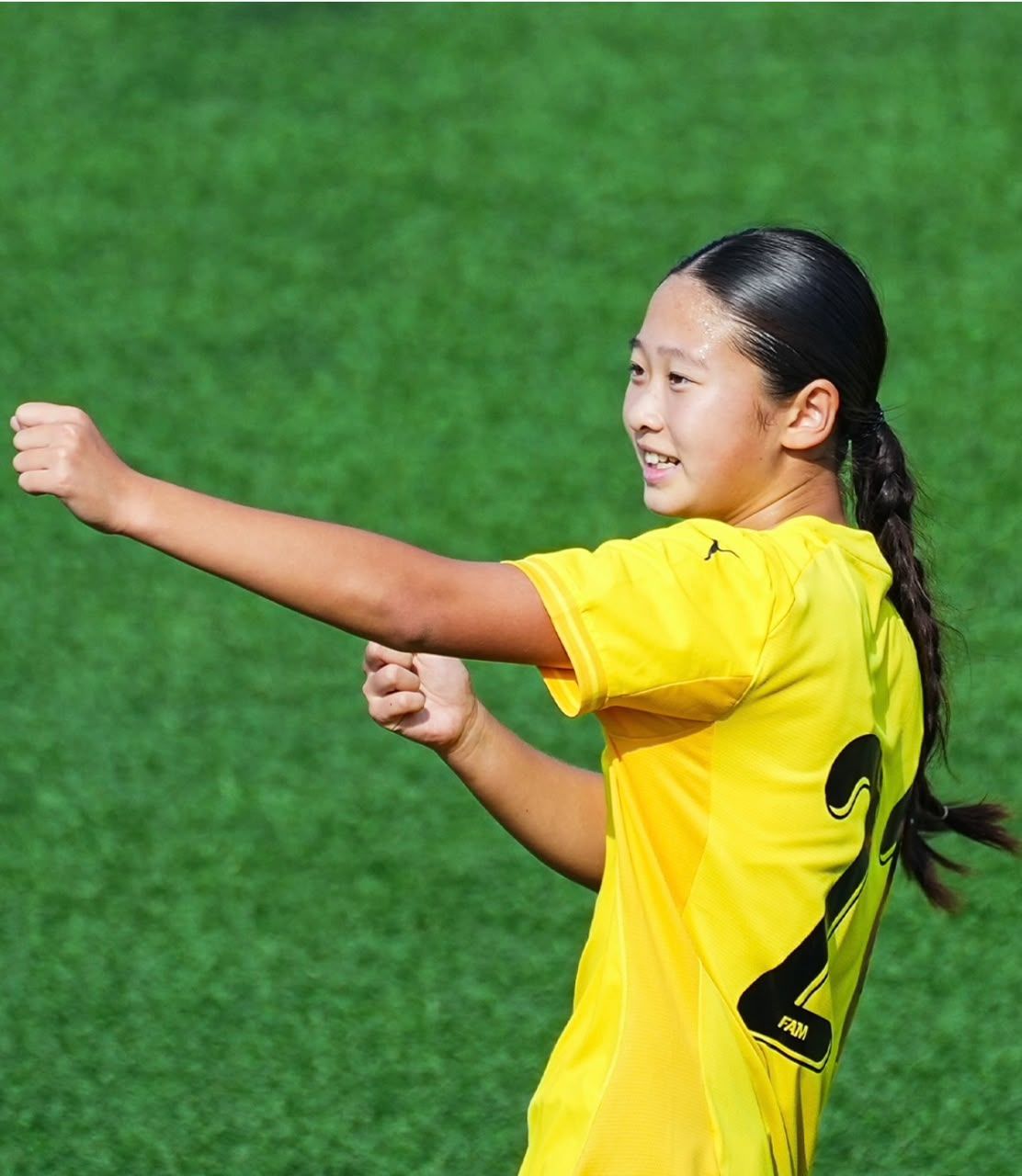
Fourteen-year-old Lim You announced herself to Malaysian football with a remarkable seven-goal performance in her maiden appearance for the Malayan Tigress Under-17 squad, spearheading a devastating 9-0 demolition of Saudi Arabia in Group A of the 2026 Srikandi Merdeka Cup held in Kudus, Indonesia on Tuesday. Every goal the young sensation netted came courtesy of her left foot, a distinctive weapon forged through years of deliberate training under her father's tutelage since early childhood, validating his unconventional coaching philosophy that positioned left-footed players as rare tactical assets in the game.
The developmental pathway for Lim You began long before her international debut, rooted in her father's strategic recognition that left-footed players remain comparatively uncommon in football globally. Rather than allowing his daughter to follow conventional bilateral development patterns typical of youth coaching, he concentrated her technical training on maximising her non-dominant foot from a young age. This specialisation proved prescient and transformative, creating a distinctive edge that translated directly into competitive advantage during her first outing in the national colours. The precision and confidence she displayed throughout Tuesday's match suggested that thousands of hours spent perfecting this particular skill set had fundamentally shaped her footballing identity and tactical profile.
During a virtual press conference coordinated by the Football Association of Malaysia, Lim You reflected on her father's unconventional but evidently effective coaching approach. She articulated her gratitude for growing up with a parent willing to develop a specialist left-foot technique rather than pursuing the more standardised training methodologies prevalent in youth academies. The teenager acknowledged that possessing a left foot as her dominant striking weapon constituted a genuine competitive advantage, offering defensive opponents fewer reference points and predictable patterns compared to the predominantly right-footed player pool she encounters in competitive environments. Her articulate explanation of this technical advantage demonstrated football intelligence extending beyond her tender years.
The seven goals materialised across the 90 minutes in measured succession: the eighth minute initiated her scoring spree, followed by clinical finishes in the 22nd and 27th minutes. She added her fourth in the 57th minute before converting a penalty in the 75th minute, then sealed her remarkable haul with back-to-back conversions in the 83rd and 85th minutes. This distributed scoring pattern underscores not merely clinical finishing but sustained pressure application and constant threat generation that prevented Saudi Arabia from ever establishing any defensive stability or psychological recovery. The performance suggested a player operating at a considerable technical advantage relative to her opponents, though she astutely credited her teammates' creative contributions in generating these goal-scoring opportunities.
Beyond the statistical achievement lies a more nuanced narrative concerning cultural adaptation and linguistic integration. Lim You candidly acknowledged initial difficulties navigating the national squad's predominantly Malay-language environment, describing the challenge as a genuine obstacle during her earliest training sessions and team interactions. Her background living in Washington state, coupled with her non-Malaysian upbringing, positioned her as a transitional figure straddling multiple cultural identities and linguistic frameworks. However, the speed with which she established rapport with her teammates and overcame this communication barrier testifies to both her resilience and the inclusive environment cultivated within the national youth football programme. She expressed genuine gratitude for her teammates' patience during this adaptation period, recognising that their support facilitated her rapid integration into the squad's tactical and social structures.
Lim You's biographical trajectory demonstrates the increasingly transnational character of Malaysian sporting talent in the modern era. Born in Taiwan and subsequently raised in the United States, she maintains deep familial connections to Malaysia through her parents, both of whom originate from Johor. These enduring family ties motivated her commitment to representing Malaysia internationally, despite her formative years spent outside the country. She maintains a practice of returning to Malaysia every two to four years to strengthen these family connections, visiting relatives dispersed throughout Johor and Kuala Lumpur. This pattern of regular engagement with her ancestral homeland has apparently preserved her sense of Malaysian identity and motivation to contribute to national sporting endeavours, notwithstanding her American residence and upbringing.
The teenager's physical profile, standing 165 centimetres tall, positions her within typical parameters for her age group, suggesting that her goal-scoring prowess derives primarily from technical refinement and tactical positioning rather than exceptional physical attributes. Her composed finishing and situational awareness demonstrate that elite youth football performance correlates more closely with decision-making quality and technical execution than with early physical maturation. This observation carries important implications for Malaysian youth coaching philosophies, which sometimes disproportionately prioritise physical development and size considerations rather than cultivating technical and cognitive dimensions of play. Lim You's performance provides compelling evidence supporting alternative development models emphasising technical specialisation and intelligent positioning.
Two additional goals concluded Malaysia's scoring avalanche, with Putri Mia Alysa Ahmad Zakiyamani converting in the 45th minute of the second half and Ku Nur Qaleysha Qaisara Ku Zainon securing the final goal in the 90th minute. Malaysia's path to the semi-finals required overcoming an initially challenging group stage featuring a goalless stalemate against Hong Kong before a disappointing 0-3 defeat against the host nation Garuda Pertiwi. The victory against Saudi Arabia provided crucial redemption and propelled Malaysia to runners-up status within Group A with four accumulated points, ultimately advancing based upon superior goal difference despite level points with Hong Kong.
The semi-final matchup will pit Malaysia against Group B winners, with Thailand, Jordan and Singapore remaining as potential opponents pending completion of their outstanding fixtures. Malaysia's advancement from a comparatively difficult position within their group demonstrates resilience and adaptability, qualities essential for progressing deeper into knockout-stage competition. Lim You's starring role in the Saudi Arabia encounter establishes her as a central figure in Malaysia's quarter-final aspirations, positioning her as a key tactical asset that opposing coaches must specifically address during their defensive preparations. Her emergence as an international-standard talent at such a young age suggests that Malaysian football may be developing a generational player capable of delivering sustained high-level performance across multiple tournament campaigns and competitive cycles.

