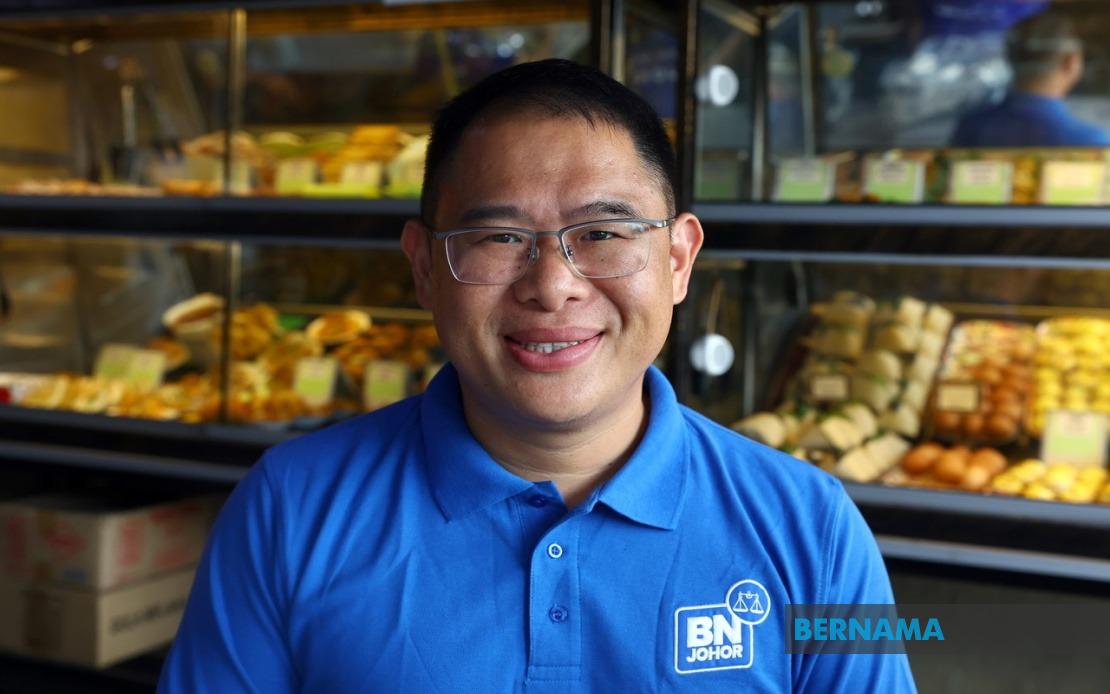
Yong Peng state assemblyman Ling Tian Soon is staking his bid for a second consecutive term on tangible infrastructure improvements that have transformed a once-notorious stretch of road into a symbol of local development. The road in question, derisively called 'Jalan Koyok' by residents for its deteriorated, patched surface, has become central to his campaign narrative as he positions himself for the upcoming Johor state election.
Known colloquially as Ah Soon among constituents, the 42-year-old assemblyman has made basic infrastructure upgrades a cornerstone of his governance approach since his 2022 election victory. His administration has directed approximately RM23 million in development funding across a three-year period to rehabilitate the crucial corridor stretching from Ayer Hitam to the Segamat border, reflecting his belief that improved road networks directly catalyse economic expansion in peripheral areas.
Ling's strategic thinking reflects established economic principles prevalent in business communities across Malaysia and Southeast Asia. The adage he invokes—that prosperous roads generate prosperous economies—resonates particularly with Chinese-Malaysian traders and logistics operators who understand the nexus between connectivity and commercial opportunity. This investment philosophy has begun yielding measurable returns, as major courier services and logistics enterprises increasingly establish operational hubs in Yong Peng, situated approximately 100 kilometres south of Johor Bahru's central business district.
The town's transformation extends beyond road improvements. A prominent e-commerce platform is reportedly advancing plans to construct its largest regional distribution facility in Yong Peng, a development expected to generate substantial employment opportunities for younger residents who might otherwise migrate to larger urban centres. Such anchor investments validate Ling's strategic vision of repositioning Yong Peng as an emerging industrial town rather than merely a transit point between larger Johor municipalities.
Geography has become Ling's greatest asset in attracting investment. Yong Peng's central location within Johor state, combined with proximity to Port of Tanjung Pelepas—Malaysia's southernmost deep-water container terminal—positions the constituency advantageously for logistics and manufacturing sectors seeking alternatives to congested Klang Valley infrastructure. This strategic positioning explains why land acquisition for industrial purposes has accelerated, fundamentally reshaping the town's economic trajectory from agricultural to manufacturing-services oriented.
Ling's re-election manifesto, to be unveiled in the campaign's opening phase, concentrates on three interconnected pillars: infrastructure consolidation, expanded social safety nets, and tourism-driven economic growth. Rather than pursuing urban-centric development models, his platform explicitly targets retention of young families and newly-married couples through enhanced community facilities and services. This demographic-focused approach acknowledges the outmigration challenge facing smaller Malaysian towns competing against larger cities for talent retention.
His political foundation rests substantially on extensive grassroots engagement accumulated over 16 years of public service. Initially cutting his teeth handling parliamentary affairs for Ayer Hitam under MCA president Datuk Seri Dr Wee Ka Siong, Ling has systematically built constituency relationships through constant informal community contact. This earned him the affectionate designation 'YB Kedai Kopi'—the coffee shop assemblyman—reflecting his practice of conducting near-daily consultations across informal business venues, from coffee establishments to mamak restaurants.
This relational approach transforms conventional representative-constituent dynamics into familial frameworks, a subtle but significant distinction in Malaysian political culture where personal networks often supersede formal institutional structures. Ling explicitly reframes his connection to voters not as transactional electoral relationships but as organic community bonds established through consistent presence and accessibility independent of electoral cycles.
His electoral confidence rests on this accumulated relational capital combined with demonstrable development achievements. Ling maintains measured expectations regarding voter assessment, framing his record—more than four years of accumulated service—as a performance report submitted for public judgment. This calibrated confidence reflects awareness that Malaysian voters increasingly scrutinise tangible service delivery alongside partisan loyalty.
The Yong Peng contest shapes up as a direct competition between Ling and Pakatan Harapan candidate Yong Hui Yi, presenting voters a binary choice between incumbency emphasising infrastructure-driven economic transformation and an opposition platform yet to articulate its own development vision. For Ling's supporters, the road rehabilitation from 'Jalan Koyok' to functional corridor serves as concrete evidence that local representation produces material improvements in quality of life.
This election outcome carries significance beyond Johor's boundaries. The Yong Peng contest exemplifies tensions between urban-centric development models and periphery-focused infrastructure investment, between established grassroots networks and challengers proposing alternatives, and between demonstrable development records and programmatic promises. How Yong Peng voters assess Ling's performance will signal whether Malaysian electorates reward infrastructure-focused local governance and relational political engagement, or whether opposition parties can successfully counter incumbency advantages through alternative platforms.

