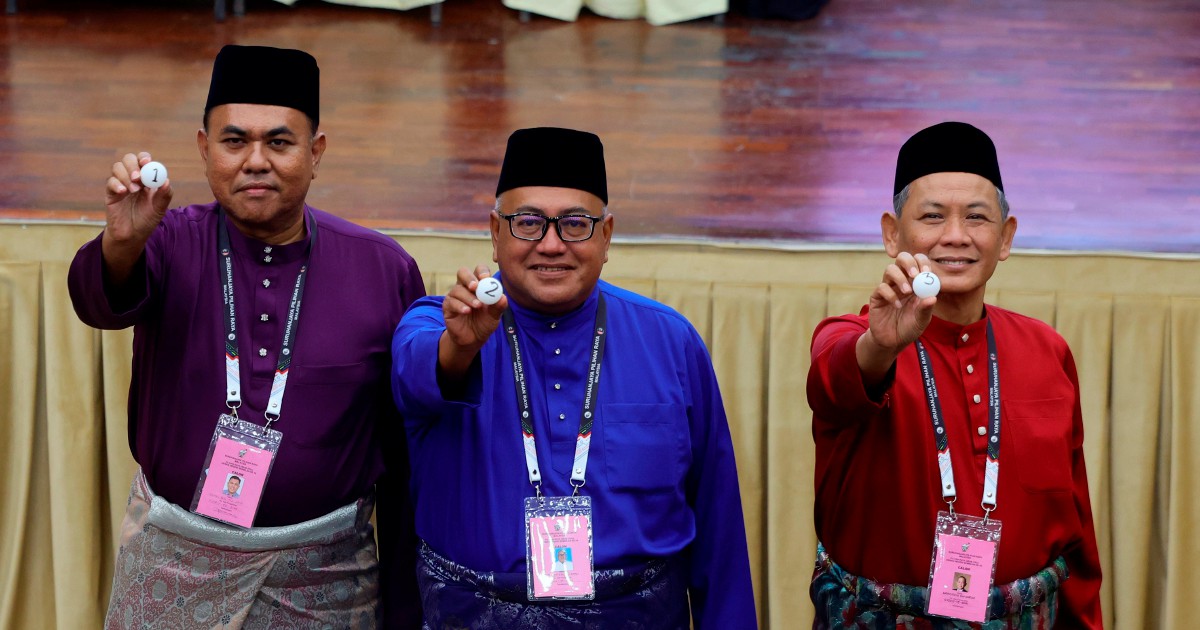
Datuk Seri Aminuddin Harun, the caretaker Menteri Besar of Negri Sembilan, has delivered a candid assessment of his political fortunes in the Linggi state seat, acknowledging that the contest will prove far more competitive than conventional wisdom might suggest. Speaking in Port Dickson, Aminuddin characterised his chances of retaining the seat as sitting at a delicate equilibrium, neither favouring his position nor suggesting an inevitable defeat. This measured appraisal reflects the increasingly unpredictable nature of Malaysian electoral contests, where traditional party strongholds no longer guarantee comfortable victories.
The Linggi seat, long considered a bastion of Barisan Nasional support in Negri Sembilan, has nevertheless become battleground territory as the state prepares for its election. This shift underscores the broader transformation sweeping through Malaysian politics, where constituencies previously written off as safe now demand concerted campaigns and genuine voter engagement. For Aminuddin, who carries the dual burden of defending both his parliamentary credibility and his chief minister's mandate, the Linggi contest carries disproportionate significance beyond mere seat counts.
The acknowledgement of such tight odds represents a departure from the confidence typically projected by incumbent holders of ministerial office. Traditionally, caretaker menteri besars leverage their administrative platforms and resources to cultivate commanding leads in their home constituencies. Aminuddin's willingness to frame the contest in terms of genuine uncertainty suggests either acute awareness of shifting ground conditions or a strategic calculation that tempering expectations protects against perceptions of failure should the margin prove narrow. Either interpretation points to a political environment where voter sentiment has grown more volatile and less amenable to traditional top-down persuasion.
The Negri Sembilan state election itself carries considerable weight within the broader Malaysian political architecture. As a state with genuine competitive dynamics between coalition blocs, outcomes in Negri Sembilan often provide early indicators of shifting national sentiment. Aminuddin's situation in Linggi therefore serves as a microcosm of larger forces reshaping the electoral landscape across the country. The strength or weakness of Barisan Nasional's showing in constituencies such as Linggi will offer concrete data about whether the coalition has successfully consolidated its recovery following earlier electoral setbacks.
The traditional strength of BN in Linggi rests upon longstanding community relationships, patronage networks, and historical voting patterns that have tilted heavily in the coalition's favour. However, the apparent erosion of this advantage suggests that voters increasingly evaluate candidates and coalitions on contemporary performance rather than inherited loyalty. This represents a fundamental recalibration of electoral behaviour, particularly among younger voters who lack the accumulated experience of earlier political arrangements and possess greater fluidity in their political allegiances.
Aminuddin's candour about the race's competitive nature also reflects the quality of opposition mobilisation in Negri Sembilan. Pakatan Harapan and its constituent parties have invested considerable organisational effort into the state, particularly in constituencies where demographic and socioeconomic shifts have created openings for alternative political narratives. The fact that a seasoned politician of Aminuddin's stature feels compelled to acknowledge such precarious odds indicates that opposition machinery has achieved sufficient sophistication to pose genuine challenges to established BN dominance.
The broader implications for Barisan Nasional's national standing should not be underestimated. Negri Sembilan represents a state where BN retains considerable institutional advantages yet faces unexpectedly spirited challenges. Should the coalition fail to secure comfortable victories in strongholds such as Linggi, it would signal that its 2022 electoral recovery may have plateaued or even begun reversing. Conversely, strong BN performances would validate the coalition's confidence that it has successfully reset its relationship with voters and restored electoral momentum.
For Aminuddin personally, the Linggi contest carries career implications extending beyond state politics. As a potential future national-level player within the BN and UMNO hierarchy, his performance in this election will inevitably factor into assessments of his political viability and electoral appeal. A dominant victory would enhance his credentials; a narrow win would invite questions about his capacity to command traditional bases of support; and a loss would substantially diminish his standing within party machinery.
The election campaign dynamics in Negri Sembilan will likely intensify significantly as polling approaches. Aminuddin's frank acknowledgement that the Linggi race remains unresolved may signal the opening of a more combative and resource-intensive campaign phase. Both BN and opposition machinery will undoubtedly pour additional effort into the constituency, recognising that results there could establish momentum affecting other state seats. Ground-level contest intensity will probably exceed that observed in previous Negri Sembilan elections.
Voter sentiment in Linggi appears to have shifted measurably since earlier electoral cycles, suggesting that established assumptions about the seat require reassessment. Whether this reflects concerns about governance, economic conditions, or broader dissatisfaction with either coalition remains an empirical question that only the balloting itself can definitively answer. What seems clear is that Aminuddin and his team recognise they can no longer rely upon automatic victory margins.

