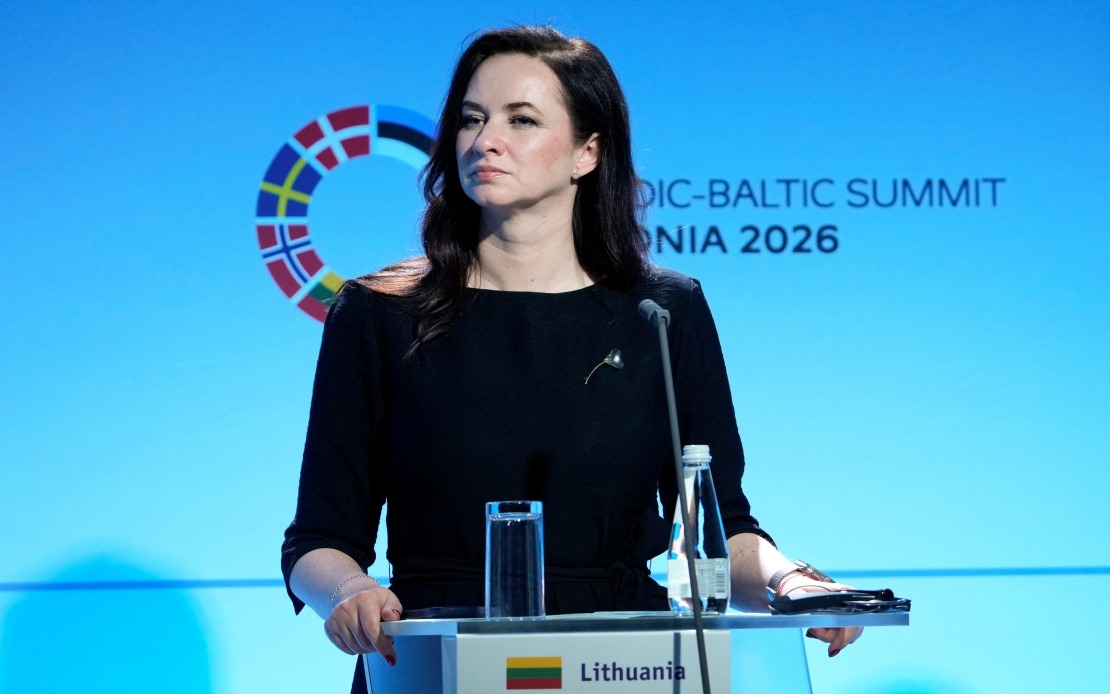
Lithuania is entering a new political phase following the resignation announcement by Prime Minister Inga Ruginiene on Tuesday in Vilnius. The move marks another significant shift within the ruling coalition and sets in motion a formal process to establish fresh leadership in the Baltic nation. President Gitanas Nauseda has accepted the resignation and instructed the outgoing Cabinet to continue functioning in a caretaker role until a successor administration takes office.
The constitutional framework governing such transitions requires the president to nominate a prime ministerial candidate within 15 days of the government's formal resignation. That nominee must then obtain approval from the Seimas, Lithuania's parliament, before proceeding to form a Cabinet. The entire process, from nomination through Cabinet assembly and policy programme presentation, typically spans several weeks and involves multiple parliamentary votes and negotiations among coalition partners.
Mindaugas Sinkevicius, the chairman of the ruling Lithuanian Social Democratic Party, is the widely anticipated choice for the premiership. Political observers and domestic media have consistently identified him as the natural successor, given his party leadership position and the Social Democrats' continued grip on the largest share of Seimas seats. If parliament confirms his nomination, Sinkevicius will then have 15 days to assemble his Cabinet team and outline his government's policy agenda to lawmakers.
Once his initial policy programme receives parliamentary endorsement, he will have a further 15 days to present the complete ministerial lineup for final approval. This staged approach allows parliament to scrutinise both the broad direction and the specific personnel selected for sensitive portfolios. The process emphasises consensus-building within coalition structures, a necessity in proportional voting systems where single-party majorities are rare.
The formation of a new government represents the third coalition arrangement the Social Democrats have constructed since parliamentary elections held in late 2024. This pattern of coalition reshuffling reflects the complex dynamics of multi-party governance in Lithuania, where managing competing interests among coalition members requires ongoing adjustment. The previous administration, led by former Prime Minister Gintautas Paluckas, departed office last August, setting the stage for Ruginiene's tenure as his successor.
Ruginiene's Cabinet held its final meeting earlier on Tuesday, where ministers unanimously approved the resignation resolution. At that gathering, Ruginiene reflected on her government's tenure, acknowledging accomplishments whilst recognising the substantial difficulties the administration had confronted. Her remarks struck a tone of measured pride, framing the resignation as a deliberate transition rather than a collapse born of crisis, though the specific policy disputes or political disagreements that prompted the change remained largely unelaborated in public statements.
The resignation's timing carries implications for European Union affairs and NATO coordination. Lithuania, as a Baltic EU and NATO member state, maintains significant defence and security responsibilities given its geographic proximity to Russia and ongoing regional tensions. Continuity in caretaker governance helps ensure that critical national security functions continue uninterrupted during the transition period. The Seimas, despite its fractious coalition dynamics, generally maintains consensus on core foreign policy and defence matters.
The Social Democratic Party's third coalition arrangement since the 2024 elections underscores the fragility of governing majorities under proportional representation. Each coalition reshuffle involves renegotiating ministerial portfolios, policy priorities, and power-sharing arrangements among partners whose interests do not always align. The party's persistence in leading governments despite these instabilities suggests it retains sufficient parliamentary support and coalition-building capability to maintain a working majority, at least for now.
For regional observers, Lithuania's political transitions demonstrate how Baltic republics manage governance challenges within robust democratic frameworks. Despite coalition volatility, parliamentary processes function normally, constitutional procedures are followed precisely, and transfers of executive power occur smoothly without institutional disruption. This contrasts sharply with other regional contexts where political transitions can trigger instability or institutional breakdowns.
The broader context includes ongoing Lithuanian commitments to strengthening defence capabilities, supporting Ukraine, and deepening EU integration. These strategic priorities typically transcend individual government changes, maintained through bipartisan consensus in the Seimas. Whichever Cabinet ultimately forms under Sinkevicius's leadership will inherit pre-existing policy trajectories and coalition agreements that constrain radical departures from established directions.
As Lithuania awaits Sinkevicius's formal nomination and confirmation process, the caretaker government continues routine administration whilst longer-term policy development and strategic planning remain in abeyance. This interim period typically lasts several weeks, during which coalition partners negotiate the distribution of Cabinet seats and policy concessions required to secure Seimas approval for the new administration. The process reflects Lithuanian democracy's reliance on negotiation, consensus-seeking, and institutional stability even amid frequent coalition reconfiguration.