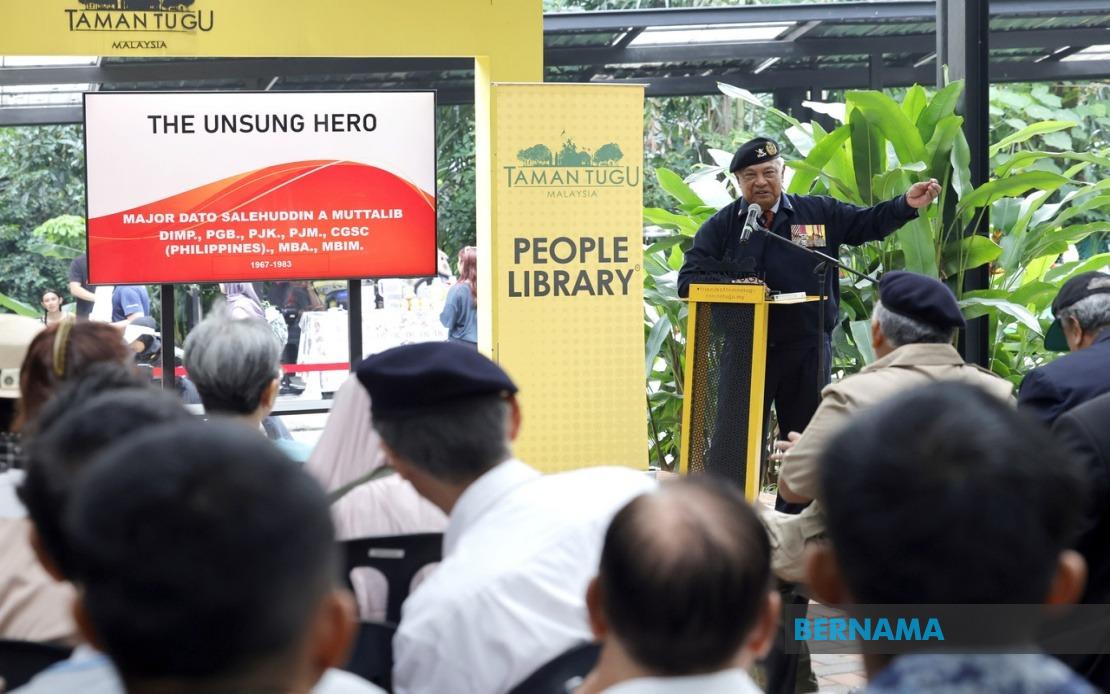
More than forty years have passed since some of Malaysia's security personnel undertook the riskiest assignments of their careers, yet the memories of those fraught encounters with communist operatives remain vivid and deeply personal. At a commemorative gathering in Kuala Lumpur ahead of Warriors' Day, veteran law enforcement and military officers opened up about the life-and-death decisions they faced while defending the nation during its most turbulent period of internal security challenge.
Superintendent (R) Paul Kiong Sing Chu, now 82 and retired after three decades with the Royal Malaysia Police, transported himself back to the early 1980s as he recounted one mission that nearly cost him everything. His assignment required him to drive three Communist Party of Malaya members past a police checkpoint in Chemor, Ipoh—a scenario laden with explosive potential. The tension of approaching the roadblock, knowing that armed confrontation could erupt at any moment and that he sat directly in the line of fire, tested every fibre of his nerve. Rather than allowing events to unfold catastrophically, Kiong made an instantaneous decision to veer into a side lane before reaching the checkpoint, an improvisation that likely prevented a shootout and preserved his life. That split-second judgment epitomised the razor-thin margins between success and tragedy that undercover operatives navigated routinely during this era.
Kiong's willingness to place himself in such extreme jeopardy earned him recognition from the state. Upon leaving the police force, he received the Seri Pahlawan Gagah Perkasa medal in acknowledgement of his exceptional bravery throughout his service. Beyond the official accolade, Kiong has chosen to document his experiences in written form, hoping that younger Malaysians will grasp the immense price paid by those who safeguarded the nation's territorial integrity and internal stability when existential threats loomed large.
The military side of this struggle produced equally searing personal stories. Major (R) Datuk Salehuddin Abd Muttalib carried out covert operations in Sarawak that brought him face-to-face with members of the Indonesian Communist Party, an organisation that posed regional security concerns during the Cold War decades. The moral weight of his actions haunted him long after the operations concluded. Salehuddin wrestled with a profound ethical dilemma when a PKI operative he had shot in combat managed to acknowledge him before succumbing to his injuries. Learning that this man was a Muslim forced Salehuddin to confront uncomfortable questions about religious kinship and whether he bore responsibility not just for a life taken but for the grief inflicted upon a fellow believer's family.
That internal struggle was given unexpected and unwelcome confirmation roughly ten years later when a stranger appeared at Salehuddin's residence. The visitor revealed himself to be a family member of the man Salehuddin had killed during that operation in Sarawak. The shock of encountering someone whose loss he had caused, and the realisation that the victim's relatives knew his identity and chose to seek him out, created a moment that would remain burned into Salehuddin's consciousness for the remainder of his life. This encounter transcended the clinical realities of wartime engagement to illuminate the profound human consequences of security operations, where the targets were not abstract threats but individuals embedded within families and communities.
The programme that brought these veterans together took place in conjunction with Warriors' Day, an annual observance on July 31 dedicated to honouring those who have served in defence of the nation. Approximately two hundred attendees gathered to hear not only Kiong and Salehuddin but three additional former security personnel who shared their own accounts of service and sacrifice. The event was orchestrated jointly by the Malaysia Military History Tourism Association and Taman Tugu, organisations committed to preserving and contextualising the nation's security heritage for public understanding.
For many younger Malaysians, the communist insurgency and the subsequent decades of counter-insurgency operations exist as abstract historical episodes, divorced from the lived reality of those who participated. The gathering provided visceral connection to that past, demonstrating that the people who fought these campaigns were not mythical figures but aging men who still carry the psychological weight of their choices and actions. Their willingness to step forward and articulate what they endured serves multiple purposes simultaneously: it validates their contributions to national security, it educates younger generations about the stakes involved in maintaining territorial sovereignty, and it humanises a period of history that can otherwise seem distant and impersonal.
The Malaysia Military History Tourism Association and Taman Tugu's collaborative approach reflects a broader regional and global recognition that veteran testimonies constitute irreplaceable historical resources. As the generation that directly experienced Malaysia's anti-communist struggle ages, the urgency of documenting their accounts becomes increasingly acute. These narratives cannot be fully captured in official military records or declassified intelligence reports; they contain emotional truths and personal reckonings that only the veterans themselves can articulate.
Kiong's decision to publish an account of his experiences embodies this understanding that the next generation requires more than dry historical facts. Young Malaysians need to comprehend not merely that counter-insurgency operations occurred but what it felt like to risk one's life, to make fateful decisions under extreme pressure, and to carry the consequences of those decisions throughout one's remaining years. The medal that Kiong received represents official recognition, but the deeper recognition comes from having one's story heard and understood by fellow citizens who might otherwise take national security for granted.
Salehuddin's encounter with his victim's relative illuminates a dimension of security operations that official histories rarely address adequately: the lasting connections between those on opposing sides and the possibility of eventual reconciliation or at least acknowledgement. The fact that the family member came to meet Salehuddin suggests a maturation of perspective in which understanding can eventually emerge from tragedy, though not without significant passage of time. This narrative arc offers lessons for contemporary Malaysia about how societies process historical trauma and military conflict.
As Malaysia continues to navigate contemporary security challenges and geopolitical complexities, the voices of veterans who lived through earlier existential struggles provide grounding perspective. The country has evolved substantially since the Cold War period, yet the fundamental imperative of maintaining security and sovereignty remains constant. The stories that Kiong, Salehuddin, and their peers have shared at such events serve not as nostalgic reminiscence but as testimony to the costs of security work and the human dimensions of state survival.

