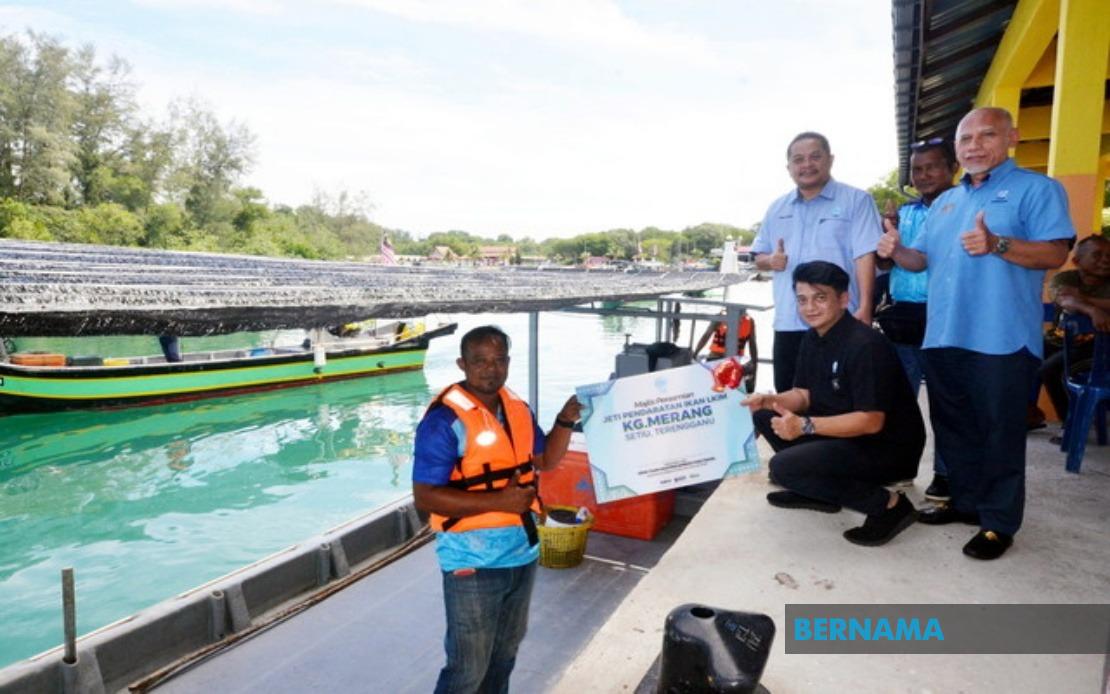
The Malaysian Fisheries Development Authority (LKIM) has embarked on a nationwide infrastructure programme, deploying RM2 million since the previous fiscal year to repair, refurbish, and construct fish landing jetties that serve as critical hubs for the nation's fishing communities. The initiative reflects a broader push to strengthen the backbone of Malaysia's fisheries sector by improving the physical facilities upon which thousands of fishermen depend for their livelihoods and market access.
LKIM chairman Muhammad Faiz Fadzil outlined the agency's progress and ambitions during a handover ceremony for the newly completed Kampung Merang Fish Landing Jetty in Bandar Permaisuri. He disclosed that the current budget cycle has already yielded the completion of the Merang facility, while two additional projects—one in Perak and another in Labuan—have advanced to the documentation and tender procurement stages. This phased approach suggests LKIM is working methodically through its pipeline of priority projects, though the pace of delivery remains constrained by available resources.
The Kampung Merang jetty stands as a tangible example of how targeted investment can transform fishing communities. Built at a cost of RM500,000, the structure represents a significant material upgrade from its predecessor, which had been constructed informally by villagers and had deteriorated to a point where safety and operational efficiency were compromised. The new concrete facility officially commenced operations on the day of the handover, immediately serving a local fleet of 68 boats operated by 124 registered fishermen in the vicinity.
For context on the broader scope of LKIM's stewardship, the authority currently oversees 372 fish landing jetties scattered across Malaysian waters, alongside 48 dedicated fisheries complexes and port facilities. These numbers underscore the complexity of maintaining adequate infrastructure across a country with an extensive coastline and numerous fishing communities—many in remote locations where infrastructure challenges are particularly acute.
Muhammad Faiz emphasised that improved landing infrastructure carries tangible economic benefits for fishing communities. Enhanced facilities reduce friction in the supply chain, allowing fishermen to process and market their catch more swiftly and with less waste. This efficiency gain translates into better pricing power and higher net income for fishermen, who operate on relatively thin margins and depend almost entirely on their daily or weekly hauls. The chairman framed this not merely as a service provision but as an income-support mechanism essential to fishery-dependent livelihoods.
Data from the Setiu district, where Kampung Merang is situated, provides a baseline for measuring the programme's potential impact. Current annual landings in Setiu total approximately 243 metric tonnes—a figure that LKIM expects will increase as the new Merang jetty reaches full utilisation. This conservative growth assumption reflects the reality that infrastructure improvements alone do not expand fish stocks; rather, they enable more efficient harvesting and marketing of existing resources and reduce losses that occur during handling and transit.
Despite these achievements, LKIM leadership has signalled that the current budgetary allocation is insufficient to meet the nation's full infrastructure needs across all fishing communities. Muhammad Faiz made an explicit appeal for enhanced government funding in the forthcoming budget cycle, arguing that additional resources would accelerate the rollout of new jetty facilities nationwide. This plea reflects the political economy challenge facing fisheries development: the sector's importance to coastal communities and food security is significant, yet capital-intensive infrastructure improvements compete with numerous other priorities for limited public funds.
The limited budget situation also reflects broader patterns in Southeast Asian fisheries governance. Many nations in the region face similar pressures to upgrade aging infrastructure, balance competing sectoral demands, and invest in facilities that may serve relatively small populations in geographically dispersed locations. The relatively modest RM2 million allocation, while meaningful in absolute terms, translates to a few completed projects annually when spread across the country's maritime footprint.
The Kampung Merang project's modest budget of RM500,000 nevertheless demonstrates that meaningful infrastructure improvements need not be prohibitively expensive, particularly when replacing informal or deteriorating structures. This cost-effectiveness provides a template that LKIM and policymakers might leverage to justify expanded funding, especially if additional projects can achieve similar or better value-for-money ratios through efficient tendering and project management.
For Malaysian fishermen and their families, such investments represent more than mere facility upgrades. They symbolise official recognition of the sector's importance and signal government commitment to improving conditions in communities that often feel peripheral to mainstream economic development. Infrastructure improvements also enhance safety and dignity of work, reducing occupational hazards and acknowledging fishermen as productive participants in the formal economy rather than relegating them to subsistence-level informality.
Looking forward, the success of the current programme will likely depend on sustained political will and consistent budget allocation. If LKIM's appeal for additional funding is heeded, the trajectory could accelerate meaningfully. Conversely, if budgets remain constrained, the pace of infrastructure development may continue to lag behind the actual needs of Malaysia's fishing communities. The Perak and Labuan projects currently in procurement will serve as indicators of implementation capacity and timeline feasibility.

