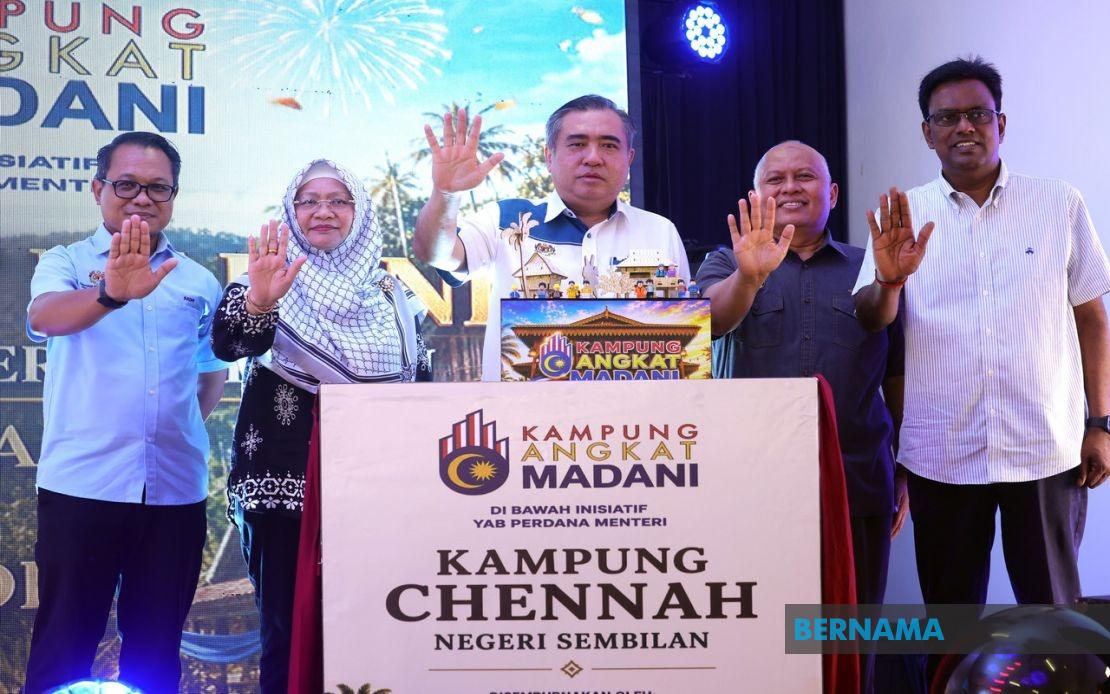
Transport Minister Anthony Loke Siew Fook has firmly rejected insinuations that the 'Kampung Angkat MADANI' programme, which targets rural communities across Malaysia, is timed to coincide with state election campaigns. Speaking in Jelebu after overseeing the launch of the Land Public Transport Agency's (APAD) iteration of the scheme at Kampung Chennah, Loke clarified that this is a established nationwide initiative that commenced two years ago and continues to unfold through carefully sequenced phases designed to address infrastructure and socio-economic deficiencies in underserved villages.
The minister underscored that the programme's fundamental purpose remains consistent: identifying and addressing the distinct development needs of remote communities that have historically been overlooked in favour of urban-centric development. By conducting systematic assessments of villages situated far from city centres, the government aims to channel resources toward critical infrastructure improvements and community facilities that directly enhance residents' quality of life. This methodical approach reflects an attempt to move beyond ad-hoc development interventions toward a more strategic, needs-based allocation framework.
Loke's reassurance regarding electoral propriety signals growing sensitivity to perceptions of government programmes being weaponised during election periods. He explicitly referenced compliance with established guidelines that prohibit official government activities and formal ceremonies within election constituencies during the official campaign window. This administrative boundary, introduced by the Prime Minister as part of efforts to reshape governmental culture, restricts ministerial participation in official programmes within affected constituencies once campaigning commences. However, Loke emphasised that the ministry's core functions continue uninterrupted, maintaining public service delivery regardless of electoral cycles.
The strategic timing of the Kampung Chennah project provides insight into the government's operational calculations. By launching the initiative before nomination day, the administration ensures that the programme can proceed without triggering complaints of electioneering during the sensitive campaign period. This creates a window for announcements and groundbreaking ceremonies that would otherwise be prohibited, a distinction that highlights the technical boundaries of electoral regulation rather than reflecting any absence of strategic intent.
Kampung Chennah's selection as the focus site for this year's initiative stemmed from its geographic isolation and documented gaps in basic amenities and infrastructure provision. The government has committed RM500,000 toward five distinct projects within the village, encompassing library facility upgrades, futsal court refurbishment, and drainage system improvements surrounding the mosque. These interventions, conceived as achievable within a two to three-month completion timeframe, target tangible quality-of-life enhancements that residents can readily observe and experience.
The ministry's commitment to close monitoring of project implementation reflects awareness that rural development initiatives often face execution challenges. By establishing oversight mechanisms and accountability frameworks, the Transport Ministry signals intent to prevent the common pattern whereby rural projects face delays or abandonment following announcement ceremonies. Such attentiveness to follow-through is particularly important in sustaining public confidence in government programmes, especially in communities that have experienced broken promises regarding infrastructure development.
Beyond its immediate infrastructure components, the 'Kampung Angkat MADANI' programme articulates a broader conceptualisation of ministerial responsibility that transcends conventional sectoral boundaries. The Transport Ministry's engagement in village-level community development challenges narrow interpretations of portfolio scope. By emphasising that regulatory oversight of ports, airports, railways, and public transport systems represents only one dimension of ministerial function, Loke positions social responsibility and community welfare as integral to the ministry's identity. This framing attempts to redefine what constitutes effective governance in Malaysia's context, moving toward holistic approaches that acknowledge transport infrastructure's intersection with rural development imperatives.
For Malaysian readers, the 'Kampung Angkat MADANI' programme carries particular significance given persistent rural-urban development disparities. Remote villages frequently experience infrastructure deficits that urban constituencies regard as standard—adequate drainage, functioning recreational facilities, accessible library services. By systematising village selection and ringfencing dedicated funding, the initiative acknowledges that piecemeal, discretionary approaches have proven insufficient to address accumulating development backlogs. The two-year implementation timeline suggests this is not a fleeting announcement but represents sustained commitment, though the rolling nature of the rollout means that completion timelines vary considerably across beneficiary villages.
From a Southeast Asian perspective, Malaysia's approach to rural development through programmatic frameworks reflects regional trends toward formalised community development structures. Countries across the region increasingly recognise that rapid urbanisation and infrastructure concentration in major cities have created peripheral communities requiring deliberate compensatory investment. The 'Kampung Angkat MADANI' scheme positions Malaysia within this regional conversation regarding inclusive development, though questions regarding resource allocation efficiency and sustainability of delivered improvements continue to merit scrutiny.
Loke's clarification regarding electoral propriety must be contextualised within Malaysia's persistent public discourse surrounding government programme timing during election cycles. Previous state and federal campaigns have witnessed intense scrutiny of ministerial announcements and groundbreaking ceremonies, with opposition coalitions frequently alleging that development initiatives serve electoral rather than governance purposes. While Loke's emphasis on pre-nomination timing technically complies with electoral guidelines, the distinction between permissible pre-campaign announcements and prohibited campaign-period activities remains contested terrain in Malaysian political culture.
The Transport Ministry's expanded engagement in rural development also reflects broader restructuring of governmental responsibilities under the current administration. Rather than confining transport-sector ministries to narrow infrastructure portfolios, the contemporary approach encourages cross-sector coordination and community-focused initiatives. This represents an implicit acknowledgment that contemporary governance challenges—rural underdevelopment, uneven service delivery, community alienation from government institutions—require integrated responses transcending traditional departmental silos.

