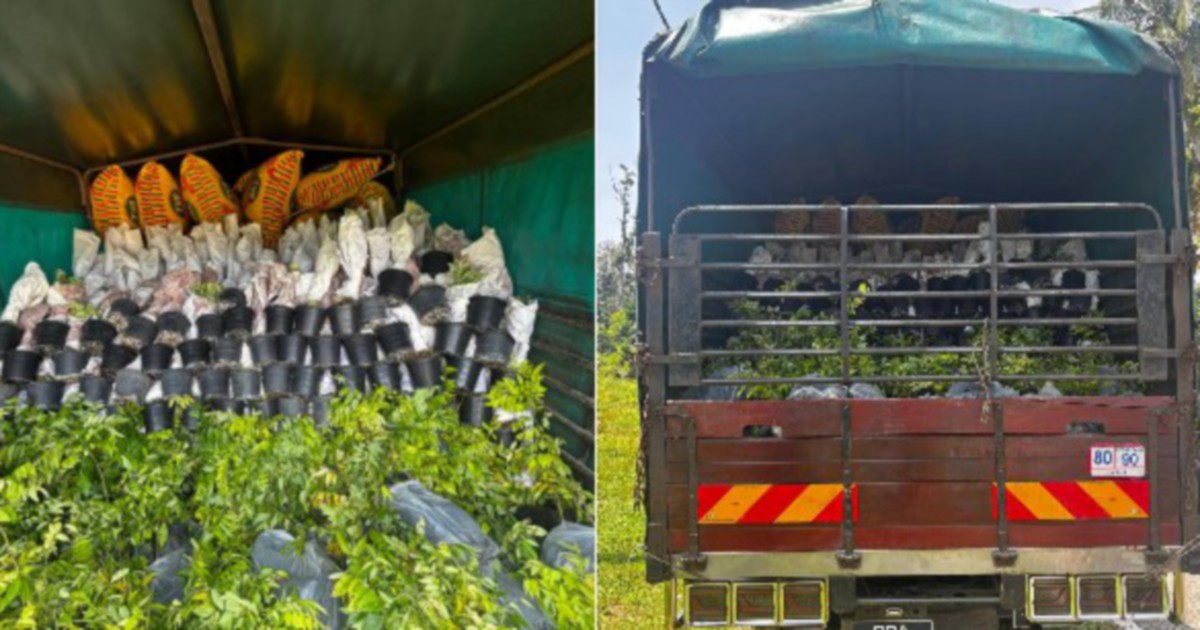
Border authorities in Kelantan apprehended a commercial vehicle operator at Rantau Panjang following the interception of a substantial consignment of ornamental plant saplings during routine enforcement operations. The seizure, which took place at Kampung Padang Licin, involved approximately 6,000 young plants with an estimated street value of RM200,000, marking a significant disruption to what investigators believe was an illegal cross-border trafficking network. The discovery underscores persistent challenges facing Malaysian customs and agricultural authorities as contraband movements through northern border regions continue to pose regulatory enforcement difficulties.
The apprehended driver, whose lorry contained the nursery stock, now faces questioning regarding the origin and intended destination of the shipment. Preliminary investigations indicate the saplings originated from Thailand, suggesting a systematic smuggling operation targeting Malaysia's horticultural market. The volume and value of the intercepted cargo point to organised trafficking rather than isolated opportunistic smuggling, though authorities have not yet disclosed details about networks or distribution channels potentially involved in the scheme.
Ornamental plants represent a growing target for illegal cross-border trade in Southeast Asia, driven by rising domestic demand among Malaysian landscaping businesses, garden enthusiasts, and commercial nurseries. The horticultural sector's expansion has created legitimate market pressures that occasionally intersect with underground supply chains offering cost advantages through tax evasion and regulatory circumvention. Thai producers benefit from established agricultural export infrastructure, favourable growing conditions, and lower labour costs, making unauthorised imports economically attractive to unscrupulous Malaysian distributors seeking competitive pricing.
The Rantau Panjang crossing, positioned at the Malaysia-Thailand border in Kelantan, remains a critical checkpoint for managing agricultural and horticultural goods moving between the two nations. Despite formalised trade protocols and bilateral agreements facilitating legitimate commerce, enforcement gaps persist that smugglers regularly exploit. The 6,000-unit seizure demonstrates how substantial contraband volumes can transit porous sections of the frontier, overwhelming checkpoint resources or evading detection through misdeclaration and concealment techniques.
From a biosecurity perspective, unregulated plant imports present tangible risks to Malaysia's agricultural ecosystem. Ornamental saplings entering without proper quarantine and phytosanitary inspection could potentially carry pests, diseases, or invasive species that threaten native vegetation and commercial crops. Regulatory authorities maintain strict protocols specifically to prevent such biological contamination, making smuggling not merely a trade violation but a potential environmental hazard requiring coordinated responses across customs, agriculture, and environmental management agencies.
The horticultural black market in Malaysia reflects broader patterns of contraband movement affecting pharmaceutical products, electronics, and luxury goods across Southeast Asian borders. Organised syndicates frequently diversify operations across multiple commodity categories, leveraging established logistics networks and corruption relationships to move prohibited items. The ornamental plant seizure provides investigators with intelligence opportunities to trace upstream suppliers and downstream distribution networks that may involve multiple smuggling routes and customer bases extending beyond Kelantan into peninsular commercial centres.
Automotive freight corridors linking Thailand and Malaysia routinely accommodate legitimately transported goods, creating operational cover for concealment attempts. Lorry drivers occupy vulnerable positions in smuggling chains, often recruited for transport duties with limited awareness of cargo contents or facing coercion through debt relationships and financial dependency. Distinguishing between conscious participation and exploitation remains an investigative consideration affecting prosecutorial approaches and driver liability determinations.
The Malaysian horticultural industry, valued at several billion ringgit annually, comprises legitimate nurseries, landscapers, and retailers competing against informal suppliers operating outside regulatory frameworks. Smuggling undermines compliance costs for legitimate operators, distorts market pricing, and erodes tax revenues that fund agricultural development initiatives. Industry associations have increasingly advocated for enforcement intensification to level competitive playing fields and protect businesses investing in compliant operational standards.
Customs agencies in Kelantan and peninsular Malaysia have progressively strengthened border detection capabilities through technology upgrades and intelligence-led targeting, yet resource constraints limit comprehensive cargo screening. The interception represents successful operational execution, though authorities acknowledge that many contraband shipments likely transit undetected, making the 6,000 saplings a visible fraction of probable total smuggling volumes. Quantifying the true scope of horticultural trafficking remains analytically challenging given underground market opacity.
Thai government cooperation through bilateral customs channels has improved information-sharing regarding trafficking patterns, though enforcement coordination remains uneven across border regions. The driver's detention and investigation findings will inform diplomatic discussions regarding enhanced joint operations and preventive measures. Malaysian authorities anticipate using recovered intelligence to disrupt supply chains and target distributors acquiring smuggled ornamental stock for retail or commercial landscaping projects.
Prosecutorial outcomes in plant smuggling cases typically involve customs act violations and potentially environmental protection statutes depending on species involved and evidence of ecological risk. Sentences and fines vary substantially based on value, organised involvement, and recidivist status, though deterrent effects remain debated among enforcement specialists. The case follows broader government efforts to tighten border security and combat contraband movements affecting revenue collection and regulatory compliance across multiple sectors.

