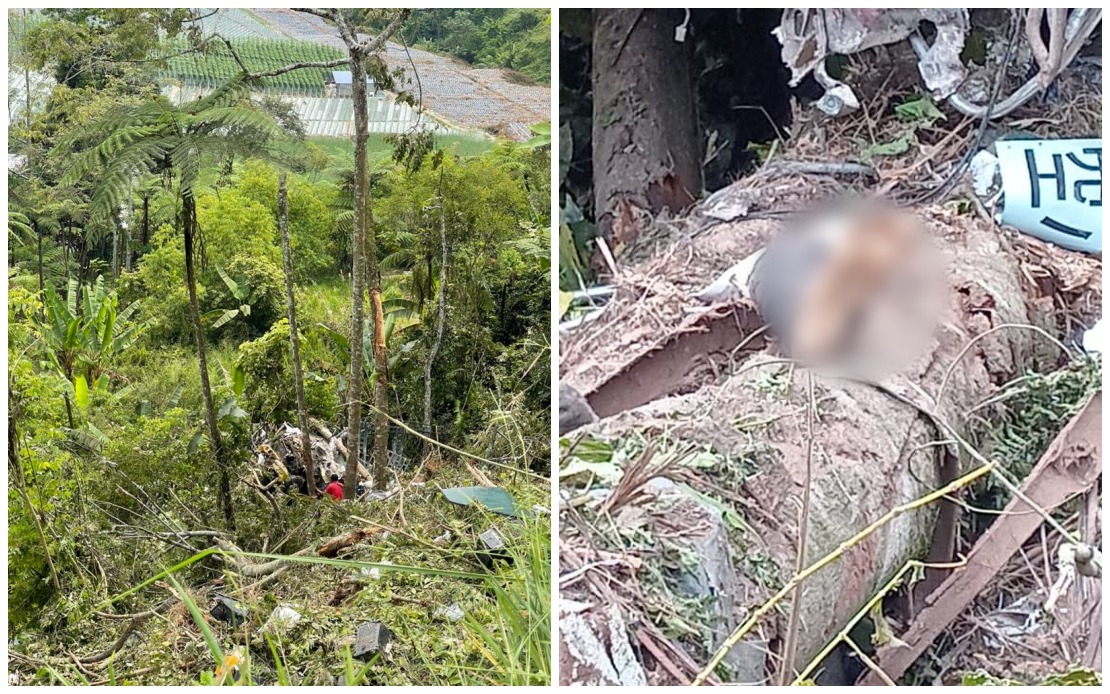
A tragedy unfolded on a rural Kelantan road today when a 10-tonne lorry careened off the roadway and plummeted into a ravine measuring approximately 150 feet deep near the Pos Blau-Lojing Bridge in Gua Musang. The incident claimed the life of the driver, a man reported to be in his 40s, whose body was discovered trapped beneath debris at the bottom of the chasm.
Emergency response to the remote location proved challenging due to the distance involved. The Gua Musang Fire and Rescue Station received the initial distress call at 11.58 am, but rescue personnel did not arrive at the scene until 1.59 pm. According to Asst Senior Fire Supt Muhammad Azrul Izzham Zulkifli, who heads the local fire station, the delay reflected the considerable distance the emergency team had to cover—nearly 98 kilometres—to reach the crash site in the sparsely populated area.
Upon arrival, firefighters assessed the situation and found the lorry resting in the ravine adjacent to an orchard. Preliminary information gathered from police indicated the driver had become trapped under fallen debris at the impact site, making initial extraction attempts complex. The rescue operation required firefighters to carefully remove a substantial tree trunk that pinned the victim in place, a task that demanded both precision and care given the precarious conditions in the ravine.
The recovery process underscored the dangers inherent in emergency response in remote highland regions of peninsular Malaysia. Gua Musang, situated in Kelantan's interior, serves as a transportation corridor for commercial vehicles travelling between population centres, yet its rural roads lack the infrastructure and immediate emergency services availability found in more developed areas. This geographical isolation inevitably extends response times, a critical factor in crash survival rates.
Firefighters successfully extracted the driver's body from beneath the tree, though resuscitation efforts ultimately proved unsuccessful. The man was pronounced dead at the scene, ending hopes that the delay in reaching the remote location might have been compensated by rapid medical intervention. His body was subsequently transferred to police custody for formal identification procedures and further processing.
Gua Musang district police chief Supt Sik Choon Foo acknowledged the incident and confirmed that a preliminary investigation had commenced. However, the exact circumstances leading to the lorry's departure from the roadway remain unclear at this stage. Police have indicated that determining the crash's root cause would require detailed examination of the vehicle, the road conditions at the time, and driver-related factors.
Possible explanations for such accidents on Malaysia's highland roads include brake failure, driver fatigue, adverse weather conditions, or loss of vehicle control on steep grades. The Pos Blau-Lojing area, which sits at elevation, experiences weather patterns that can rapidly change and potentially compromise road safety. Additionally, heavy commercial vehicles navigating the region's winding terrain place considerable stress on braking systems, making mechanical failure a recurring concern among safety advocates.
The incident highlights ongoing concerns about road safety in Malaysia's less populated districts, where accident rates per vehicle kilometre frequently exceed those on major highways. Limited street lighting, sparse guardrailing on steep sections, and minimal emergency medical facilities in crash zones all compound the dangers. The fatality in this instance underscores how geography can amplify tragedy in rural transportation corridors.
For the logistics and transport industry operating in peninsular Malaysia's interior regions, this accident serves as a sobering reminder of the risks inherent in moving cargo through challenging terrain. Companies operating in such areas face pressure to maintain schedules while navigating inherently dangerous conditions, a tension that safety experts argue requires stronger regulatory oversight and investment in road infrastructure.
The police investigation will focus on recovering data from the vehicle, interviewing any witnesses, and examining maintenance records to establish whether mechanical failure played a role. Forensic examination of tyre marks, vehicle damage patterns, and the final resting position may provide crucial insights into the sequence of events leading to the crash. Depending on findings, recommendations may emerge for enhanced safety measures on this particular route or in similar highland corridors elsewhere in Malaysia.

