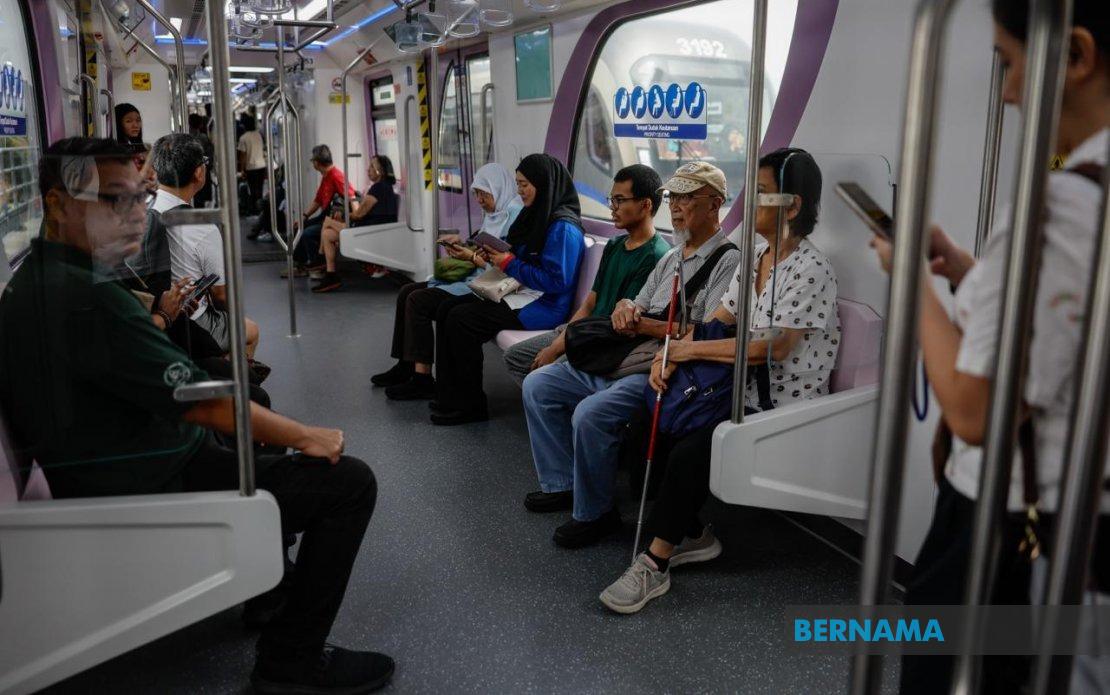
The Light Rail Transit 3 Shah Alam Line opened its doors on June 29 to a wave of favourable user response, marking another significant milestone in the country's ongoing expansion of rapid transit infrastructure. Early commuters travelling the new route between Kajang and Glelmarie 2 reported that the line delivers on its promise of faster, more convenient journeys, while also raising thoughtful suggestions for refinement to ensure the service truly serves Malaysia's diverse travelling public.
The RM16.63 billion project represents a substantial government commitment to modernising the Klang Valley's public transport backbone. Prime Minister Datuk Seri Anwar Ibrahim's announcement of free fares across the entire system—both the rail line and connecting Prasarana bus services—running from the launch date through July 31 represents a deliberate policy choice to encourage trial adoption. This promotional window grants commuters, particularly budget-conscious workers and students, the opportunity to evaluate whether the new corridor genuinely improves their daily mobility patterns before deciding whether to integrate it into their regular routines.
Visually impaired commuter Razlan Ibrahim, aged 40, took to the inaugural service as an informal tester of the line's accessibility credentials. His trial journey from Kajang to Glenmarie 2 revealed both encouraging advances and persistent shortcomings in how the transit operator has engineered inclusion into the new system. The tactile guidance pathways installed throughout the network, notably the comprehensive setup at Bandar Utama Station, impressed Ibrahim as thoughtfully executed infrastructure that genuinely facilitates independent navigation for persons with disabilities seeking to access key facilities.
Yet Ibrahim's feedback underscored a critical disconnect between physical accessibility—the ramps, pathways, and tactile surfaces—and informational accessibility. The absence of systematic Braille signage at crucial decision points such as toilet facilities, prayer rooms for both genders, and elevator entrances represents a meaningful gap in the accessibility architecture. For visually impaired users, directional clarity at these junctures proves essential to independent travel; without consistent Braille labelling, even excellently designed tactile pathways function as incomplete solutions. Ibrahim's articulate critique carries weight because it comes from practical, lived experience rather than theoretical accessibility auditing.
Commuters without disabilities also voiced approval tempered by forward-looking suggestions. Samantha Fong, a 26-year-old private sector employee, appreciated the time efficiency and directness of the new route, eliminating previously necessary transfers and interchange delays. Yet she flagged the absence of women-only coaches as a consideration for future service enhancements. This suggestion reflects ongoing conversations across Southeast Asian transit systems about passenger safety and comfort preferences, particularly relevant in urban Malaysian contexts where female commuters have long advocated for dedicated carriage options during peak hours.
Another early adopter, Rainchie Lee, similarly praised the operational smoothness and comfort of the inaugural service. She pointedly highlighted how the month-long complimentary trial period creates genuine value beyond simple cost savings. By removing the financial barrier to experimentation, the promotional scheme allows diverse user groups—office workers with established commuting habits, students navigating educational campuses, and occasional travellers—to assess objectively whether the LRT3 genuinely optimises their personal mobility needs. This evidence-gathering approach produces more informed future ridership decisions than traditional launch celebrations alone could achieve.
The positioning of accessibility feedback as a positive conversation rather than criticism reflects a maturation in Malaysian public discourse around inclusive design. Early users are not dismissing the new line but rather identifying specific, actionable improvements that would strengthen its utility for marginalised communities. Razlan Ibrahim's measured approach—acknowledging substantial progress whilst identifying genuine gaps—models how disability advocates can constructively contribute to infrastructure development without either blanket endorsement or dismissal.
The LRT3 Shah Alam Line arrives at a moment when Malaysia's urban centres face mounting transport congestion and air quality challenges. The Klang Valley, encompassing Kuala Lumpur, Selangor, and surrounding areas, represents one of Southeast Asia's most densely populated corridors. Expanding rapid transit capacity directly addresses environmental and quality-of-life imperatives alongside economic productivity concerns. A fully accessible, genuinely comfortable transit network becomes not merely a social equity issue but a practical necessity for maximising the system's total utility across the broadest possible user base.
Looking forward, transit authorities face clear direction from the feedback loop already emerging. The physical infrastructure foundations—the guided pathways, station layouts, and vehicle design—appear sound, suggesting that operators managed the engineering and construction dimensions competently. The enhancement opportunities cluster around accessibility information systems and passenger comfort refinements. Implementing comprehensive Braille signage represents a manageable addition to existing wayfinding infrastructure. Evaluating the business case for women-only coaches during specified peak hours follows a model already operating successfully in other regional transit systems.
The generous free-fare window through July 31 serves multiple purposes beyond pure ridership stimulation. It provides extended operational testing under genuine load conditions, allowing system managers to identify efficiency bottlenecks and service reliability issues before transitioning to fee-based operation. Simultaneously, the extended trial period gives feedback mechanisms time to mature, as occasional users transform into regular commuters and discover unanticipated operational or comfort issues that might not surface in opening-day euphoria.
For Malaysia's transportation planning community, the LRT3 Shah Alam Line's early reception validates the continued investment in rail-based transit as essential infrastructure. The enthusiastic uptake from office workers and others seeking time-efficient journeys demonstrates proven demand for well-designed rapid transit alternatives. The thoughtful accessibility critiques from the disability community provide a constructive template for evaluating future expansion projects, establishing expectations that inclusive design represents a baseline standard rather than an optional enhancement.
The convergence of positive early experience, specific improvement suggestions, and a structured promotional period extending through July creates an unusually productive foundation for the line's transition to sustainable, fare-supported operation. Success will ultimately depend on how swiftly authorities translate user feedback into tangible enhancements, particularly regarding accessibility information systems. The groundwork appears solid; the next phase belongs to implementation and continuous refinement.

