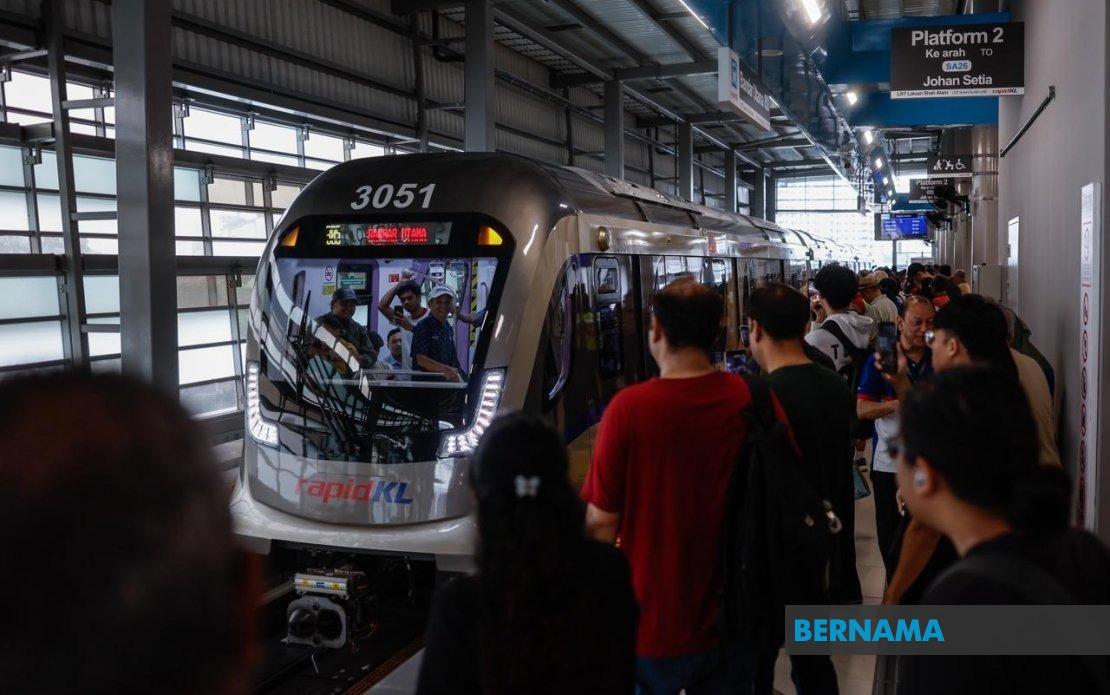
The LRT3 Shah Alam Line commenced operations this morning, marking a significant expansion of Kuala Lumpur's rapid transit network. Prasarana Malaysia Berhad, the operator, opened the line at 6 am in Shah Alam with measured expectations, anticipating between 5,000 and 10,000 passengers on opening day. The operator's cautious forecast reflects industry experience with new transit corridors, which typically require time to gain traction as commuters discover routes and integrate them into their daily travel patterns.
Prasarana president and chief executive officer Amir Hamdan outlined an ambitious growth trajectory during remarks at Glenmarie 2 station, projecting that daily ridership could climb to 67,000 passengers within twelve months. This target hinges substantially on how quickly users adopt the new line and incorporate it into their commuting habits. Hamdan acknowledged that the projection represents a gradual ramp-up rather than immediate capacity utilization, a realistic assessment given the challenges of launching new transport infrastructure in an already-established metropolitan area.
Early responses from commuters have proven encouraging, Hamdan noted, with passengers expressing satisfaction about avoiding traffic congestion and enjoying more comfortable journeys to workplaces. The initial feedback circulating through social media platforms has been predominantly positive, suggesting that the line addresses genuine transportation needs within the Klang Valley region. This grassroots enthusiasm, though preliminary, provides operators with confidence that demand will materialize as awareness spreads and regular commuters discover time-saving advantages.
Operational performance on the opening day has proceeded without significant disruptions. Prasarana has implemented a train frequency of approximately eight minutes during peak hours, a scheduling interval that balances capacity utilization with operational efficiency. All station facilities, including ticketing machines and automatic gates, have functioned properly according to Hamdan, though the company is treating the initial phase as an extended testing period during which passenger behavior patterns will be carefully documented.
The line's integration with existing rapid transit networks represents a critical advantage for ridership growth. Glenmarie 2 station serves as an interchange with the Kelana Jaya Line, while Bandar Utama connects to the Kajang Line, creating valuable transfer opportunities that could drive adoption among commuters seeking multimodal journeys. These interchange points will receive particular monitoring attention, as they represent the infrastructure's capacity to serve as a genuine network rather than an isolated corridor. Prasarana's management will track usage patterns at these critical nodes to identify potential bottlenecks or opportunities for optimization.
The company's operational strategy prioritizes user experience during this critical launch phase rather than maximizing immediate capacity. Assessments will occur regularly over the coming weeks, with particular attention to how passengers navigate ticketing, boarding, and station facilities. Should demand materialize rapidly or bottlenecks emerge at specific locations, Prasarana stands ready to increase train frequency or position additional units along busy segments during rush periods. This flexibility reflects lessons learned from previous transport infrastructure launches within Malaysia and across regional peers.
Concerns about specialized facilities, such as women-only coaches, remain under observation rather than immediate implementation. Prasarana indicated that decisions regarding such amenities will emerge from collected ridership data and user feedback rather than speculation. This evidence-based approach acknowledges that new transport lines often exhibit usage patterns that differ from initial assumptions, making data collection during the critical early months essential for informed management decisions.
A significant boost to adoption comes from Prime Minister Datuk Seri Anwar Ibrahim's announcement of complimentary service for one month, extending from today through July 31. The free-ride promotion encompasses not only LRT3 trains but also Prasarana-operated feeder bus services, effectively removing financial barriers to trial usage. This subsidy strategy aims to accelerate the line's penetration into commuting consciousness and establish usage habits before fare collection commences. For price-sensitive commuters and those considering the line for the first time, the promotional period offers a risk-free opportunity to evaluate whether the service meets their transportation needs.
The Shah Alam corridor itself represents a strategically important region for transit expansion, encompassing residential neighborhoods, commercial districts, and emerging employment centers. As Shah Alam continues developing as a secondary commercial hub within the greater Klang Valley, enhanced public transportation connectivity addresses both current congestion challenges and future growth projections. The LRT3 line enables workers to access Shah Alam employment opportunities without relying exclusively on personal vehicles, potentially reshaping commuting patterns across the region.
For Malaysian transit advocates and urban planners, the LRT3 opening validates continued investment in rail-based solutions for managing metropolitan mobility. The project demonstrates that despite implementation challenges and extended timelines common to infrastructure development in Malaysia, major transit corridors can reach operational status and begin serving public mobility needs. Success of this line, measured by whether it achieves or exceeds the 67,000 daily ridership target, will influence political appetite for additional rapid transit expansion in other corridors experiencing congestion and sprawl.
The coming months will prove critical for establishing whether the LRT3 Shah Alam Line fulfills its intended role in the metropolitan transport ecosystem. Initial passenger enthusiasm suggests genuine demand exists, though translation of novelty interest into sustained ridership depends on consistent service quality, reliable scheduling, and continued convenience relative to alternative travel modes. Prasarana's management approach—combining operational flexibility with evidence-based decision-making—positions the operator to respond to actual usage patterns rather than predetermined assumptions, potentially improving long-term viability of this significant infrastructure investment.

