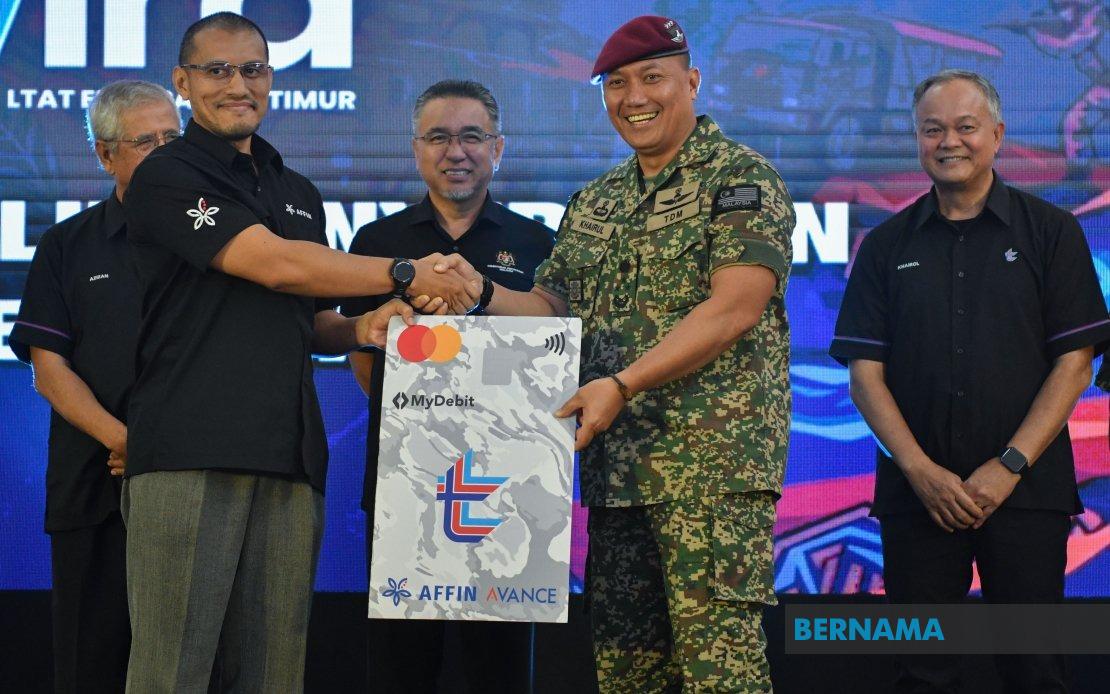
The Armed Forces Fund Board (LTAT) has transformed its annual outreach initiative into a hybrid platform designed to cast a wider net across Malaysia's defence establishment. Launched in Kota Bharu on July 2 by Deputy Defence Minister Adly Zahari at Desa Pahlawan Camp, the East Coast Edition of Jelajah Wira LTAT 2026 represents a significant departure from traditional roadshow models by integrating digital live-streaming capabilities alongside conventional on-ground engagement. This dual approach reflects mounting recognition within Malaysia's military community that personnel stationed across dispersed locations require alternative channels to access critical information about their welfare, financial services, and development opportunities.
The strategic pivot toward digital integration addresses a fundamental challenge facing military outreach programmes: the geographic spread of armed forces personnel across maritime, terrestrial, and air installations. While the roadshow expects to draw over 3,600 military personnel through direct physical attendance at three main venues across the East Coast region—Desa Pahlawan Camp in Kota Bharu, Sri Pantai Camp in Kuala Terengganu (scheduled for July 9), and Kuantan Air Base in Pahang (July 13)—the digital component substantially multiplies its reach. By livestreaming key sessions and programme highlights, LTAT effectively transforms what could remain a regional initiative into a nationwide engagement platform with projected viewership exceeding 10,000 personnel.
The expansion aligns closely with government economic priorities and welfare mandates affecting the defence sector. LTAT explicitly positioned the initiative within Malaysia's broader MADANI Economy framework and PuTERA35 aspirations, signalling that military personnel welfare now intersects with national productivity and sustainable development targets. This framing suggests that defence force well-being is no longer compartmentalised as a purely military concern but integrated into Malaysia's comprehensive economic modernisation agenda. For military communities already navigating complex transitions in service conditions and pension reforms, such integration potentially offers broader access to government support schemes and economic opportunity pathways.
Financial literacy emerges as a central pillar of the roadshow's programming, particularly given LTAT's mandate as a custodian of defence force savings and welfare contributions. The board has committed to enhancing how military personnel understand fund management, investment principles, and long-term financial planning. Since introducing the LTAT Contributors' Briefing and Financial Literacy Programme in December 2023, the organisation has already conducted sessions reaching over 68,000 armed forces members across various military installations. The continuation and expansion of this initiative suggests that LTAT perceives financial education not merely as transactional information delivery but as foundational infrastructure supporting military personnel autonomy and economic resilience.
The roadshow introduces tangible new benefits extending beyond traditional briefing formats. Participants can anticipate symbolic presentation of the AFFIN LTAT Affiliate Debit Card, designed specifically for ATM personnel banking needs. More substantially, the 2026 SPM e-Perkasa programme will distribute smart devices to children of military personnel at participating venues, facilitating access to free online tuition classes. This education-focused benefit reflects an emerging approach within defence welfare provisioning that recognises military families' broader needs. By addressing educational access for service members' children, LTAT attempts to mitigate socioeconomic vulnerabilities that military families frequently experience during postings or transitions.
Veteran economic empowerment constitutes another significant programme dimension, with particular emphasis on the East Coast region. LTAT's Wira Entrepreneur Empowerment Programme is expanding into a third series targeting veteran communities, building upon demonstrated success from previous cohorts. Results from the second series, conducted in the Northern Zone, revealed striking outcomes: participating veterans recorded average monthly business income increases of 162 percent following the structured six-month intervention. These metrics suggest that organised business mentoring combined with financial literacy instruction and ecosystem support yields measurable economic advancement. Such results carry particular significance for Southeast Asian defence sectors, where veteran transition to civilian economic participation frequently encounters structural barriers and limited market access.
The comprehensive nature of the roadshow reflects evolving sophistication in how regional defence establishments engage personnel welfare. Rather than confining itself to fund management briefings, LTAT has constructed a multifaceted engagement platform addressing financial literacy, educational access for families, veteran entrepreneurship, and digital accessibility. This holistic approach acknowledges that contemporary military personnel expectations extend beyond remuneration into comprehensive welfare ecosystems encompassing family support, skills development, and entrepreneurial pathways. For Malaysia's defence force, which competes with civilian employment sectors for personnel retention, such comprehensive benefit demonstration serves strategic human resources functions.
The digital livestreaming component carries particular implications for geographically dispersed military communities throughout Southeast Asia. Naval personnel stationed on vessels, air force members at remote bases, and ground forces in training environments have historically faced barriers accessing centralised wellness and benefit briefings. By enabling real-time digital participation, LTAT removes temporal and spatial constraints that previously excluded portions of the military population from engagement opportunities. This technological democratisation of access potentially reduces information asymmetries that sometimes persist between metropolitan-based military headquarters and outlying installations.
The initiative's timing reflects broader regional considerations affecting defence force stability and modernisation. Southeast Asian militaries increasingly recognise that personnel welfare and economic opportunity directly influence retention rates and operational morale. Malaysia's defence establishment, like its regional counterparts, navigates complex fiscal environments while competing for skilled personnel against expanding civilian technology and financial sectors. By enhancing welfare visibility through digital channels and demonstrating tangible economic benefits like veteran business income growth, LTAT addresses recruitment and retention challenges through comprehensive rather than minimalist benefit communication.
For Malaysian military dependents and families, the expanded roadshow offers previously unavailable pathways to financial education and economic advancement support. Spouses managing household finances during postings benefit from financial literacy sessions, while children gain educational access through the e-Perkasa programme. This family-centred approach represents a measurable evolution from historically personnel-focused military welfare models. As defence establishments throughout Southeast Asia confront demographic shifts and changing family structures, such inclusive programming may establish precedents that regional counterparts eventually emulate.
The roadshow's structured approach to veteran entrepreneurship, incorporating mentoring and financial support within defined timeframes, offers a replicable model for defence personnel transition. Countries throughout Southeast Asia grapple with effectively channelling veteran expertise into sustainable civilian economic activity. Malaysia's demonstrated success in achieving 162 percent income increases suggests that structured intervention combining education, mentoring, and ecosystem facilitation yields superior outcomes compared to passive support. This evidence base may influence how regional defence establishments design their own veteran transition programmes.
Looking forward, LTAT's hybrid roadshow methodology establishes foundations for sustained digital military engagement beyond the 2026 iteration. As livestreaming capabilities mature and military personnel increasingly expect digital service channels, LTAT's infrastructure investments position Malaysia's defence welfare system competitively within regional comparisons. The combination of physical engagement maintaining community connection with digital expansion enabling broad participation represents a pragmatic resolution to competing operational constraints. For Malaysian military communities distributed across archipelagic and terrestrial territories, this balanced approach directly addresses longstanding accessibility challenges inherent to geographically extensive defence establishments.

