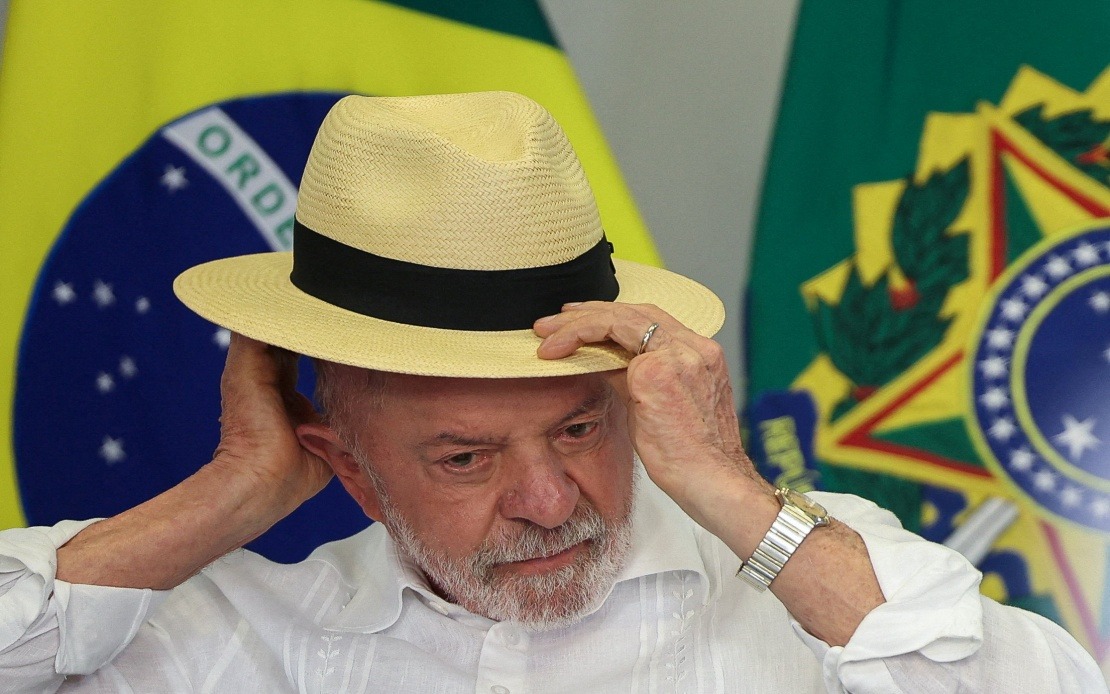
Brazilian President Luiz Inacio Lula da Silva holds a precarious advantage over Senator Flavio Bolsonaro as the country's October presidential election draws closer, according to fresh polling data that underscores an increasingly competitive contest for the nation's highest office. The latest Quaest survey, commissioned by Brazil's influential Globo media group, reveals the extent to which the political landscape has shifted, presenting a starkly different picture from earlier months when Lula enjoyed more comfortable polling margins.
The survey, administered between August 10 and 13 among 2,004 respondents, recorded Lula securing 43 per cent support compared to Bolsonaro's 40 per cent in a head-to-head runoff matchup. The two-point gap falls within the survey's margin of error, effectively rendering the contest statistically indistinguishable at this stage. Just one week prior, on August 5, an equivalent polling exercise had shown Lula ahead by five percentage points, at 44 per cent versus 39 per cent, indicating measurable momentum favouring the right-wing challenger in recent days.
When respondents were asked about their preferences in a first-round ballot scenario, where multiple candidates compete simultaneously, Lula's advantage expanded noticeably. The incumbent president captured 38 per cent of intended votes, while Bolsonaro trailed at 31 per cent. Other candidates garnered marginal support: both Renan Santos and Ronaldo Caiado registered four per cent each, while Romeu Zema managed only two per cent. These figures reflect how Brazil's electoral mathematics could significantly influence the campaign's trajectory. Under the country's electoral framework, if no candidate secures an absolute majority of valid votes in the first round, the top two finishers automatically proceed to a subsequent runoff election.
Flavio Bolsonaro, the eldest son of former President Jair Bolsonaro, has positioned himself as the principal standard-bearer for Brazil's conservative and right-leaning political forces following his father's disqualification from the race. This development represents a critical juncture for the Brazilian right, which has struggled to consolidate behind an alternative figure after losing its former leader's candidacy. The younger Bolsonaro's emergence as a viable contender demonstrates how political dynasties and family networks continue to shape electoral competition in Latin America, even when the original figurehead becomes unavailable.
Jair Bolsonaro's removal from contention stemmed from multiple legal obstacles that accumulated during his post-presidency period. Brazil's superior electoral tribunal declared him ineligible, citing abuse of political power during his term. Subsequently, he faced conviction in connection with an alleged conspiracy to reverse his 2022 electoral defeat to Lula, charges that further entrenched his legal vulnerabilities and rendered his candidacy untenable under Brazilian law.
Lula's campaign strategy has deliberately anchored itself to themes of national sovereignty and protection against external interference, particularly as geopolitical tensions intensify across the region. On August 2, he formally launched his re-election bid at the Workers' Party convention in Sao Paulo, emphasising Brazil's right to autonomy in managing its own affairs and natural resources. His messaging reflected growing anxiety within Brazilian political circles regarding potential pressure from the incoming Trump administration in Washington, which has cultivated notably close relationships with the Bolsonaro family across multiple political cycles.
The president articulated his defensive posture toward foreign intervention with characteristic bluntness, stating he intended to remain vigilant so that no external actor could invade or dominate Brazil. Lula specifically focused attention on rare earth elements and other critical minerals embedded within Brazilian territory, framing their protection as essential to national dignity and economic sovereignty. His rhetoric encompassed warnings to multiple global powers: China, the United States, and France would not gain advantageous access to Brazilian mineral wealth without respecting the country's sovereignty and decision-making autonomy.
Lula's invocation of national pride and resistance to external pressure addresses historical anxieties within Brazilian society regarding economic dependency and foreign domination. The language he employed—asserting that Brazil would not tolerate anyone overstepping boundaries in domestic affairs—resonates with electorate segments concerned about losing control over strategic national assets to foreign corporations or governments. This framing transforms the election partly into a referendum on Brazil's international standing and autonomy rather than purely a domestic contest about competing economic programmes or social policies.
The incumbent president previously issued a pointed caution to Trump directly, conveying his message in June that American electoral affairs represented American concerns, not Brazilian preoccupations, and reciprocally that Brazilian elections constituted Brazilian matters from which external powers should remain distant. This rhetorical stance acknowledged the Trump administration's documented closeness with the Bolsonaro family while establishing clear boundaries for acceptable international behaviour. Trump's historical alignment with Jair Bolsonaro during the latter's presidency and subsequent support have created perceptions among Lula's team that American interference constitutes a tangible electoral risk requiring explicit deterrence.
The tightening contest reflects broader volatility in Brazilian politics and the electorate's evident ambivalence between competing visions for the country's future direction. With approximately two months separating the polling date from the scheduled October election, considerable scope remains for further fluctuations in voter sentiment. The narrow margins revealed in current surveys suggest that marginal shifts in turnout patterns, campaign messaging effectiveness, or external events could decisively alter the electoral outcome, precluding confident predictions about the final result.
For Malaysian and Southeast Asian observers, Brazil's election holds significance beyond Latin American regional dynamics. The contest between Lula's sovereignty-focused messaging and the opposition's alternative vision reflects global tensions regarding multipolarity, resource competition, and the influence wielded by major powers—dynamics directly relevant to Southeast Asian nations navigating comparable geopolitical pressures from China, the United States, and other regional actors. Brazil's experience managing these international pressures while conducting democratic elections offers instructive parallels to challenges confronting nations throughout the Indo-Pacific region.

