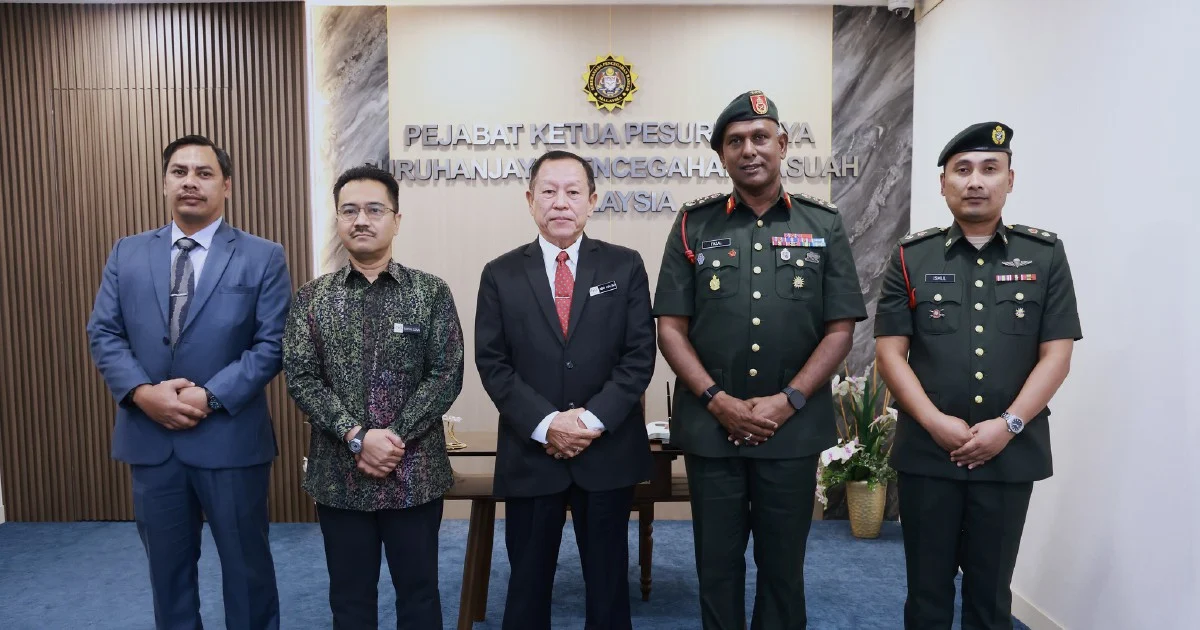
Malaysia's fight against institutional corruption has entered a new phase with the Malaysian Anti-Corruption Commission (MACC) and the armed forces formally committing to expanded intelligence coordination and information-sharing protocols. The partnership, rooted in recognition that corruption within security institutions undermines both governance and national defence, signals a recognition that corruption prevention requires a multi-institutional approach transcending traditional bureaucratic silos.
The coordination framework between MACC and the military addresses a critical vulnerability in Malaysia's anti-corruption architecture. Historically, the armed forces maintained considerable autonomy in internal disciplinary matters, with limited external oversight mechanisms. By establishing formal intelligence-sharing arrangements, both institutions acknowledge that corruption within defence and security sectors poses unique risks—threats that extend beyond financial irregularities to encompass breaches of operational security, compromise of sensitive intelligence, and erosion of military effectiveness. This collaborative stance represents a philosophical shift toward integrated governance oversight.
Intelligence sharing between these agencies creates operational advantages for corruption detection. The armed forces possess extensive internal monitoring systems, personnel records, and operational knowledge that can identify suspicious financial transactions, unexplained asset accumulation, or conflicts of interest among military personnel. MACC brings prosecutorial experience, forensic accounting expertise, and access to financial intelligence networks that may reveal patterns invisible to military internal security units. By pooling these complementary capabilities, the institutions gain enhanced capacity to identify sophisticated corruption schemes before they metastasize into systemic problems.
The governance enhancement component signals movement toward standardized anti-corruption protocols across defence establishments. Military procurement—involving defence contracts, equipment purchases, and infrastructure projects—has historically been vulnerable to corrupt intermediaries who exploit classification requirements and limited transparency. Establishing shared governance standards encourages military leadership to implement civilian anti-corruption best practices while maintaining operational security requirements. This could include transparent tender processes, ethics training for procurement officers, and whistleblower protection mechanisms adapted for military contexts.
Regional implications warrant consideration. Southeast Asia faces persistent defence sector corruption, with neighbouring nations grappling with military procurement fraud and defence budget misappropriation. Malaysia's institutional approach—combining military discipline with civilian investigative authority—offers a model potentially adaptable across ASEAN. As regional powers modernize defence capabilities and increase military spending, corruption-control mechanisms become increasingly critical to ensuring that defence investments translate to genuine security enhancement rather than enriching corrupt intermediaries.
The arrangement also addresses jurisdictional complexities that previously complicated corruption investigations. Military courts and MACC investigations historically operated with unclear boundaries regarding cases involving uniformed personnel. Establishing information-sharing protocols clarifies investigative authority, prevents duplication of effort, and ensures that cases proceed through appropriate legal channels. This streamlining reduces opportunities for cases to become mired in jurisdictional disputes that corrupt officials might exploit to delay accountability.
Information exchange arrangements carry implications for civil-military relations. Civilians have legitimate interest in ensuring defence spending integrity, yet excessive civilian oversight can compromise operational security and create friction with military leadership sensitive to perceived interference. Intelligence sharing represents a compromise mechanism—enabling MACC to scrutinize defence finances while allowing the military to control sensitive operational information. This balanced approach respects both accountability requirements and security necessities.
For Malaysian business entities operating within defence and security sectors, the enhanced coordination creates both challenges and opportunities. Firms engaging in defence contracting face heightened scrutiny from coordinated MACC-military investigations, reducing opportunities for corrupt arrangements with procurement officials. However, companies committed to transparent, legitimate operations gain competitive advantages as corruption decreases and procurement processes become more predictable and merit-based. The long-term market outcome should favour ethical companies offering genuine value over those relying on corrupt relationships.
Implementation details remain critical. Intelligence sharing requires establishment of secure communication channels, classification protocols, and personnel vetting procedures protecting both investigations and operational security. The institutions must develop clear guidelines delineating information categories appropriate for sharing while safeguarding classified defence intelligence. Training programs for liaison officers from both organizations will be essential, as will clear accountability mechanisms ensuring that shared intelligence is used exclusively for authorized anti-corruption purposes rather than becoming leverage in institutional power struggles.
The partnership also reflects evolving Malaysian approaches to institutional accountability. Rather than viewing anti-corruption work as exclusively MACC's responsibility, the framework positions corruption prevention as a shared institutional commitment requiring active participation from every agency handling public resources. This distributive approach—where anti-corruption becomes embedded within organizational cultures—proves more sustainable than relying solely on external investigative bodies.
Monitoring the partnership's effectiveness will require measurable outcomes. These might include prosecution statistics for defence-sector corruption cases, changes in procurement fraud detection rates, and reductions in complaints regarding defence acquisitions. Tracking these metrics provides both accountability for the initiative and evidence regarding which intelligence-sharing mechanisms prove most operationally valuable.
The initiative ultimately reflects understanding that modern governance requires breaking down institutional barriers that historically protected corruption. By creating mechanisms for MACC and armed forces to function as coordinated rather than parallel anti-corruption actors, Malaysia advances toward a system where corrupt individuals face detection regardless which institution initially identifies suspicious activity. This systematic integration, if properly executed, should strengthen both military professionalism and institutional integrity across Malaysia's governance structures.

