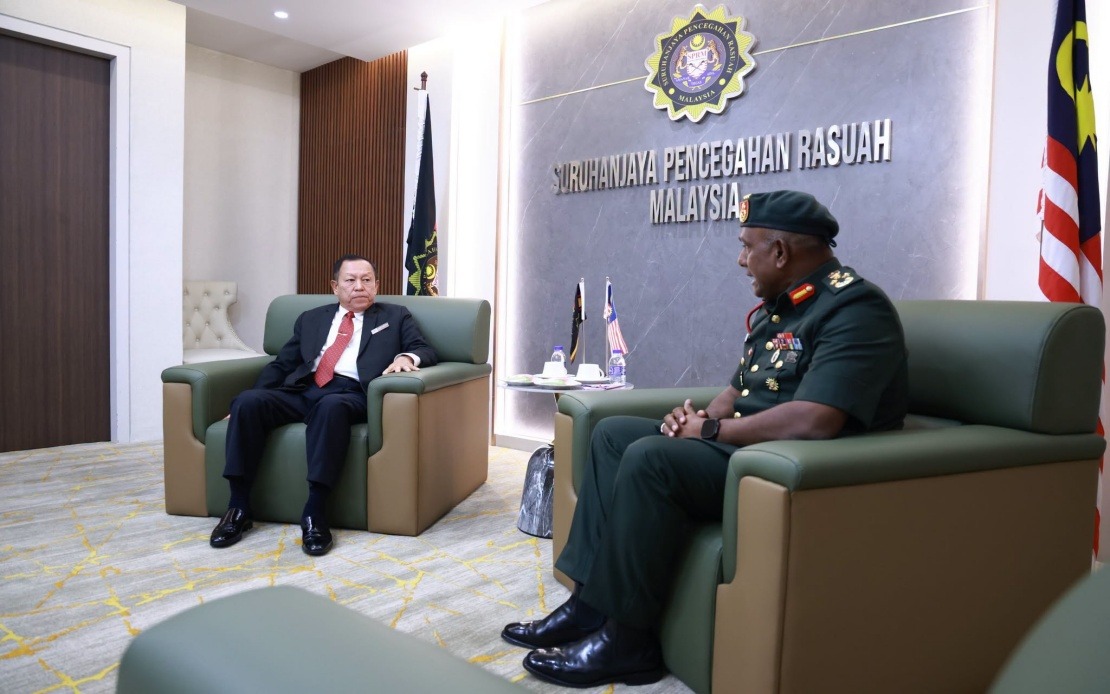
The Malaysian Anti-Corruption Commission and the Malaysian Armed Forces have committed to deepening their strategic partnership, focusing on intelligence sharing, information exchange and governance improvements to combat corruption more effectively and safeguard national security interests. The pledge emerged during a meeting at MACC headquarters in Putrajaya involving senior officials from both organisations, signalling renewed momentum in inter-agency collaboration at a time when institutional integrity remains central to Malaysia's governance agenda.
MAAC Chief Commissioner Datuk Seri Abd Halim Aman underscored the importance of the existing relationship between the two bodies, noting that the commission places considerable value on the longstanding alliance with the armed forces. He expressed optimism that collaborative efforts would deepen, particularly in areas where overlapping jurisdictions and shared national security concerns make joint action essential. The commission views its partnership with the military as foundational to advancing integrity standards across government institutions that handle sensitive resources and personnel.
The courtesy meeting took place during the official appointment of Malaysian Defence Intelligence Organisation director-general Lt Gen Datuk Fazal Abdul Rahman, who assumed his position on May 21. Such ceremonial engagements between senior law enforcement and military officials often serve as occasions to reaffirm institutional commitments and map out operational frameworks for cooperation. The timing of this visit suggests that the newly appointed military intelligence chief is establishing his agency's collaborative relationships with key oversight bodies early in his tenure.
Fazal articulated the armed forces' own dedication to maintaining rigorous governance standards and enforcing discipline across all operational levels. He emphasised that the military recognises its unique accountability obligations, given the scale of its budget allocations, personnel management responsibilities, and access to national assets. By publicly endorsing closer ties with MACC, the defence intelligence chief positioned his agency as proactive in supporting broader anti-corruption initiatives rather than merely responding to investigations.
The partnership framework encompasses intelligence exchange mechanisms, which could enhance MACC's investigative capabilities by providing military-sourced information on potential misconduct within defence establishments. Conversely, shared governance enhancement initiatives suggest that MACC expertise in designing institutional safeguards and procurement oversight could be applied to military operations. Such cross-pollination of institutional knowledge represents a pragmatic approach to addressing corruption vulnerabilities in the defence sector, where procurement spending and personnel management create multiple exposure points for misconduct.
For Malaysia's broader integrity ecosystem, this alliance carries symbolic weight beyond operational mechanics. The defence and security sectors historically operate with greater opacity than civilian agencies, partly due to legitimate national security concerns. When military leadership voluntarily embraces anti-corruption collaboration, it signals to subordinate commands that integrity is non-negotiable and that external oversight should be welcomed rather than resisted. This messaging is particularly important in a hierarchical organisation like the armed forces, where cultural norms significantly influence conduct at all ranks.
The presence of MACC Intelligence Division senior director Datuk Saiful Ezral Arifin and MAF Security and Counter Intelligence Directorate director Lt Col Muhamad Zainol Md Yusof at the meeting indicates that operational-level intelligence professionals are being engaged in the partnership. This suggests that cooperation will likely extend beyond ceremonial exchanges to involve substantive intelligence protocols and information-sharing procedures. Intelligence divisions typically manage sensitive investigations and counterintelligence operations, so their participation suggests that the collaboration has practical implications for how corruption cases involving military personnel are identified and pursued.
Regionally, Malaysia's approach to military corruption control carries implications for Southeast Asian governance standards. Other nations in the region continue grappling with defence sector corruption, and Malaysia's model of institutional partnership between anti-corruption bodies and military leadership could offer lessons. The explicit focus on intelligence sharing and governance enhancement rather than punitive measures suggests a preference for systematic prevention over reactive enforcement, an approach that may prove more effective in embedding integrity within organisational culture.
The stated commitment to intelligence sharing warrants consideration of practical mechanisms. Military units must often operate in remote locations or undertake classified activities, creating information asymmetries that civilian oversight bodies struggle to penetrate. Formalised intelligence-sharing arrangements could enable MACC to access relevant operational data without compromising security protocols, while military command structures gain assurance that civilian investigations of military personnel follow proportionate procedures. Such mechanisms typically require detailed memoranda of understanding specifying what categories of information can be exchanged and under what circumstances.
Governance enhancement initiatives likely encompass procurement process improvements, asset management oversight, and personnel vetting protocols. The defence sector manages substantial equipment acquisitions, facilities management, and human resources functions, all areas historically vulnerable to corrupt practices. By involving MACC in reviewing military governance frameworks, the armed forces gain access to anti-corruption expertise developed across government agencies, potentially identifying vulnerabilities before misconduct occurs. This preventive orientation aligns with international best practices in institutional integrity management.
The commitment also reflects evolving thinking about military accountability in Malaysia. Democratic governance requires that armed forces operate under civilian oversight and institutional checks, yet military effectiveness demands operational autonomy and hierarchical decision-making. The MACC-MAF partnership attempts to navigate this tension by establishing cooperative rather than adversarial relationships, where both institutions work toward shared integrity objectives while respecting operational necessities. This collaborative model may prove more sustainable than purely investigative approaches that can create defensive institutional cultures.
Looking forward, the durability of this partnership will depend on translating high-level commitments into practical operational procedures. Successfully executing intelligence-sharing protocols while maintaining security compartmentalisation presents genuine technical challenges. Ensuring that investigations involving military personnel proceed fairly while preventing obstructionism requires careful calibration. The presence of senior figures from both institutions in endorsing the partnership suggests organisational commitment, but implementation will ultimately determine whether this alliance meaningfully enhances anti-corruption effectiveness within Malaysia's defence establishment.

