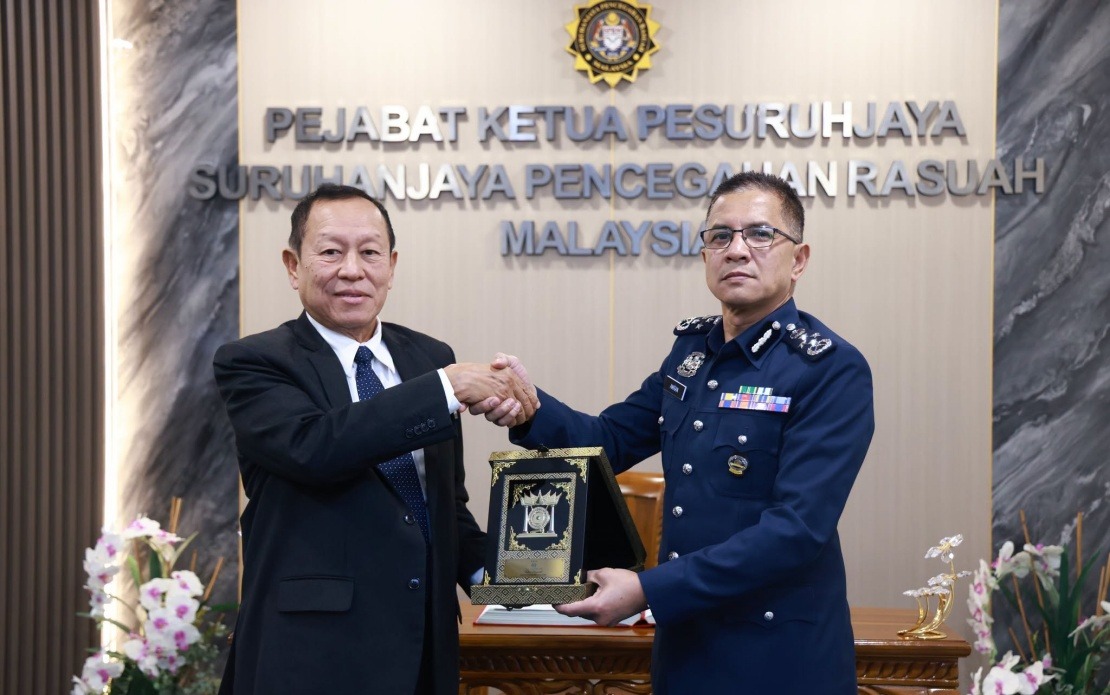
Strengthening institutional cooperation between law enforcement agencies, the Malaysian Anti-Corruption Commission (MACC) and the Royal Malaysian Customs Department (JKDM) are moving ahead with establishing a dedicated task force focused on bolstering compliance and revenue collection at key port facilities nationwide. The initiative emerged following strategic discussions held at MACC headquarters in Putrajaya on July 15, when JKDM director-general Datuk Amran Ahmad visited the anti-corruption body to explore avenues for deeper collaboration on enforcement matters.
The proposed task force reflects growing recognition among senior government officials that tackling illicit trade and revenue leakage demands integrated action across multiple agencies. MACC chief commissioner Datuk Seri Abd Halim Aman underscored the importance of this partnership, noting that the one-hour meeting provided valuable opportunity to align strategies on shared challenges. Both organisations identified customs inspection procedures and associated bureaucratic obstacles as persistent hurdles that criminal syndicates continue to exploit, creating vulnerabilities in Malaysia's port infrastructure.
Container management has emerged as a particularly significant concern, with evidence suggesting systematic efforts to circumvent controls at ports across the country. JKDM has documented numerous instances where containerised cargo fails to undergo adequate scrutiny, allowing contraband and undeclared goods to enter Malaysian territory. These gaps in oversight translate directly into lost government revenue and provide openings for organised crime networks to operate with relative impunity.
Criminal tactics have become increasingly sophisticated. JKDM officials detailed elaborate schemes involving deliberate falsification of shipping documents, misclassification of goods, and fraudulent approvals designed to deceive customs authorities. Beyond conventional smuggling, investigators have uncovered coordinated efforts to provide false information across multiple approval systems, suggesting involvement of corrupt officials or colluding intermediaries within legitimate trading networks.
Particularly troubling are documented cases of currency manipulation at borders. JKDM has detected a distinct pattern wherein individuals declare significantly lower cash amounts upon arrival than what they actually carry, effectively masking capital flows and potentially laundering proceeds from illicit activities. This modus operandi suggests individuals possess detailed knowledge of detection gaps and enforcement vulnerabilities, raising questions about information leakage or systematic weak points in cash declaration procedures.
The magnitude of these enforcement challenges justifies the collaborative approach. Maritime borders remain critical vulnerability points in Malaysia's security architecture, and the country's position as a major transhipment hub makes ports particularly attractive to international smuggling networks. Revenue losses from tax evasion and illicit trade create fiscal pressures on government budgets while simultaneously advantaging criminal enterprises and unscrupulous traders operating outside legitimate commercial channels.
Beyond immediate enforcement objectives, JKDM director-general Amran welcomed MACC's broader commitment to fostering integrity within his department. Corruption among customs personnel represents an internal threat that significantly amplifies external vulnerability, potentially transforming officials into unwitting or willing collaborators in smuggling operations. Institutional integrity initiatives, coupled with anti-corruption awareness programmes directed at JKDM staff, address this critical dimension of the problem.
The meeting involved senior figures responsible for investigation and integrity oversight, including MACC Investigation Division senior director Datuk Mohd Hafaz Nazar and JKDM Integrity branch head Azian Umar, indicating this initiative carries executive backing and institutional weight. Their participation suggests both agencies view this collaboration as strategically important rather than merely routine cooperation.
From a broader Southeast Asian perspective, this development reflects regional trends toward institutional integration in combating transnational crime. Maritime smuggling networks operate across borders, and Malaysian authorities recognise that unilateral efforts, however well-intentioned, cannot effectively counter internationally-coordinated criminal operations. The MACC-JKDM task force may establish a template for deeper regional law enforcement cooperation, potentially extending to bilateral and multilateral arrangements with neighbouring countries experiencing similar vulnerabilities.
For Malaysian trade and commerce, the initiative carries mixed implications. Legitimate importers and exporters may experience enhanced scrutiny and procedural delays as enforcement tightens, though properly designed systems should distinguish between routine compliance verification and targeted investigation of high-risk transactions. The business community's cooperation remains essential, as smuggling networks operate partly through collusion with seemingly legitimate trading entities that exploit gaps between documented and actual cargo movements.
Successful implementation will depend on sustained resource allocation, interagency communication protocols, and capacity building within both organisations. Technology solutions, including advanced scanning equipment and data-sharing platforms, may prove essential for scaling compliance monitoring across Malaysia's multiple port facilities without creating unmanageable bottlenecks. Training programmes ensuring MACC investigators understand customs procedures, and vice versa, will be equally important.
The announcement signals official acknowledgment that existing enforcement structures have proven inadequate against increasingly organised smuggling operations. Rather than viewing this as institutional failure, both MACC and JKDM are positioning the task force as necessary adaptation to evolving criminal methodologies. Whether implementation matches the apparent commitment to collaboration remains to be seen, but the high-level engagement visible in these initial discussions suggests both agencies view port security and revenue protection as genuine operational priorities requiring coordinated action.

