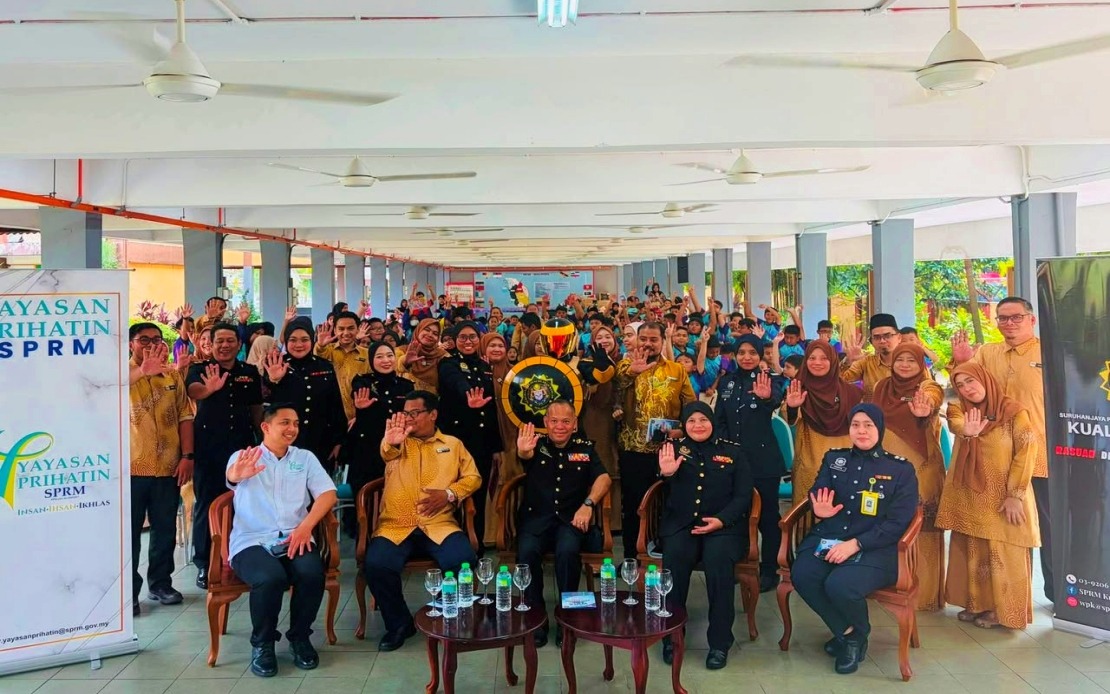
The Kuala Lumpur office of the Malaysian Anti-Corruption Commission has intensified its battle against graft by bringing anti-corruption lessons directly into classrooms through an initiative aimed at cultivating ethical behaviour from childhood. The Wira Antirasuah (WAR) programme, unveiled at Sekolah Kebangsaan Jalan Pasar 1 in Kuala Lumpur on August 14, represents a strategic pivot toward prevention and value formation rather than enforcement alone. By targeting pupils at foundational educational levels, the MACC is investing in what officials describe as a comprehensive approach to rooting out corruption through generational change.
Modelling this prevention strategy is Mohamad Zakkuan Talib, the Kuala Lumpur MACC director, who articulated the commission's philosophical stance that integrity building during formative years constitutes a lasting institutional investment. His framing of heroism—not as the possession of extraordinary powers but as the willingness to choose right action consistently—offers Malaysian students an accessible definition of moral courage. This reframing is particularly significant in a Malaysian context where anti-corruption messaging often emphasises compliance with rules rather than the internal motivation to uphold principle. By positioning integrity as fundamentally about character rather than fear of punishment, Mohamad Zakkuan shifts the conversation toward intrinsic values.
The programme's pedagogical approach recognizes that ethical formation occurs through accumulation of small choices rather than through isolated moments of high moral drama. Daily decisions—resisting the temptation to cheat academically, refraining from appropriating others' belongings, honouring commitments, and preserving the trust others have invested—constitute the building blocks of integrity. This granular understanding of how corruption takes root and how ethical culture develops contrasts with reactive enforcement measures and suggests the MACC has absorbed lessons about sustainable institutional change. In the Malaysian education system, where examination pressures and competitive dynamics sometimes incentivise dishonesty, this messaging directly addresses real vulnerabilities within school environments.
The WAR programme combines multiple engagement strategies to maximise impact across diverse learning styles and age groups. The Community Education Branch (PenMas) conducted briefings designed to convey anti-corruption concepts in age-appropriate language, while the MACC mascot Kapten MACC facilitated interactive sessions that make compliance concepts memorable and appealing to younger audiences. The integration of entertainment and education reflects contemporary understanding that behavioural change requires emotional resonance alongside intellectual comprehension. For Malaysian schools navigating limited resources, the provision of engaging external programmes offers valuable supplementation to existing moral education curricula.
The establishment of an Anti-Corruption Corner at Sekolah Kebangsaan Jalan Pasar 1 creates an institutional space dedicated to sustained integrity messaging. Rather than treating anti-corruption as a one-off assembly or campaign event, this corner functions as an ongoing resource hub where both pupils and educators can access information, reinforcing the MACC's commitment to embeddedness within school life. Such infrastructure investments suggest the commission recognises that lasting cultural change requires repeated exposure and normalisation of anti-corruption values within institutional settings. In Malaysian schools where space and resources are often stretched, the willingness of an agency to provide dedicated materials and platforms signals the importance assigned to this work.
Beyond the strictly educational components, the programme incorporated welfare support that addresses socioeconomic dimensions of integrity. The Yayasan Prihatin SPRM's donation of a smart television to the school and the provision of educational aid to 29 pupils from asnaf families acknowledge that integrity cannot be taught in isolation from material security and dignity. Students experiencing deprivation may face pressures that undermine ethical commitment; correspondingly, support that alleviates such pressures creates conditions in which moral principles can take root more firmly. This integrated approach—combining values education with practical welfare—reflects sophisticated understanding of how corruption itself often emerges from desperation and exclusion.
The programme's symbolic gesture of planting hibiscus, the national flower, served dual purposes aligned with the Keep Malaysia Clean campaign and National Month celebrations. This ritual simultaneously promoted environmental consciousness and national pride, embedding anti-corruption work within broader narratives of national identity and collective responsibility. For Malaysian pupils, particularly those from special education streams, participatory activities that connect patriotic sentiment to ethical conduct create memorable associations between national loyalty and personal integrity. The inclusion of special education pupils in this public activity further signals that anti-corruption education and national belonging extend to all students regardless of ability.
Within the Southeast Asian context, where corruption remains a significant governance challenge across the region, Malaysia's MACC represents one of the more institutionally mature anti-corruption bodies. Yet institutional maturity alone proves insufficient without cultural transformation among ordinary citizens. By focusing on schools, the MACC acknowledges that top-down enforcement and regulatory tightening have natural limits; sustainable reductions in corruption require shifts in how citizens internalise norms around integrity and acceptable conduct. The WAR programme thus positions the MACC not merely as a law enforcement agency but as an educator and culture-shaper operating within civil society.
The programme's grassroots implementation carries particular significance in Malaysia's federal context, where Kuala Lumpur's initiatives potentially influence approaches in other states. If successful, the WAR model could be scaled and adapted across the country, creating networks of schools engaged in systematic integrity building. State-level and federal MACC offices might then collaborate in expanding school engagement, creating synergies between regional offices and national headquarters. Such expansion would transform Malaysia's anti-corruption infrastructure from one centred on investigation and prosecution toward one that combines enforcement with widespread preventive education.
For Malaysian parents and educators, the MACC's school engagement programme offers institutional validation of integrity education's importance. Teachers face increasing pressure to focus narrowly on examination performance and measurable academic outcomes; external validation from respected institutions like the MACC strengthens teachers' authority to invest time in character formation. Similarly, parents seeking to instil ethical values in their children encounter a school system increasingly aligned with these objectives, creating reinforcing cycles in which home and institutional education support one another.
The longer-term success of such programmes depends on sustained commitment and genuine embedding within school culture rather than treating anti-corruption education as an addon or tokenistic exercise. If the Anti-Corruption Corner at Sekolah Kebangsaan Jalan Pasar 1 remains actively resourced and regularly referenced in school life, it may meaningfully shape students' understanding of integrity. Conversely, if enthusiasm wanes and the corner becomes neglected, the programme risks reinforcing cynicism about institutional commitment to change. The MACC's follow-up activities and measurement of impact will determine whether the WAR programme represents genuine strategic investment in prevention or another temporary campaign.
Moving forward, the MACC might benefit from developing feedback mechanisms through which participating students and teachers assess programme effectiveness and suggest refinements. Incorporating school communities' insights into programme design would enhance relevance and ownership, increasing the likelihood that anti-corruption messages resonate genuinely rather than feeling imposed externally. In Malaysian schools where diverse socioeconomic, ethnic, and religious backgrounds coexist, understanding how different student populations receive and internalise integrity messaging becomes crucial for ensuring equitable impact. The foundation laid at Sekolah Kebangsaan Jalan Pasar 1 thus represents both an immediate initiative and a prototype for more comprehensive approaches to embedding anti-corruption values within Malaysia's education system.

