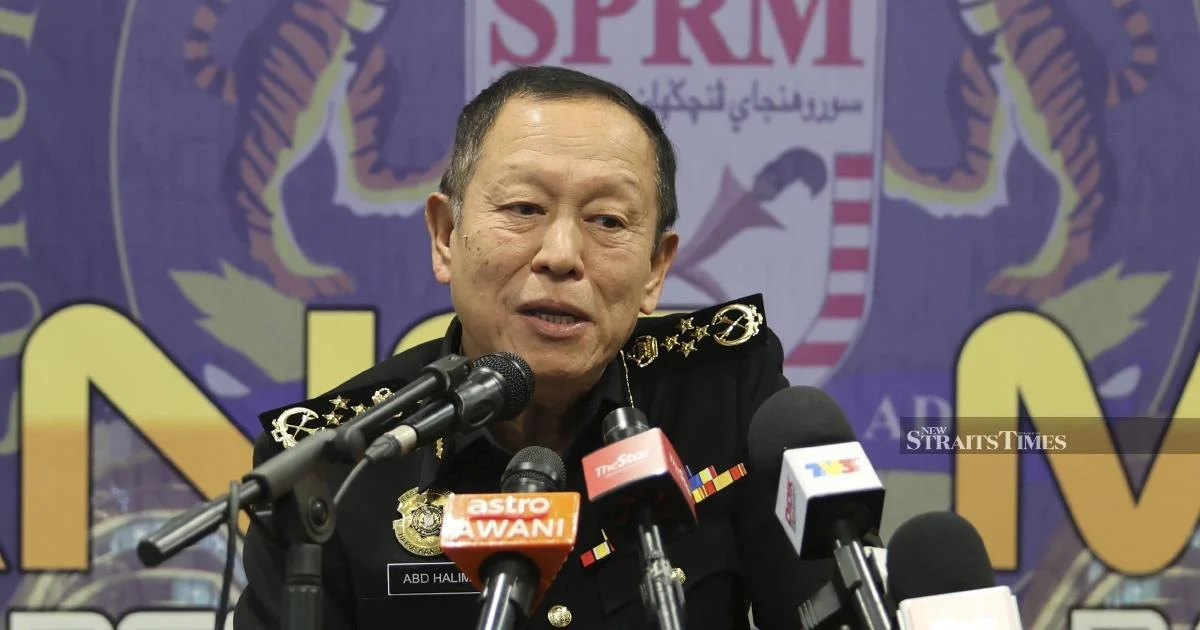
The Malaysian Anti-Corruption Commission (MACC) has reiterated that its investigation into Low Taek Jho, the businessman at the centre of Malaysia's largest financial scandal, continues in earnest and has not been shelved. The assertion comes as fresh confirmation that authorities remain committed to pursuing the case despite the subject's continued absence from Malaysian jurisdiction.
Low Taek Jho, widely known as Jho Low, disappeared from public view after the 1Malaysia Development Berhad (1MDB) scandal unravelled in 2015. He has since become one of Malaysia's most wanted fugitives, with authorities across multiple countries pursuing parallel investigations into his alleged role in the massive financial misappropriation that shook the nation's economy and international standing. The MACC's statement dispels any notion that the agency has deprioritised the case or allowed it to lapse into dormancy.
The significance of this reaffirmation cannot be overstated. In jurisdictions where high-profile corruption cases have involved flight of the accused, investigative momentum often dissipates over time as resources are redirected and public attention wanes. By explicitly stating that the probe remains active, the MACC signals unwavering institutional resolve to pursue accountability regardless of geographical barriers or the passage of time. This approach aligns with Malaysia's broader anti-corruption agenda and efforts to rebuild international confidence in the nation's governance frameworks following the 1MDB debacle.
The case involving Low has evolved considerably since its initial exposure. Over subsequent years, multiple countries including the United States, Singapore, and Switzerland have launched their own investigations into the alleged diversion of funds from 1MDB. Various parties connected to the scheme have faced prosecution in different jurisdictions, resulting in convictions and substantial financial recoveries. These parallel proceedings underscore the transnational nature of the offences and the complexity inherent in pursuing a suspect who has managed to evade capture across multiple borders.
From a Malaysian perspective, the continued investigation carries particular weight because it reflects the country's determination to reclaim its international reputation. The 1MDB scandal became a defining moment in Malaysia's recent history, tarnishing the nation's standing among international investors and governance watchdogs. By maintaining active investigative efforts against Jho Low despite his absence, the MACC demonstrates that Malaysia will not permit such high-profile transgressions to fade from prosecutorial view simply because the primary suspect remains at large.
The practical mechanics of keeping investigations open when subjects are fugitive involve sustained coordination between domestic and international law enforcement agencies. Interpol red notices, asset freeze orders, and extradition arrangements form part of the enforcement architecture. Each development in international law or enforcement cooperation creates fresh opportunities to pressure jurisdictions where Low might be sheltering or conducting business activities. The MACC's assertion that the probe remains active suggests that such international mechanisms continue to be engaged and monitored.
Regional context matters considerably here. Southeast Asia has increasingly recognised that corruption flows across borders and that effective responses require sustained commitment and cross-border cooperation. Malaysia's continued pursuit of Jho Low alongside other regional economies' investigations into different aspects of the scheme sets a precedent that fugitives cannot indefinitely evade accountability through geographic displacement. This sends important signals to potential offenders contemplating similar schemes, and to regional partners regarding Malaysia's commitment to standard-setting in anti-corruption enforcement.
The MACC's reaffirmation also addresses potential concerns among stakeholders who might otherwise question whether the government's anti-corruption credentials were performative or substantive. Maintaining investigative pressure on a fugitive who has evaded capture for years requires genuine institutional commitment and resource allocation. It signals that the Malaysia's anti-corruption framework is not merely reactive, generating public prosecutions only when suspects are conveniently available, but rather proactive in maintaining legal and enforcement mechanisms against offenders regardless of their accessibility.
Looking forward, several pathways could accelerate resolution of the Jho Low matter. Changes in political circumstances in jurisdictions where he may be located, refinements in international extradition treaties, or new financial intelligence could potentially alter the landscape. The MACC's maintenance of investigative readiness ensures that the institution can pivot rapidly should any such development occur. Additionally, asset recovery efforts may continue yielding results even absent the suspect's prosecution, allowing Malaysia to recover funds for the nation and creditors harmed by the original misappropriation.
For ordinary Malaysians, the MACC's statement reinforces that accountability mechanisms, though sometimes slow and complicated, remain operational even in extraordinarily complex cases. It also underscores why building and maintaining effective anti-corruption institutions matters beyond any single case—such agencies must possess the institutional stamina to pursue offenders over extended periods and across jurisdictional boundaries. The Jho Low investigation, precisely because it has become Malaysia's most prominent corruption case, serves as a barometer of the nation's broader anti-corruption commitment and capacity.

