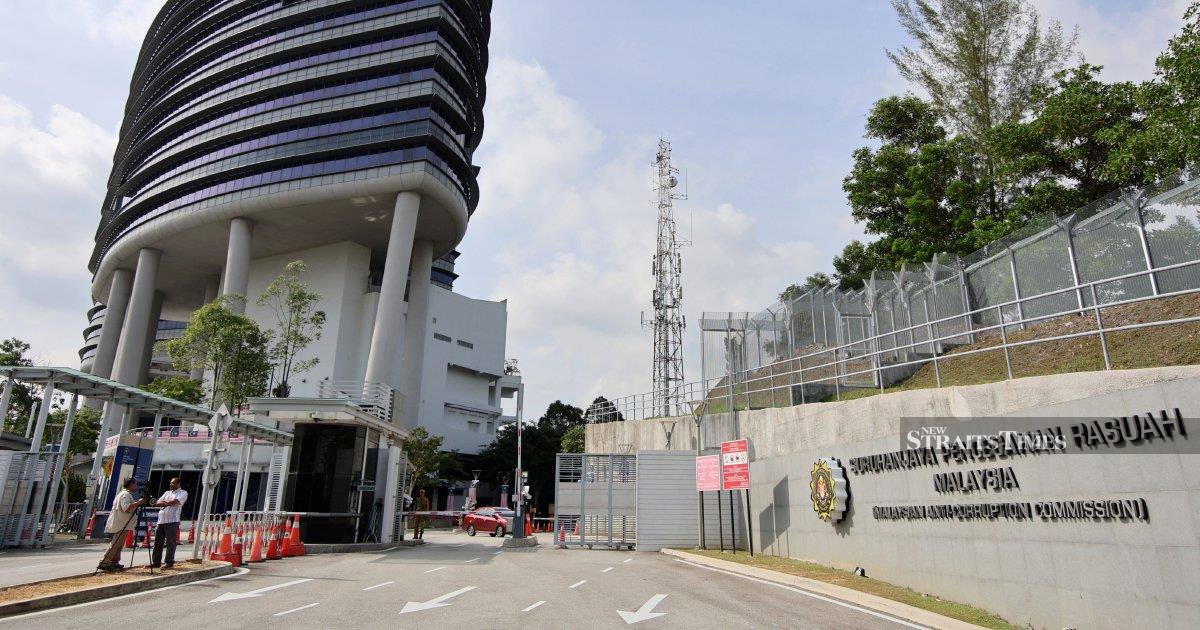
The Malaysian Anti-Corruption Commission has intensified its push for comprehensive whistleblower protection frameworks, urging top-tier government administrators to embed safeguarding mechanisms within their organisations as a cornerstone of Malaysia's anti-corruption strategy through 2030. The appeal represents a deliberate shift in enforcement philosophy, positioning information disclosure and informant security as foundational elements in the nation's broader fight against graft rather than peripheral concerns.
The MACC's directive targets ministry secretaries-general and department directors-general—the administrative apex of Malaysia's public service hierarchy—signalling that institutional responsibility for whistleblower protection must flow from the highest echelons downward. This vertical approach acknowledges that without explicit commitment and policy direction from senior leadership, protection mechanisms remain dormant bureaucratic provisions rather than functional deterrents against corruption. The commission recognises that employees at all levels require confidence in protective structures before they will risk disclosing misconduct, particularly when such disclosures might implicate powerful figures or entrenched interests.
Whistleblower protections operate as a critical diagnostic tool in anti-corruption architecture. When individuals reporting irregularities face retaliation, dismissal, or social ostracism, organisations lose visibility into internal wrongdoing. Conversely, robust protections create incentive structures that transform ordinary employees into frontline monitors of institutional integrity. Malaysia's historical reliance on enforcement-driven approaches has produced mixed results; investigations following reported violations consume substantial resources and require high evidentiary thresholds. Early disclosure mechanisms allow preventative intervention and can dismantle corruption networks before damage accumulates.
The Corruption Perceptions Index, compiled annually by Transparency International, evaluates countries based on expert assessments of public sector corruption levels. Malaysia's position in these rankings carries significance beyond symbolic rankings—it influences investor confidence, foreign direct investment flows, and the nation's diplomatic standing. Numerous multinational corporations and institutional investors incorporate CPI scores into due diligence frameworks when evaluating market entry or expansion decisions. Enhancement of Malaysia's CPI standing therefore carries material economic implications for competitiveness across manufacturing, financial services, and technology sectors where foreign capital seeks governance assurance.
The 2030 timeline specified by MACC reflects alignment with global sustainability goals and regional governance aspirations. By establishing a discrete temporal target, the commission creates measurable accountability and enables tracking of incremental progress. Implementation across a decade-long horizon permits systematic capacity building, legislative refinement, and cultural embedding of whistleblower-centric governance norms. This extended timeframe also acknowledges the institutional inertia that characterises public sector change in Malaysia, where bureaucratic systems often resist rapid transformation despite policy directives.
Malaysia's existing whistleblower framework operates under the Whistleblower Protection Act 2010, which provides legal remedies for individuals suffering dismissal or discrimination following disclosure of improper conduct. However, enforcement evidence suggests significant implementation gaps. Public sector employees frequently remain unaware of their statutory protections, while organisational cultures in numerous ministries and departments continue to stigmatise information disclosure as disloyalty. Anonymous reporting channels, essential for protecting identities, remain underdeveloped in many agencies. The MACC's current initiative appears designed to address these operational deficiencies rather than legislative voids.
Comparative analysis across Asia-Pacific governance systems reveals that nations advancing their CPI rankings—such as Singapore and New Zealand—have systematically strengthened whistleblower infrastructure alongside conventional enforcement mechanisms. Singapore's Public Sector Governance Act and complementary institutional policies create layered protections that encourage disclosure while maintaining confidentiality. These frameworks have contributed to Singapore's consistently elevated corruption perceptions scores. Malaysia's trajectory suggests similar integration of whistleblower protection as a strategic governance priority could yield measurable improvements in institutional transparency metrics.
The challenge for Malaysian implementation extends beyond legislative adequacy to organisational cultural transformation. Many public servants have internalised hierarchical communication norms that discourage upward reporting of irregularities outside formal channels. Supervisors in some departments view whistleblowing as circumventing established chain-of-command protocols rather than fulfilling civic duty. MACC's directive thus implicitly addresses cultural recalibration, requiring agency heads to model receptiveness to disclosure and actively communicate protection guarantees to their workforces.
Regional implications merit consideration as ASEAN nations increasingly compete on governance differentiation. Thailand's corruption indices have deteriorated alongside institutional turbulence, while Indonesia's incremental improvements reflect sustained anti-corruption institutional investment. Malaysia's positioning between these trajectories creates competitive incentive for governance advancement. Stronger whistleblower frameworks could position Malaysia as a regional governance exemplar, potentially attracting regional headquarters for multinational corporations prioritising compliance-heavy jurisdictions and signalling to international partners a commitment to institutional development.
The MACC's emphasis on ministry secretaries-general and directors-general engagement suggests a recognition that sustainable governance change requires volitional leadership commitment rather than mere compliance with directives. These officials control budgetary allocations for protective infrastructure, determine appointment of individuals championing whistleblower programmes, and establish organisational policies that either facilitate or obstruct disclosure. By directing attention to administrative leadership, MACC identifies the leverage points where institutional transformation can be initiated and sustained.
Implementation success will ultimately depend on sustained attention and resource commitment extending beyond the current initiative. Whistleblower protection infrastructure requires continuous investment in secure reporting systems, investigative capacity, and retaliation monitoring mechanisms. Measurement frameworks must track not merely legislative amendments but actual disclosure rates, investigation responsiveness, and employee awareness of protections. Malaysia's trajectory on these metrics will provide meaningful indication of whether the MACC's initiative catalyses genuine governance transformation or remains largely rhetorical.

