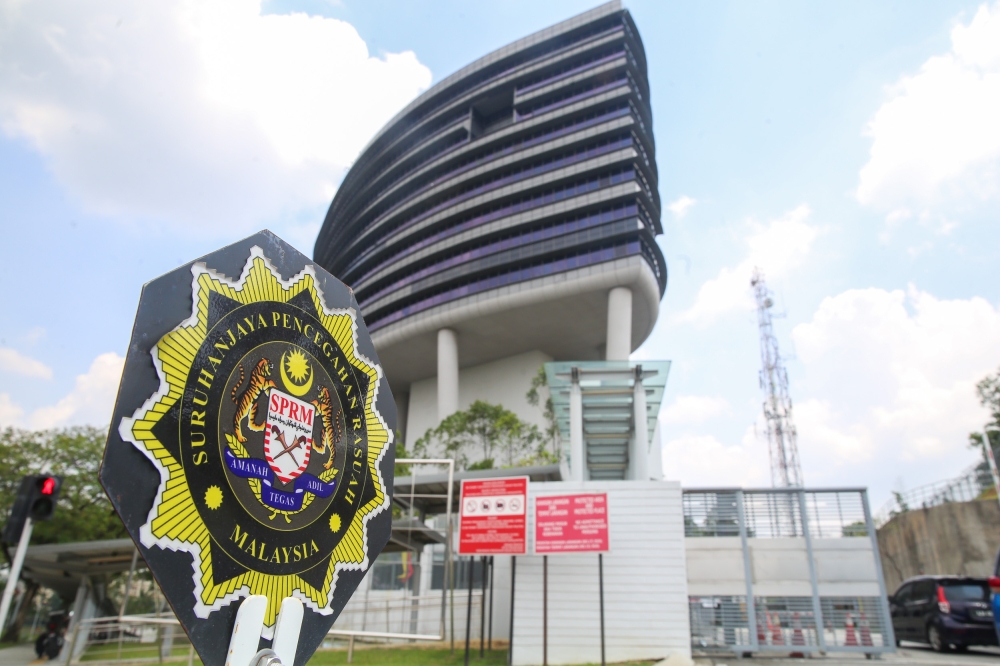
The Malaysian Anti-Corruption Commission is moving decisively to equip its investigators with cutting-edge tools to identify artificial intelligence-generated deepfakes and doctored evidence, marking a significant modernisation of the agency's detection capabilities in response to evolving criminal tactics. The initiative, announced in Putrajaya, underscores MACC's recognition that traditional forensic methods alone are insufficient for countering sophisticated digital manipulation techniques that increasingly feature in contemporary graft cases across the region.
Corruption fighters globally have grown increasingly alarmed by the weaponisation of deepfake technology and advanced image and video manipulation tools in criminal enterprises. As these technologies become more accessible and realistic, their potential to obscure guilt, fabricate incriminating material against political rivals, or destroy legitimate evidence has become a serious operational concern for enforcement agencies. MACC's proactive stance signals that Malaysia's corruption-fighting establishment understands the urgency of staying ahead of technological sophistication that bad actors might deploy to undermine investigations.
The commission's expansion of digital forensics capacity reflects a broader institutional transformation aimed at professionalising anti-corruption work through technological advancement. Enhanced capabilities in detecting manipulated media do not merely address a future theoretical problem; they address current operational realities. Investigators increasingly encounter digital evidence in cases ranging from illicit financial transfers to bribery schemes, and the authenticity of this evidence is frequently contested. Without reliable analytical frameworks to validate or debunk claims of manipulation, successful prosecutions become vulnerable to courtroom challenges that exploit reasonable doubt.
The practical implications for Malaysian investigators are substantial. Consider a complex corruption case involving allegations of improper payments to officials: a defence strategy might introduce a deepfake recording purporting to show the accuser fabricating evidence, or submit doctored financial records claiming they have been AI-manipulated. Without forensic tools to definitively analyse such claims, prosecutors face significant evidentiary hurdles. MACC's upgrade addresses precisely these scenarios, establishing baseline technical capabilities that neighbouring countries in Southeast Asia may need to replicate as deepfake technology proliferates throughout the region.
The investment also carries implications for Malaysia's international standing on governance and transparency. Countries with robust institutional capacity to combat technologically sophisticated corruption are regarded as more credible by international partners and investors. As organised crime networks and corrupt officials increasingly harness artificial intelligence for concealment purposes, nations demonstrating preparedness appear more serious about enforcement. This technological credibility becomes particularly important for trade negotiations, cross-border cooperation agreements, and Malaysia's positioning as a regional financial hub where institutional integrity is paramount.
Digital forensics expertise remains relatively concentrated in Southeast Asia. Most countries in the region lack the technical depth or institutional investment that MACC is now pursuing. This positions Malaysia's anti-corruption apparatus as potentially more advanced than counterparts in neighbouring jurisdictions, creating opportunities for regional leadership in knowledge-sharing and capacity-building. MACC could eventually provide forensic analysis services or training to partner agencies across Asean, establishing itself as a specialised centre of excellence for detecting manipulated digital evidence.
The underlying technical challenges are formidable. Detecting deepfakes requires understanding the subtle artefacts that neural network-based generation leaves behind—pixel-level inconsistencies, temporal distortions in video, and voice modulation patterns that betray synthetic origins. These traces can be deliberately obscured through counter-forensic techniques, creating an escalating arms race between deepfake creators and detection specialists. MACC's commitment to building expertise signals that the agency understands this is not a one-time technological gap to be bridged, but an ongoing domain requiring continuous investment and specialist talent recruitment.
The institutional culture shift accompanying this technological upgrade should not be underestimated. Investigators trained in traditional evidence collection and witness interrogation now require exposure to digital analysis methodologies. This demands recruitment of personnel with computer science backgrounds, partnerships with academic institutions, and potentially engagement with international forensics firms during the initial capability-building phase. MACC's willingness to embrace this transformation reflects confidence that sophisticated investigation is compatible with anti-corruption work's historical focus on follow-the-money investigative tradecraft.
For private sector organisations operating in Malaysia, the implications are twofold. Companies engaged in high-risk sectors such as construction, procurement, and resource extraction should assume that their communications and transactions are subject to increasingly sophisticated forensic analysis. Simultaneously, those same organisations can have greater confidence that investigations conducted against their interests will withstand technical scrutiny, reducing the risk that cases collapse due to evidentiary weakness related to digital evidence admissibility. This creates incentives for compliance and disincentives for fabricating exculpatory evidence through deepfakes or manipulation.
The timing of MACC's announcement arrives as artificial intelligence capability accelerates globally. Generative AI tools that were research prototypes two years ago are now consumer applications available to anyone with internet access. The democratisation of these technologies means that deepfake creation requires progressively fewer technical skills. MACC's recognition that defensive capabilities must expand in tandem with offensive technological accessibility demonstrates institutional maturity. The agency is not waiting for a major crisis involving fabricated evidence to trigger reform; it is building capacity anticipating where the threat landscape is heading.
Regionally, this development may catalyse similar investments across Asean. Thailand, Indonesia, and the Philippines all face substantial corruption challenges and would benefit from comparable forensic capabilities. MACC's pioneering work potentially establishes best practices and demonstrates the feasibility of building these capabilities within developing-world institutional contexts. As deepfakes become more prevalent in regional corruption schemes, neighbouring countries will likely follow Malaysia's lead in establishing digital forensics units within their anti-corruption agencies.

