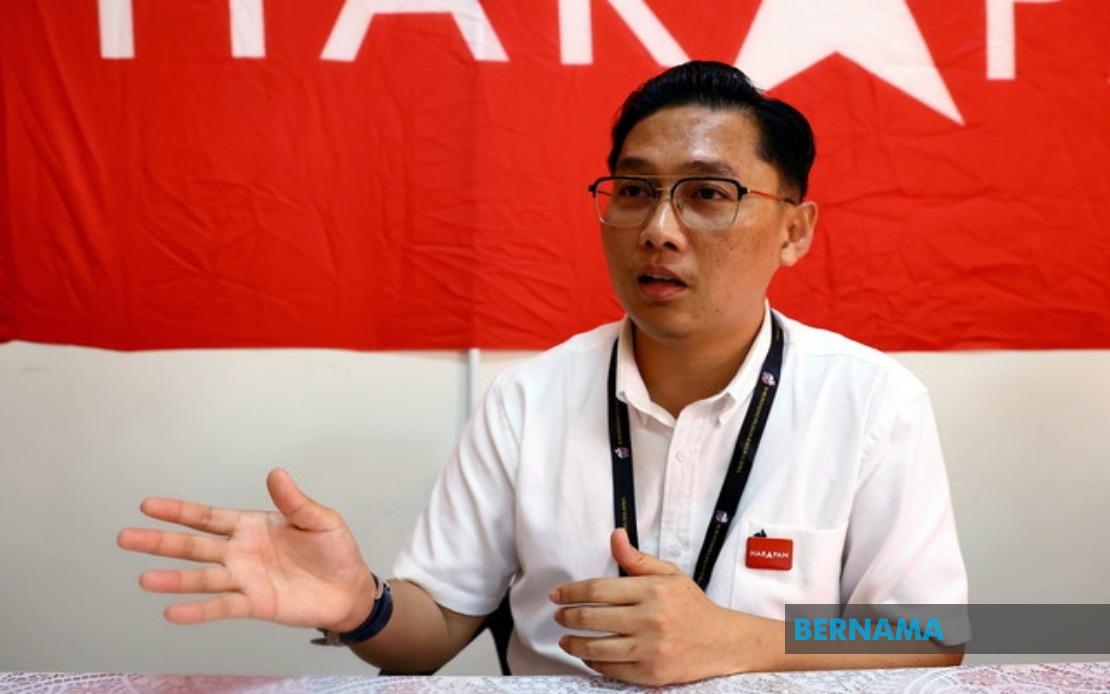
The contest for Johor's Machap state seat is shaping up as a high-profile showdown between Pakatan Harapan candidate Nur Hafiz Roslan and the sitting Menteri Besar, with the challenger expressing confidence despite his opponent's commanding incumbency advantage. Nur Hafiz, a legal professional with 18 years in practice, is set to face Datuk Onn Hafiz Ghazi in the July 11 state election, marking a direct confrontation between an opposition politician and one of Johor's most prominent political figures.
Machap has traditionally been a fortress for Barisan Nasional, with Onn Hafiz securing a substantial majority of 6,543 votes in the 2022 election. Yet Nur Hafiz appears unintimidated by the electoral topography he faces. During a campaign engagement in Simpang Renggam, he articulated a philosophical position that political outcomes are rarely predetermined, citing historical precedents from within Johor's leadership ranks themselves. The observation carries weight—former Johor Menteri Besars Tan Sri Abdul Ghani Othman and Datuk Seri Khaled Nordin both experienced electoral defeats despite their stature, suggesting that even figures of considerable political standing are not immune to electoral reversal.
The candidate's framing of his challenge reflects a deliberate strategic choice: rather than dwelling on the statistical improbability of his victory, Nur Hafiz emphasises the quality of representation he can offer and the ideas he intends to champion. His legal background serves as a credential he marshals to suggest capability in addressing constituent concerns systematically and with precision. The emphasis on professional expertise over political lineage is itself a statement about how he wishes to contest the seat—on grounds of competence and problem-solving capacity rather than factional politics or historical advantage.
Central to Nur Hafiz's campaign philosophy is a forthright rejection of what he terms outdated political frameworks. He specifically names divisive tactics rooted in racial, religious and royalist sentiments—the so-called 3R politics—as antithetical to contemporary governance needs. This positioning suggests that Pakatan Harapan in Johor is attempting to reframe electoral competition around substantive policy concerns rather than identity-based messaging. For Malaysian readers accustomed to elections saturated with communal appeals, this rhetorical shift represents a notable departure, though its electoral resonance remains uncertain.
Nur Hafiz's critique extends to the emotional registers through which Malaysian politics has traditionally operated. He explicitly questions the sustainability of campaigns predicated on fear—fear among Malay, Chinese and Indian voters respectively—proposing instead that political energy should concentrate on tangible daily concerns affecting constituents' material lives. This framing assumes that voters, across demographic lines, are prepared to prioritise concrete policy outcomes and institutional effectiveness over symbolic or communal considerations. Whether such assumptions align with electoral behaviour in a state like Johor, where communal boundaries have historically structured voting patterns, will be tested on election day.
The PH machinery in Machap appears cohesive according to Nur Hafiz's assessment, with the candidate describing the party's organisational structure as stable and conflict-free since the nomination phase. Such unity is operationally significant; internal division has historically undermined opposition efforts in various Malaysian constituencies. A disciplined, unified campaign apparatus enhances communication effectiveness and volunteer mobilisation, practical advantages that can translate into marginal gains in tightly contested seats. Whether Machap proves tight, however, depends partly on whether Nur Hafiz's intellectual arguments about mature politics gain traction with voters.
The role Nur Hafiz envisions for himself, should he prevail, carries implications for state-federal coordination. He positions himself as a bridge between Kuala Lumpur and Machap, ensuring that local concerns receive appropriate hearing at both governmental levels. This aspiration reflects a broader Pakatan Harapan strategy of emphasising constituent service and institutional connectedness as counterweights to incumbency. For Machap voters, the proposition is essentially one of representation quality and institutional access rather than factional dominance or resource capture.
Onn Hafiz's position as both Menteri Besar and Machap assemblyman confers significant structural advantages. His tenure in the chief minister role allows him to direct state resources and attention toward his own constituency, a privilege unavailable to opposition candidates. Additionally, Barisan Nasional's traditional organisational infrastructure in Johor remains formidable. Nur Hafiz's confidence, while rhetorically compelling, confronts these material realities. The 6,543-vote majority from 2022 represents a substantial baseline that Pakatan Harapan would need to overcome through either superior campaign execution or significant shifts in voter sentiment.
The timing of the Machap contest within Johor's electoral landscape is also worth noting. The state election represents an important inflection point in Malaysian politics following federal-level developments. Johor's outcome will send signals about voter receptiveness to opposition messaging and about the sustainability of Barisan Nasional's dominance in its traditional strongholds. A Pakatan Harapan breakthrough in Machap would carry symbolic weight beyond the constituency itself, suggesting that voters are indeed responsive to appeals for mature, policy-centred politics.
Early voting is scheduled for July 7, with the main poll following on July 11. The campaign period between now and those dates will test whether Nur Hafiz's intellectual arguments about rejecting divisive politics resonate with Machap voters or whether traditional communal and incumbency factors prove determinative. His willingness to contest this seat against considerable odds reflects either genuine confidence in his message's appeal or strategic recognition that opposition parties must challenge even apparently unwinnable seats to remain electorally visible and ideologically relevant. The outcome will clarify which calculation proves correct.

