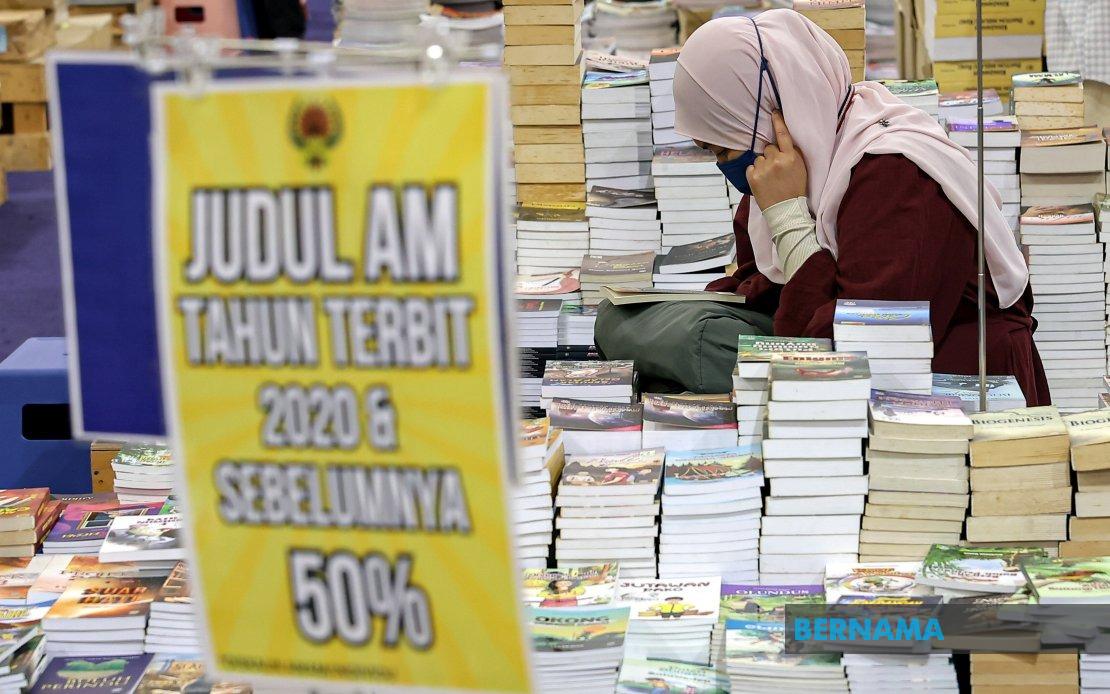
The Malaysian government is extending its MADANI Book Voucher initiative to reach more than 2.2 million students nationwide, marking a continued investment in reading accessibility and educational enrichment across the country. The scheme, backed by a substantial RM221.6 million allocation, will commence its redemption phase tomorrow and run through October 31, providing students with RM100 e-vouchers that can be exchanged for books through an established digital platform. Deputy Education Minister Wong Kah Woh announced the programme details in Parliament today, positioning it as a cornerstone initiative to democratize access to reading materials regardless of geographic or socioeconomic circumstance.
The beneficiary pool encompasses a broad spectrum of learners across Malaysia's education system. Eligible recipients include students from Remove Class through Form Six in conventional secondary schools, alongside those enrolled in vocational colleges, matriculation institutions, and the Malaysian Institute of Teacher Education (IPGM). The figure of 2,217,579 students represents a significant portion of Malaysia's student population, underscoring the government's commitment to universal educational support. This inclusive approach ensures that learners pursuing different pathways—whether academic, technical, or teacher-training routes—all receive equal opportunity to build their personal libraries and deepen their engagement with written knowledge.
The technical infrastructure supporting the voucher scheme operates entirely through the BookCapital platform, a digital ecosystem that has grown substantially since the programme's inception. Currently, the platform hosts 1,238 registered booksellers, creating a diverse marketplace for students to select titles that match their interests and educational needs. The shift to a fully online purchasing and delivery system addresses a longstanding challenge in Malaysian education: ensuring that students in remote and rural areas access the same range of reading materials available in urban centres. This digital-first approach eliminates geographic barriers while maintaining transparency and efficiency in fund deployment.
A notable refinement for 2026 involves the introduction of the MADANI Special Title Focus category, which curates a selection of reading materials aligned with national development priorities. This curated collection encompasses literary classics and broader works exploring history, philosophy, economics, geopolitics, and human capital development—disciplines essential for developing critical thinking and contextual understanding among young Malaysians. Significantly, the initiative places particular emphasis on future-oriented subjects including artificial intelligence, information technology, and STEM fields generally. Each student receiving a voucher must dedicate at least a portion of their RM100 allocation to purchasing at least one title from this special focus category, ensuring exposure to knowledge areas aligned with Malaysia's digital transformation agenda and skill requirements for tomorrow's workforce.
Evaluation data from the programme's earlier iteration provides compelling evidence of its real-world impact. An impact study conducted by the Darul Ehsan Institute revealed that 97.5 percent of surveyed recipients agreed that the MADANI Book Voucher had substantially assisted students, particularly those from economically disadvantaged backgrounds. Furthermore, 92.2 percent of respondents reported that access to voucher-purchased books had aided their examination preparation, suggesting tangible academic benefits beyond the broader objective of fostering a reading culture. These metrics demonstrate that the programme operates not merely as a symbolic gesture but as a practical intervention addressing both equity and academic performance concerns.
The 2024 implementation phase achieved a 100 percent redemption rate, an exceptional outcome indicating both that students understood and utilized the scheme and that the BookCapital platform functioned reliably at scale. This complete utilization contrasts sharply with many government assistance programmes that experience uptake challenges or administrative leakage. Wong emphasized that this achievement, coupled with the platform's operational transparency and absence of documented fund misappropriation, represents three critical successes: universal redemption, complete transparency, and zero leakage. The emphasis on these metrics reflects recognition that public confidence in government educational initiatives depends on demonstrable efficiency and proper stewardship of allocated resources.
The programme's digital architecture enables equitable service delivery across Malaysia's vast geographic and demographic diversity. Students in Peninsular Malaysia's urban corridors access identical book selections, pricing, and delivery logistics as their counterparts in Sabah, Sarawak, and other remote regions. This standardization eliminates the hidden disadvantages that often accompany decentralized implementation, where variation in local capacity creates unequal outcomes for geographically dispersed populations. The online delivery mechanism also accommodates the logistics of serving a dispersed student population more efficiently than traditional voucher redemption at physical retail outlets.
For Malaysian parents and students, particularly those from lower-income families, the MADANI vouchers represent meaningful purchasing power in an education context where book acquisition often remains financially challenging. At RM100 per student, the voucher permits acquisition of multiple titles or higher-quality publications that families might otherwise defer or forgo entirely. The emphasis on curricular support and examination preparation recognizes that reading for academic success and reading for personal enrichment are complementary objectives, both essential components of educational development. The curation of the special focus category further signals to students that certain knowledge domains carry particular importance for their nation's future trajectory.
The programme also reflects deliberate policy choices regarding Malaysia's educational priorities in an era of rapid technological change. The emphasis on STEM, artificial intelligence, and digital literacy aligns with broader government strategies for economic competitiveness and workforce development. By incentivizing student engagement with literature addressing these domains during formative educational years, the initiative aims to seed early interest in fields where Malaysia will require substantial talent pipelines. This integration of reading accessibility with strategic skill development represents a more sophisticated approach than simple book distribution alone.
From a regional perspective, Malaysia's MADANI Book Voucher Programme offers a model worth noting for other Southeast Asian economies grappling with educational equity challenges. The combination of targeted digital infrastructure, curated content selections aligned with national priorities, and demonstrated commitment to equitable geographic access provides a template that neighbouring countries might adapt. The availability of rigorous impact evaluation data also supports peer learning within the region, where educational policymakers increasingly demand evidence of programme effectiveness before substantial investment commitment.
Looking forward, the 2026 iteration builds on established institutional foundations while refining implementation based on earlier experience and feedback. The expanded scale, refined title curation, and sustained focus on digital delivery suggest that the MADANI Book Voucher Programme has achieved institutional maturity and political durability. Successive government commitments to the initiative, evidenced by continued budget allocation and parliamentary discussion, indicate that supporting reading accessibility among students has become embedded in Malaysia's educational policy framework as a sustained commitment rather than a temporary intervention.

