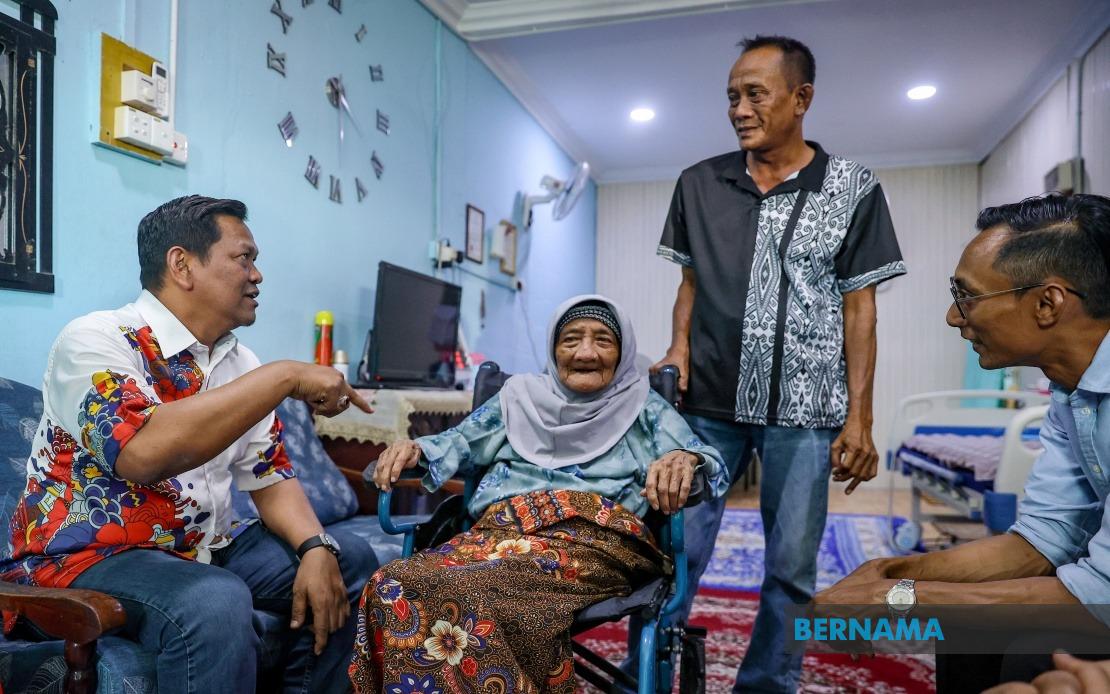
The federal MADANI administration is doubling down on its Ziarah Kasih welfare programme, positioning regular community outreach visits as a cornerstone of its people-centric governance model. At a grassroots engagement session in Mersing on 23 June, government representatives underscored the scheme's role in translating the Malaysia MADANI development blueprint into tangible benefits for struggling households across the country.
Ziarah Kasih operates as a targeted assistance mechanism, leveraging data and community networks to identify families and individuals facing acute financial strain or health crises. Rather than relying solely on universal subsidies or indirect support mechanisms, the programme channels aid directly to recipients vetted through the Department of Information and Komuniti MADANI chapters. This approach reflects a broader shift within the MADANI government toward precision welfare, where resources flow to those demonstrably in need rather than dispersed broadly across populations.
During the Jiwa@Komuniti MADANI Sembang Santai World Cup Edition programme held in Endau, Abdullah Izhar Mohamed Yusof, political secretary to the Communications Minister, reinforced that such initiatives would continue as regular fixtures in the government's engagement calendar. The message carried strategic weight: by embedding welfare visits into the political machinery and communications apparatus, the administration signals sustained commitment beyond one-off charitable gestures.
The human dimension of Ziarah Kasih emerged vividly through beneficiary testimonies. Hamdan Abd Latif, a 71-year-old bedridden former firefighter, embodies the programme's target constituency. Hamdan's trajectory illustrates how catastrophic illness derails even financially prudent families. A workplace accident in 2011—just weeks before his scheduled retirement from firefighting—triggered a cascade of medical crises including a brain tumour requiring surgery, followed by a stroke sustained in a domestic fall. His wife, Meriam Abd Wahab, aged 66, abandoned her own income-generating activities to provide full-time care, effectively sacrificing household earnings to manage his complex health needs.
For households like Hamdan's, government assistance provides more than emotional comfort; it addresses immediate shortfalls in meeting daily needs. The delivery of healthcare equipment through Ziarah Kasih reduces out-of-pocket medical expenditures that frequently bankrupt middle-income and lower-income families managing chronic conditions. In Malaysia's context, where elderly care often falls disproportionately on wives and daughters, such targeted support acknowledges the unpaid labour burden absorbed by family caregivers.
A second beneficiary story reinforces patterns of dependency created by caregiving obligations. Zainon Ibrahim, aged 91, relies on her son Jamaluddin Ismail for round-the-clock supervision and assistance. Jamaluddin abandoned formal employment approximately two years prior to dedicate himself to his mother's care, accepting financial contributions from his siblings to sustain household operations. His former occupation as a supervisor suggests middle-class stability now sacrificed on the altar of filial responsibility, a common trajectory in Malaysian families lacking adequate public elderly care infrastructure.
The Ziarah Kasih model implicitly acknowledges structural gaps in Malaysia's social safety net. Rather than investing comprehensively in long-term care services, subsidised in-home nursing, or expanded pension systems, the government opts for episodic cash transfers and equipment provision. While immediate relief matters profoundly for families like those profiled in Mersing, the approach raises questions about sustainability and comprehensiveness. Vulnerable populations navigating health crises, disability, and ageing require predictable, ongoing support architectures rather than programmes dependent on political goodwill and periodic visitation schedules.
From a political economy perspective, Ziarah Kasih serves dual functions. Substantively, it delivers material relief to constituencies facing genuine hardship. Performatively, it generates visible evidence of government benevolence, allowing senior officials to demonstrate empathy and engagement during community forums. The photographs and testimonies from such events circulate through communications channels, reinforcing narratives of a government attuned to citizen vulnerabilities.
The programme's emphasis on identification through Komuniti MADANI structures suggests administrative capacity-building efforts aimed at neighbourhood-level governance. By embedding community identification mechanisms, the government potentially develops granular knowledge of household-level vulnerabilities, creating infrastructure for future targeted interventions. This represents a modest shift toward data-driven welfare administration compared to historical approaches relying on bureaucratic recommendation or patronage networks.
For Malaysian policymakers, Ziarah Kasih illustrates the tension between generous targeted assistance and the need for comprehensive social protection systems. While direct transfers address acute crises effectively, they cannot substitute for robust pension systems, universal healthcare coverage, affordable long-term care services, and employment protection for caregivers. Families like those in Mersing require not merely periodic government visits bearing gifts, but predictable institutional frameworks ensuring dignity and security across the lifecycle.
As the MADANI administration consolidates its welfare messaging, regional observers note Malaysia's broader struggle to balance developmental ambitions with social provisioning. The commitment to continuing Ziarah Kasih represents political recognition that vulnerability remains widespread despite Malaysia's middle-income status. Whether episodic community outreach ultimately catalyses comprehensive social policy reform or simply perpetuates fragmented assistance patterns will shape the government's longer-term social contract with citizens.

