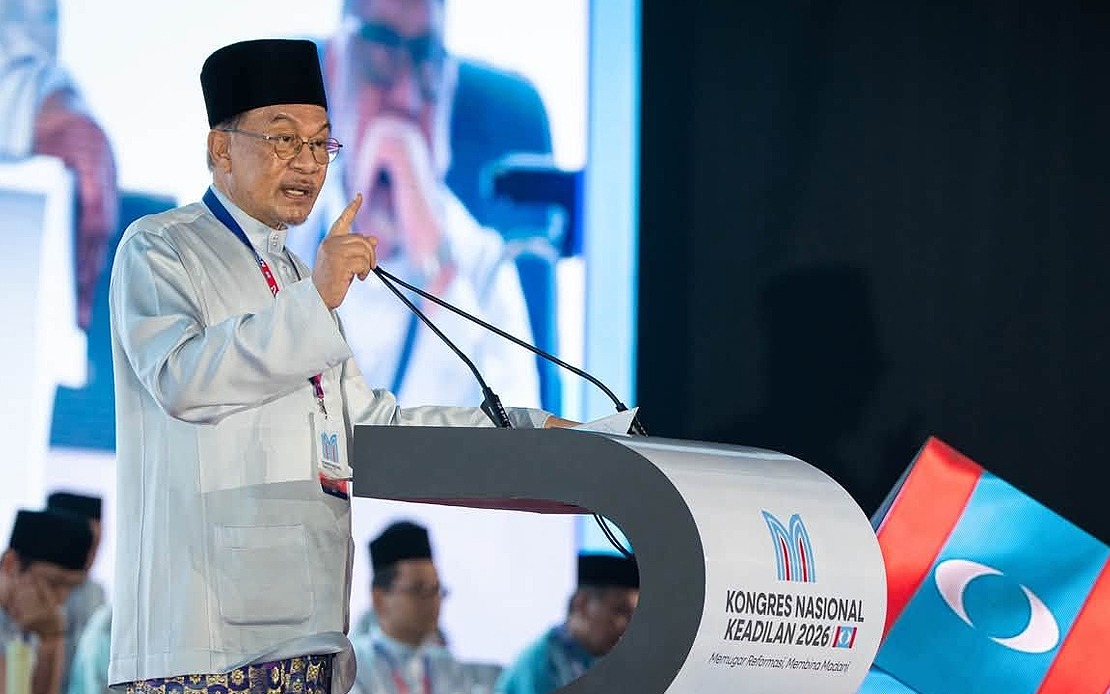
The Malaysian Government's reform agenda risks losing public traction if its achievements remain abstract policy announcements rather than concrete improvements in people's daily lives, warned Prime Minister's Senior Political Advisor Tengku Datuk Seri Zafrul Tengku Abdul Aziz during the 2026 PKR National Congress in Melaka. Speaking as delegates debated the party's direction at the two-day gathering, which opened today at the Melaka International Trade Centre, Tengku Zafrul emphasised that transforming reform rhetoric into measurable outcomes represents the fundamental challenge facing the MADANI coalition Government.
The nation's economic performance has exceeded expectations, with gross domestic product growth reaching six percent, a figure that surpassed forecasts from both domestic analysts and international observers. Yet this macroeconomic success has not automatically translated into widespread prosperity among ordinary Malaysians, a disconnect that threatens the Government's broader reform narrative. Tengku Zafrul's intervention signals concern within the administration that headline achievements risk hollow victories if citizens across all socioeconomic strata do not experience tangible improvements in their financial circumstances, employment opportunities, or access to essential services.
At the heart of this challenge lies a critical communications deficit within the MADANI administration. Government initiatives—whether structural reforms, economic programmes, or policy reversals—frequently generate little public awareness, leaving citizens unaware of changes designed ostensibly to benefit them. Tengku Zafrul acknowledged this breakdown candidly, stating that if Malaysians remain ignorant of government achievements, the fault rests not with the public but with the administration's failure to communicate effectively. This admission reflects growing frustration within PKR's leadership that substantial policy work remains invisible to its intended beneficiaries, undermining both the Government's credibility and the party's ability to build electoral support ahead of the next general election.
PKR President Datuk Seri Anwar Ibrahim's policy speech to congress delegates outlined several flagship initiatives that exemplify the Government's reform ambitions. The abolition of the Universities and University Colleges Act (AUKU)—a longstanding restriction on campus political expression—represents a symbolic victory for civil liberties advocates and student organisations that have campaigned against the provision for decades. Simultaneously, the Government has prioritised rehabilitation of the Federal Land Development Authority (FELDA), a statutory body whose financial and operational deterioration has harmed smallholder farmers and undermined rural development across Malaysia. These initiatives, alongside unspecified economic measures in the forthcoming Budget, demonstrate that the MADANI coalition recognises the reform agenda remains incomplete despite two years in office.
The congress's overarching theme—"Reviving Reform, Building MADANI"—encapsulates a subtle but significant message: the initial momentum of reform has plateaued, requiring renewed commitment and strategic refocusing. This framing suggests that PKR leadership believes the party risks complacency or public disengagement unless it demonstrates sustained progress on transformative change. By convening party delegates in Melaka to debate implementation mechanisms and communication strategies, the party attempts to reinvigorate internal discipline and renew grassroots enthusiasm for the broader coalition agenda. Tengku Zafrul's remarks at the congress underscore this institutional anxiety about maintaining reform momentum in the face of public scepticism and competing political narratives from opposition parties.
The question of how to distribute economic gains equitably across Malaysian society extends beyond communication strategy to fundamental policy design. A six percent growth rate means little to informal sector workers, underemployed youth, or fixed-income pensioners unless Government policies actively channel expansion benefits toward these vulnerable segments. Without deliberate redistributive mechanisms—whether through targeted subsidies, wage policies, skills training programmes, or progressive taxation—macroeconomic growth risks concentrating wealth further among already-privileged groups. Tengku Zafrul's emphasis on "spillover effects" implicitly acknowledges this concern, suggesting the Government recognises that trickle-down assumptions prove insufficient without complementary interventions designed to lift living standards across income distribution.
Enhancing the party machinery and strengthening internal coordination mechanisms represents a second pillar of the MADANI administration's reform strategy. Tengku Zafrul identified PKR's institutional capacity to listen to grassroots concerns and translate feedback into policy adjustments as essential to political success. This focus on party responsiveness reflects both the governing coalition's narrow parliamentary majority and the demonstrated volatility of Malaysian electoral politics, where shifts in public sentiment can rapidly alter political fortunes. By emphasising the need for improved "working mechanisms and party solidarity," Tengku Zafrul signals that the coalition's continued governance depends on PKR's ability to maintain internal cohesion while demonstrating responsiveness to constituent demands.
The 2026 PKR National Congress occurs within a broader regional context of democratic backsliding and political polarisation. Malaysia's reform coalition faces pressure from opposition parties exploiting perceived Government failures or implementation delays, whilst competing with entrenched vested interests resistant to institutional change. The congress debate sessions broadly aligned with Anwar Ibrahim's policy direction, suggesting party discipline remains largely intact, yet undertones of concern about implementation gaps and communication failures suggest deeper anxieties about sustaining reform momentum. Whether the Government can successfully bridge the gap between policy ambition and public perception will substantially determine the coalition's electoral viability and the sustainability of Malaysia's ongoing democratic reform process.
For Malaysian citizens, the implications of Tengku Zafrul's intervention are significant. Government initiatives designed to enhance educational freedom, rehabilitate rural development institutions, and stimulate inclusive economic growth remain largely invisible to many who might benefit most. The communication challenge facing the MADANI administration transcends marketing or public relations; it reflects structural difficulties in translating centralised policy decisions into localised, visible improvements that ordinary Malaysians experience directly. Unless the Government substantially improves both its capacity to implement reform and its effectiveness in communicating results to citizens, the reform agenda risks becoming another cycle of broken political promises that cynical voters have come to expect from Malaysian Governments.

