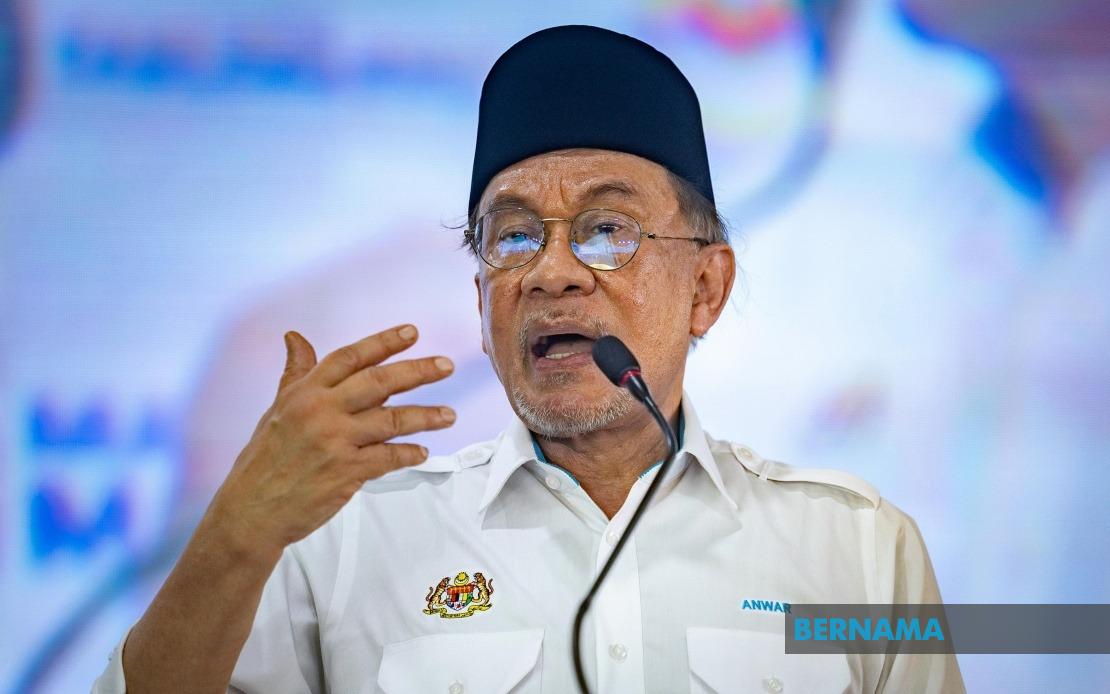
Prime Minister Datuk Seri Anwar Ibrahim has pledged that the MADANI Government will pursue sustained development of religious and pondok schools throughout the country, signaling a strategic commitment to an educational sector that has historically served as a cornerstone of Islamic instruction in Malaysia. Speaking at the 2026 Perak Pondok and Religious Schools Gathering in Ipoh on July 19, the Prime Minister outlined his administration's determination to strengthen institutions that have preserved Islamic traditions while adapting to contemporary needs.
The remarks come at a critical juncture for Malaysia's religious education sector. Pondok schools, which have traditionally functioned as centers for Islamic learning across the nation, have experienced a period of transition as educational landscapes shifted rapidly over recent decades. While these institutions maintained their foundational role in transmitting Islamic knowledge and cultural heritage, they struggled to maintain relevance as they were unable to keep pace with evolving economic and technological demands. This gap left many pondok schools operating at a disadvantage when compared to secular institutions equipped with modern infrastructure and curricula.
Anwar's comments represent a deliberate pivot toward modernizing religious education without abandoning its core mission. The Prime Minister expressed appreciation for the dedication of religious teachers, pondok school administrators, and tok guru who have worked to preserve classical Islamic texts and theological traditions while simultaneously demonstrating willingness to embrace new fields of knowledge. This dual commitment—honoring heritage while engaging with innovation—represents the philosophical underpinning of the government's approach to the sector.
Central to the government's strategy is the integration of technology into religious school curricula. The Prime Minister specifically highlighted cooperation with Malaysia Digital Economy Corporation (MDEC) and the Implementation Coordination Unit (ICU) under the Prime Minister's Department, both of which have been instrumental in facilitating access to computer technology and artificial intelligence education within these schools. This collaboration signals recognition that Islamic education institutions cannot remain isolated from the digital transformation reshaping global economies.
The push to incorporate AI and digital literacy into pondok school programs carries significant implications for Malaysia's broader workforce development goals. By embedding technological competency within religiously-grounded institutions, the government creates pathways for students from these schools to participate more fully in the digital economy. This approach acknowledges that religious and secular education need not exist in tension, and that devout Muslims equipped with modern skills will strengthen both the economy and society.
Anwar's comments reflected his characteristic emphasis on inclusion and national cohesion. The Prime Minister cited his conversation with Sheikh Wazir Che Awang Al-Makki, a respected religious scholar from Kelantan, as evidence of the administration's genuine engagement with religious education stakeholders. This personal connection underscores that government policy in this domain emerges from consultation with influential voices within the Islamic education community rather than top-down imposition.
The government's commitment carries a conditional qualifier tied to macroeconomic stability. Anwar stated that pondok school enhancement would continue provided the nation maintains health and economic vitality. This phrasing reflects the reality that educational investment requires fiscal resources and that government ability to fund expansion depends on revenue generation. For regional observers, this conditional promise also signals confidence in Malaysia's economic trajectory, even as the country navigates global uncertainties.
The gathering itself underscored the political importance attached to this agenda. Attendees included Perak Menteri Besar Datuk Seri Saarani Mohamad, Minister in the Prime Minister's Department (Religious Affairs) Dr Zulkifli Hasan, and Chief Secretary to the Government Tan Sri Shamsul Azri Abu Bakar. The presence of such senior officials demonstrates that support for pondok schools has been elevated to a matter of central government concern rather than remaining confined to state-level administration.
For Malaysian policymakers, the initiative addresses a long-standing challenge in creating educational equity. Pondok schools serve predominantly Muslim constituencies and historically have drawn students from less affluent backgrounds. By directing government support toward these institutions—particularly technology integration initiatives—the administration works to narrow the digital divide and ensure that religious school graduates can compete in contemporary labor markets. This equity dimension strengthens the policy's social legitimacy beyond religious constituencies.
The emphasis on combining classical Islamic education with modern technical training also responds to concerns that have periodically surfaced about extremism and radicalization within poorly-resourced religious schools. By investing in quality teaching and contemporary curricula, the government pursues a preventive approach grounded in educational improvement rather than surveillance or restriction. This strategy reflects confidence that well-taught, economically integrated Islamic education contributes to stability.
Regionally, Malaysia's approach to religious education modernization may offer lessons for other Southeast Asian nations with significant Muslim populations. The model presented by Anwar—preserving spiritual and textual heritage while incorporating technology—provides an alternative to both complete secularization of education and isolation of religious schools from contemporary knowledge. This middle path appeals particularly to communities seeking to maintain cultural identity while equipping youth for global participation.
Looking forward, the success of this initiative will depend on adequate resource allocation and sustained political support across electoral cycles. Pondok schools will require investment in teacher training, technological infrastructure, and curriculum development. The government's pledge, while politically significant, now must translate into budgetary commitments and implementation mechanisms that reach individual schools in Perak, Kelantan, Terengganu, and beyond.

