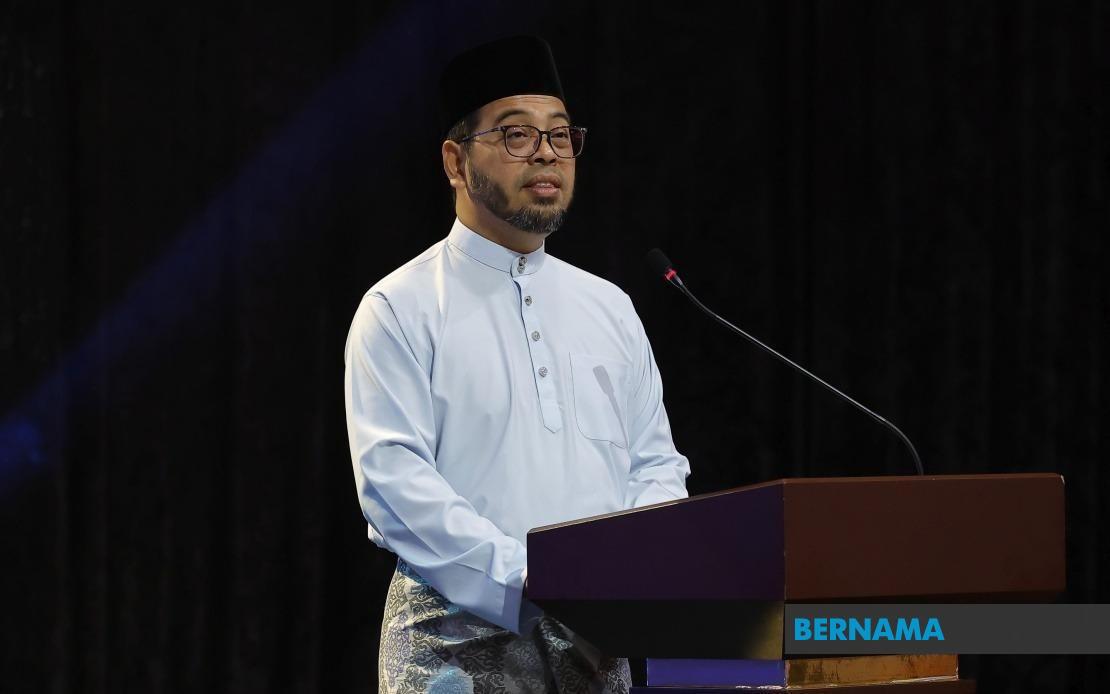
The MADANI Government has reiterated its dedication to developing tahfiz education as an integral component of Malaysia's broader educational ecosystem, with Religious Affairs Minister Dr Zulkifli Hasan stressing that Islamic memorisation programmes must evolve beyond traditional boundaries. Speaking at Darul Quran JAKIM's 34th convocation ceremony in Kuala Lumpur on July 4, Zulkifli articulated a vision wherein tahfiz institutions operate in parallel with conventional schools, each reinforcing the other's contribution to national human capital development.
The minister's remarks came as Darul Quran JAKIM marked its Diamond Jubilee, commemorating six decades of educational work since the institution's founding in 1966. This milestone provided the government official with an opportunity to reassess the role of tahfiz education within Malaysia's broader development agenda. Rather than viewing religious education as a standalone track, Zulkifli framed tahfiz as a foundational pathway capable of producing graduates equipped with technical expertise, ethical grounding, and professional qualifications necessary for meaningful participation across multiple sectors of the economy and public service.
Central to the government's articulated philosophy is the rejection of a narrow interpretation of tahfiz education's purpose. Zulkifli emphasised that producing hafiz—individuals who have memorised the Quran—represents merely one dimension of institutional objectives. Instead, the emphasis has shifted toward cultivating well-rounded individuals whose religious knowledge combines with intellectual rigour, moral fortitude, and practical competencies. This broader framework acknowledges growing expectations that religious education graduates should possess qualifications and skills comparable to their peers from secular institutions, thereby eliminating artificial hierarchies between educational pathways.
Darul Quran JAKIM's track record underscores the institution's significance within Malaysia's educational landscape. Over its sixty-year operational history, the institution has graduated 12,633 huffaz who have dispersed throughout the nation's professional sectors. These alumni are not confined to religious roles; the government data indicates substantial representation in education, Islamic judicial administration, Islamic evangelism, academic research, public administration, and various commercial professions. This diversification of career trajectories demonstrates that tahfiz education has already begun the transition toward producing multi-skilled graduates capable of functioning across traditional and non-traditional employment categories.
The Diamond Jubilee convocation ceremony itself reflected this institutional evolution. Seven hundred graduates received credentials across four distinct qualification tiers, signalling a tiered, differentiated approach to tahfiz education delivery. Thirty-seven graduates obtained bachelor's degrees through a collaborative arrangement with Universiti Sains Islam Malaysia, indicating deepening partnerships between specialist Islamic institutions and mainstream universities. A substantially larger cohort—454 individuals—completed diploma qualifications in Quranic studies and recitation methodologies, positioning graduates for immediate entry into teaching or religious guidance roles. Additional graduates received tertiary-level tahfiz certification and foundational certificates, ensuring that institutions serve students across varying academic preparation levels and commitment timeframes.
The government's positioning of tahfiz institutions as components of a holistic educational framework carries significant implications for Southeast Asian Muslim-majority and Muslim-minority regions. Malaysia's approach demonstrates that Islamic religious education need not remain isolated from broader development objectives or secular employment markets. By emphasising professional certification, university partnerships, and cross-sectoral career pathways, the MADANI Government signals that religious learning can coexist productively with economic modernisation and social pluralism. This model may carry particular relevance for regional jurisdictions grappling with balancing religious identity with contemporary educational standards.
Zulkifli's comments regarding the symbolic meaning of the Diamond Jubilee reveal governmental thinking about institutional renewal. Rather than celebrating six decades as a terminus of achievement, the minister framed this anniversary as a launching point for intensified excellence across the subsequent sixty years. This forward-looking rhetoric suggests the government intends tahfiz institutions to undergo substantial transformation rather than perpetuate established methodologies. Such transformation likely encompasses curriculum development, faculty professional development, physical infrastructure enhancement, and strategic alignment with national skills development initiatives.
The government's commitment to strengthening tahfiz education occurs within a broader context of Malaysia's educational modernisation. Policymakers increasingly recognise that sustainable human capital development requires mobilising all educational institutions and traditions within the national system. Religious education institutions possess distinctive advantages—established networks, community trust, and specialised pedagogical knowledge—that can be harnessed for national development purposes when properly integrated with mainstream educational structures. By explicitly endorsing tahfiz sector strengthening, the MADANI Government signals that religious and secular educational streams possess complementary rather than contradictory roles.
The institutional autonomy and resource allocation decisions facing tahfiz institutions will ultimately determine whether governmental rhetorical commitments translate into substantive support. Beyond convocation ceremonies and ministerial endorsements, meaningful strengthening requires sustained budgetary allocation, governance reform enabling innovation, and structural incentives encouraging tahfiz graduates to pursue further tertiary education and professional specialisation. The specificity of graduate credential categories suggests government awareness of market differentiation needs, yet implementation capacity remains crucial for determining outcomes.
Looking forward, the MADANI Government's tahfiz education agenda intersects with broader questions about Malaysia's educational trajectory and social cohesion strategy. Successful integration of tahfiz institutions within mainstream educational frameworks could strengthen social bonds by demonstrating respect for diverse educational pathways and cultural traditions. Conversely, inadequate resource commitment or perceived marginalisation could exacerbate perceptions of unequal treatment. The government's verbal commitments therefore carry substantive weight beyond ceremonial contexts, requiring demonstrable follow-through in budgeting, partnership development, and policy implementation to earn institutional and community confidence.

