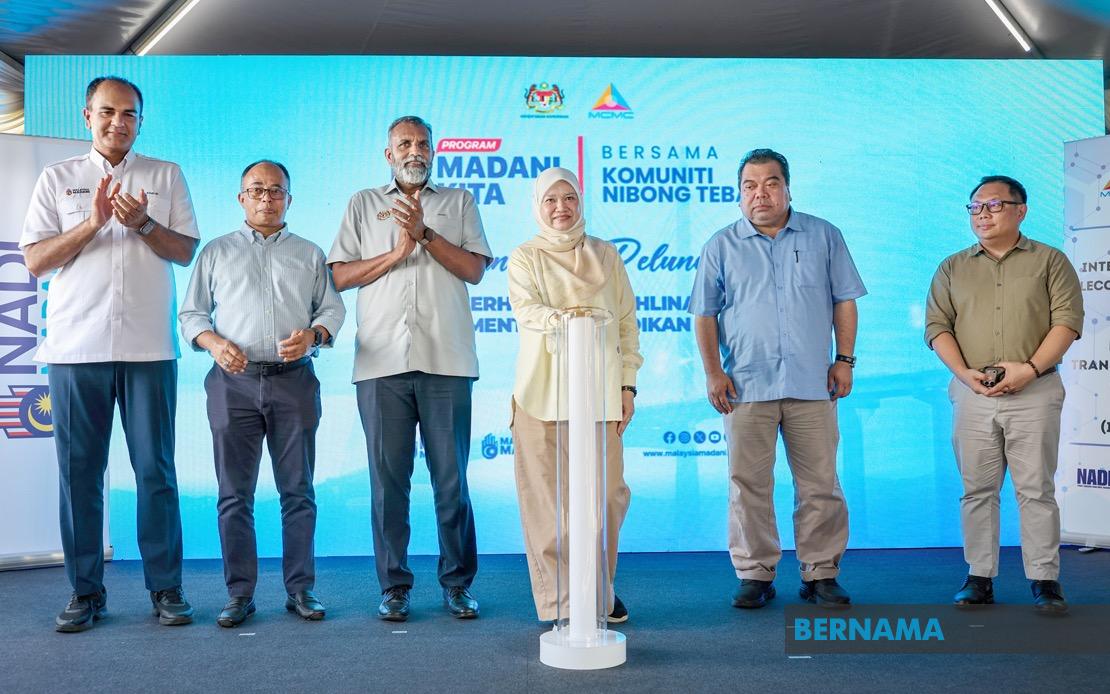
The Malaysian government is taking a significant step toward improving how citizens interact with public institutions through an expanding series of direct engagement initiatives. The Communications Ministry has now conducted 41 MADANI Kita programmes, which bring together multiple ministries and government agencies in a coordinated effort to bring services directly to communities across the country. The strategy represents a shift away from traditional top-down communication toward a model where officials meet the public face-to-face, answer questions in real time, and demonstrate tangible benefits of government policies.
Deputy Secretary-General at the Communications Ministry Mano Verabathran outlined the core philosophy behind these programmes during the launch of the Nibong Tebal iteration, which was officially opened by Education Minister and Nibong Tebal Member of Parliament Fadhlina Sidek. The initiative operates through a collaborative framework involving the Community Communications Department, the Malaysian Information Department, and the Malaysian Communications and Multimedia Commission, all coordinated through the National Information Dissemination Centre. This inter-agency approach ensures that citizens can access information and services from multiple government bodies in a single venue, reducing the need for people to navigate different offices and bureaucratic channels.
The traditional challenge facing government communication in Malaysia—and indeed across Southeast Asia—has always been the gap between policy formulation and public understanding. Citizens often receive information about government initiatives through one-way channels such as press releases or television announcements, leaving them with limited opportunity to seek clarification or provide feedback. The MADANI Kita programmes directly address this disconnect by creating spaces where the public can engage substantively with government representatives, ask questions without intermediaries, and voice concerns about policies that affect their daily lives. This two-way dialogue is essential for building public trust and ensuring that government efforts actually resonate with community needs.
Beyond basic information dissemination, these programmes incorporate a diverse range of activities designed to appeal to different segments of the population. Educational components help citizens understand government initiatives more comprehensively, while skills development workshops provide practical training that extends the programmes' value beyond mere awareness-raising. Community wellbeing activities strengthen social cohesion, and technology-focused initiatives position Malaysia as a digitally engaged nation while building digital literacy among participants. This multifaceted approach recognizes that modern citizens expect government engagement to be informative, interactive, and beneficial in concrete ways.
A particularly notable component of the MADANI Kita programmes targets Malaysia's youth population through activities that go beyond traditional civic engagement methods. The inclusion of esports competitions and talent development opportunities reflects recognition that younger Malaysians engage with their communities and authorities through contemporary cultural channels. By framing competition, team-building, and skill development within a government engagement context, these programmes make civic participation feel relevant and exciting rather than obligatory or abstract. This strategy is particularly important for nations seeking to maintain social cohesion and democratic participation among younger generations who might otherwise feel disconnected from formal institutions.
The scale of these initiatives demonstrates significant government investment in public outreach. The MADANI Kita Permatang Pauh programme, held in conjunction with the Penang International Halal Expo 2026 from July 24 to 26, attracted more than 17,000 participants. This figure indicates substantial public interest in direct government engagement when activities are conveniently located and aligned with existing community events. By strategically placing MADANI Kita programmes alongside major public gatherings, the government maximizes reach and demonstrates how multiple policy objectives—such as promoting Malaysia's halal industry while improving civic engagement—can be achieved simultaneously.
For Malaysian businesses and civil society organizations, these programmes carry important implications. They signal government commitment to transparency and accessibility, factors that contribute to a healthier business environment and stronger public-private collaboration. When citizens understand government policies more clearly and have channels to provide input, the result is often more effective policy implementation and reduced friction between public institutions and the communities they serve. This is particularly valuable in a diverse nation like Malaysia, where ensuring that government services are responsive to multiple community perspectives remains an ongoing challenge.
The programme structure also addresses a specific challenge facing Southeast Asian governments: the digital divide and information asymmetry. While digital communication channels are increasingly important, face-to-face engagement remains critical for citizens with limited digital access or literacy. By maintaining robust offline engagement mechanisms through MADANI Kita programmes, the government ensures that policy information reaches across socioeconomic boundaries. This inclusive approach is essential for legitimate governance in a region where digital infrastructure and access vary considerably across urban and rural areas.
Looking forward, the expansion of MADANI Kita programmes represents a learning opportunity for other Malaysian government agencies and potentially for neighboring countries in the ASEAN region. The data generated from these 41 programmes—information about citizen concerns, misconceptions about policies, and community priorities—provides valuable feedback for refining future government initiatives. If properly analyzed and acted upon, this ground-level intelligence can make subsequent policy formulation more responsive to actual community needs rather than bureaucratic assumptions. This feedback loop transforms public engagement from a communication exercise into a mechanism for improving governance itself.
The success of these programmes ultimately depends on consistent implementation across all 41 venues and sustained commitment to acting on public feedback. Malaysians and observers across Southeast Asia will be watching to see whether government agencies genuinely incorporate citizen input into policy adjustments, or whether MADANI Kita programmes become primarily ceremonial events that create an appearance of engagement without substantive change. The initiatives represent an encouraging step toward more open government, but their true impact will be measured by whether ordinary Malaysians see tangible improvements in service delivery and policy responsiveness in the months and years following their participation.

