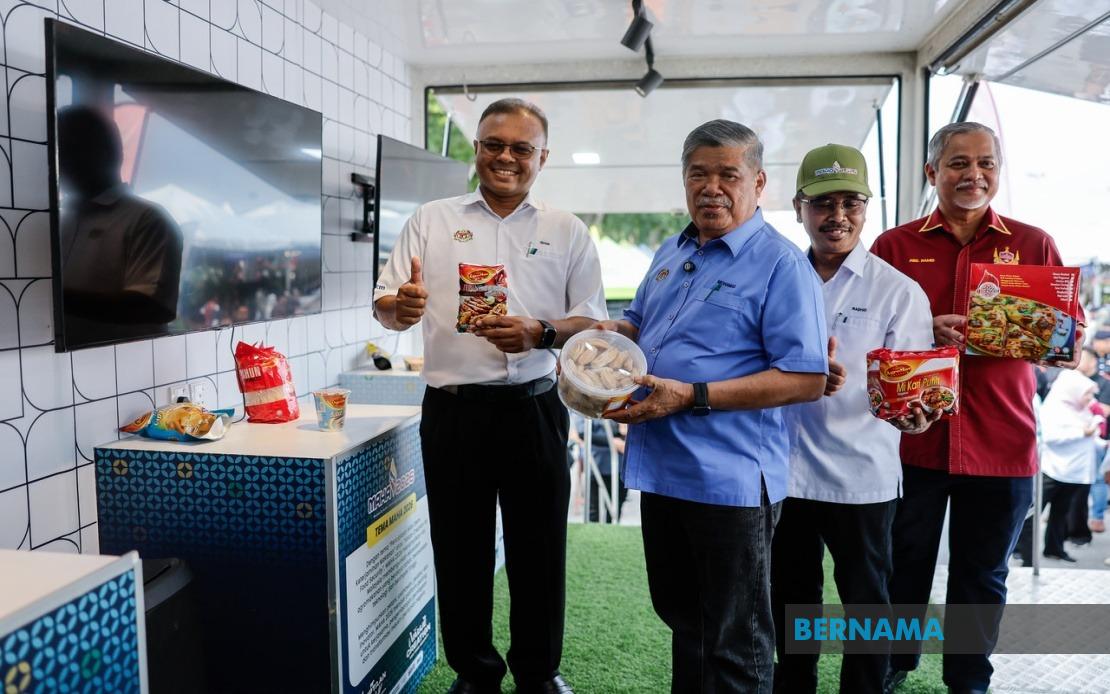
Malaysia's premier biennial agriculture showcase, the Malaysia Agriculture, Horticulture and Agrotourism Show (MAHA) 2026, is set to mark a significant turning point by welcoming foreign exhibitors onto its platform for the inaugural time. This expansion reflects both the maturation of Malaysia's agricultural sector and the interconnected nature of global food systems, according to Agriculture and Food Security Minister Datuk Seri Mohamad Sabu.
The list of confirmed international participants reads like a snapshot of global agricultural powerhouses. Brazil, China, the United States, Japan, South Korea, Hungary, and China's Guangxi region have all pledged their involvement in the event, with Uzbekistan also signalling intent to participate. Additional countries remain in discussions about their attendance, suggesting the final roster may expand further before the show opens its doors. This geographical diversity underscores MAHA's evolution from a domestic showcase into a regional and international agricultural forum.
The inclusion of foreign exhibitors carries profound implications for Malaysia's farming community and agribusiness sector. Agriculture and Food Security Ministry secretary-general Datuk Isham Ishak highlighted that the presence of international participants would facilitate knowledge transfer and technology uptake among local operators. Farmers, agribusiness entrepreneurs, and agricultural professionals will gain direct exposure to cutting-edge farming practices, equipment innovations, and cultivation methodologies developed in some of the world's most advanced agricultural economies. This exchange mechanism addresses a persistent challenge in developing agricultural sectors: bridging the gap between local practice and global best practices.
Minister Mohamad articulated the philosophical foundation underlying this international cooperation, emphasising that food security transcends national boundaries. His observation that no single nation has entirely solved its food challenges reflects the reality that agricultural systems remain vulnerable to climatic shocks, supply chain disruptions, and unforeseen crises. The pandemic starkly illustrated this interdependence, as disruptions in one region cascaded into food shortages elsewhere. By hosting and engaging with international agricultural stakeholders, Malaysia positions itself within networks of mutual support and collaborative problem-solving that strengthen regional and global food resilience.
Beyond knowledge exchange, the international exhibitor presence creates tangible commercial opportunities. The ministry plans to orchestrate structured business matching sessions during MAHA 2026, facilitating direct negotiations between local and foreign participants. These sessions will enable Malaysian farmers and agribusinesses to explore export opportunities by marketing their products to international buyers, while simultaneously gaining access to imported agricultural inputs, technologies, and finished goods that could enhance their competitive positioning. For smallholder farmers particularly, such direct buyer-seller engagement can circumvent traditional middlemen and potentially improve profit margins.
The timing of this initiative aligns with broader Malaysian policy priorities. The country has been strengthening its food security apparatus through both legislative reform and technological innovation. The simultaneous launch of the Surveillance and Intervention Supply Demand Agrofood system (SISDA) during Mohamad's visit represents a complementary development. This data-driven platform leverages artificial intelligence, machine learning algorithms, and comprehensive analytics to monitor agricultural supply, demand fluctuations, and price movements in real time.
SISDA's capabilities address critical vulnerabilities in Malaysia's food supply chain. By generating early warning signals when supply-demand imbalances emerge or price volatility threatens affordability, the system enables government intervention before crises develop. The platform can identify emerging bottlenecks in distribution networks, anticipate seasonal price pressures, and provide policymakers with evidence for calibrated market interventions. This technological approach represents a shift from reactive crisis management toward proactive supply chain governance, a model particularly valuable given Malaysia's dependence on food imports for staple commodities.
For Malaysian visitors attending MAHA 2026, the expanded international dimension transforms the event from a primarily domestic procurement and knowledge platform into an exposure opportunity. Consumers, retailers, and food service operators will encounter foreign agricultural products and innovations, potentially discovering alternative suppliers or higher-value offerings that enhance market competition and consumer choice. This exposure effect can create beneficial competitive pressure on local producers to improve quality, reduce prices, and innovate, ultimately benefiting end consumers through greater product variety and better value propositions.
The strategic positioning of Malaysia as an agricultural destination and knowledge hub carries broader implications for Southeast Asia. As the region grapples with climate change impacts on crop yields, demographic pressures driving food demand, and the technological disruption of traditional farming models, events like MAHA serve as connective tissue between national agricultural systems and global innovation networks. Malaysian participation in these exchanges can inform regional agricultural policy discussions and support the Association of Southeast Asian Nations' broader food security agenda.
For Malaysian agribusinesses with export aspirations, MAHA 2026 presents a lower-risk pathway to international market engagement. Rather than undertaking costly independent market research and overseas trade missions, participants can interact with potential buyers, logistics partners, and technology providers within a curated environment. This reduces barriers to internationalisation, particularly for smaller enterprises lacking dedicated export departments. The business matching infrastructure essentially democratises access to international commercial networks.
The minister's confidence that the event will proceed smoothly despite ongoing planning reflects institutional readiness. The Central Zone's Road to MAHA 2026 programme represents systematic preparation across Malaysia's regions, ensuring that both urban and rural participants can benefit equally from the expanded showcase. This inclusive approach aligns with agricultural development priorities that emphasise bringing modern farming knowledge and market opportunities to peripheral and smallholder farming communities.
Looking forward, the foreign participation in MAHA 2026 may establish a template for future editions, transforming the show into an annual or regular international engagement platform. Such permanence would strengthen Malaysia's standing within global agricultural networks, potentially attracting international investment in local agricultural innovation hubs and value-addition enterprises. For a nation with significant agricultural heritage seeking to modernise and globalise its farming sector, MAHA 2026 represents more than a trade show—it signals Malaysia's strategic positioning within the emerging global agricultural knowledge economy.