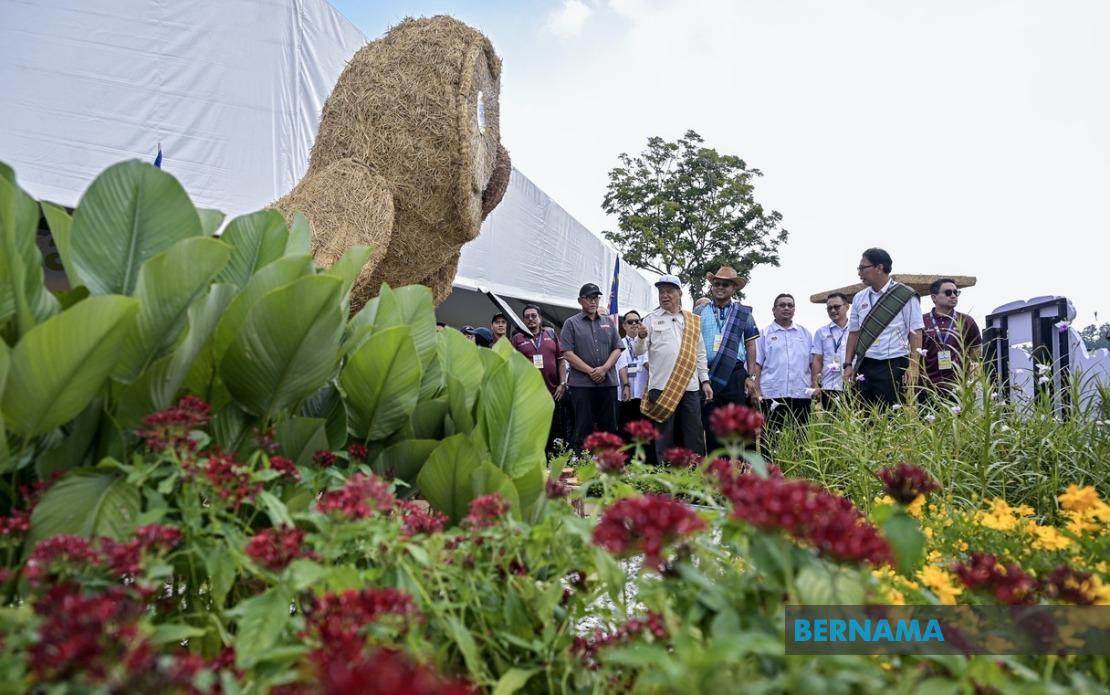
The Malaysia Agriculture, Horticulture and Agrotourism Exhibition (MAHA) 2026 is tracking ahead of expectations after drawing 1.8 million visitors and generating nearly RM6 million in sales during its opening weekend at the Malaysia Agro Exposition Park Serdang (MAEPS). Agriculture and Food Security Minister Datuk Seri Mohamad Sabu disclosed the figures during a visit to launch the Laman Padi MAHA 2026 pavilion, signalling robust public interest in the biennial showcase of Malaysia's agricultural sector.
The foot traffic has been substantial enough to strain local transportation infrastructure, with 184,000 vehicles recorded entering and exiting the exhibition grounds over the three-day period. This volume of movement underscores not only the draw of the exhibition itself but also reflects broader consumer appetite for agricultural products, farm inputs, and rural tourism experiences among Malaysian households. The congestion, while challenging for attendees, demonstrates the event's capacity to mobilize a significant portion of the national population within a short timeframe.
Organizers have set an ambitious sales target of at least RM58 million for the duration of the nine-day exhibition, which runs from August 28 through September 6. If the opening trajectory holds, the event appears well-positioned to meet or exceed this goal. Agricultural inputs such as crop seeds constitute a meaningful portion of expected purchases, reflecting the exhibition's dual role as both a consumer-facing showcase and a commercial platform for agricultural suppliers and technology providers seeking to reach farming communities across the country.
The strong opening performance owes partly to programming strategies designed to broaden appeal beyond core agricultural audiences. MAHA Merdeka, a special event held during the exhibition's opening days, featured fireworks displays and drone shows coordinated with National Day celebrations on August 31. This fusion of patriotic commemoration with agricultural promotion served to attract families and casual visitors who might not otherwise prioritize an agricultural fair, thereby expanding the overall visitor demographic and generating spillover commercial activity.
Operational challenges have emerged proportional to the scale of attendance. Minister Mohamad acknowledged extensive queuing at state pavilions, where visitors have congregated to explore regional agricultural offerings and procurement opportunities. The intense heat during peak visitation hours has compounded visitor discomfort, prompting management directives to expedite crowd movement and enhance transportation logistics. These logistical constraints, while temporary, highlight the administrative complexity of hosting large-scale public events in Malaysia's tropical climate.
To manage transportation pressures, exhibition authorities have expanded shuttle service capacity and implemented daily coordination meetings to address emerging complaints and identify real-time solutions. The responsive approach reflects a commitment to maintaining visitor satisfaction despite unexpected operational friction. The relevant committee structure indicates recognition that events of this magnitude require continuous adjustment rather than static planning, allowing organizers to deploy resources dynamically across the nine-day period.
The exhibition features approximately 2,000 exhibitors representing diverse segments of the agricultural value chain, from equipment suppliers and seed producers to agrotourism operators and food processors. This breadth of participation positions MAHA as a convergence point for the entire sector, facilitating business-to-business networking alongside consumer transactions. For smallholder farmers and agricultural entrepreneurs, the exhibition provides visibility and direct market access that might otherwise be inaccessible outside of specialized trade channels.
The four-million-visitor target set for the complete exhibition period represents confidence in sustained momentum beyond the opening weekend. Achieving this figure would place MAHA 2026 among Malaysia's largest public events and would validate the exhibition's strategic importance within the nation's agricultural promotion framework. Success at this scale carries implications for rural economic activity, as purchases of seeds, tools, and advisory services filter through to farming communities and contribute to agricultural productivity in the coming growing seasons.
For Malaysian policymakers, the strong attendance validates continued public investment in agricultural education, promotion, and market development. The exhibition serves multiple policy objectives simultaneously: supporting farmer incomes through direct sales channels, showcasing technological advancement in the sector, and reinforcing agriculture's cultural and economic significance to Malaysian identity. The ministerial involvement and high-level attention underscore official recognition that agriculture remains strategically important despite the nation's industrial development.
The event also carries regional significance, as MAHA draws international visitors and exhibitors, positioning Malaysia as a hub for agricultural innovation in Southeast Asia. The exhibition's scale and organization enhance the country's standing within ASEAN agricultural circles and signal openness to technology transfer and knowledge exchange with trading partners. For Malaysian agricultural exports and services, MAHA provides a platform to demonstrate competitiveness and quality standards to international audiences.
Looking forward, the opening-weekend performance has established momentum that organizers will work to sustain through the final week of the exhibition. Lessons from the first three days—particularly regarding transportation management and crowd flow optimization—will likely inform adjustments to visitor experience design. Feedback mechanisms put in place by the coordinating committee will capture attendee insights for future iterations of this important national event.

