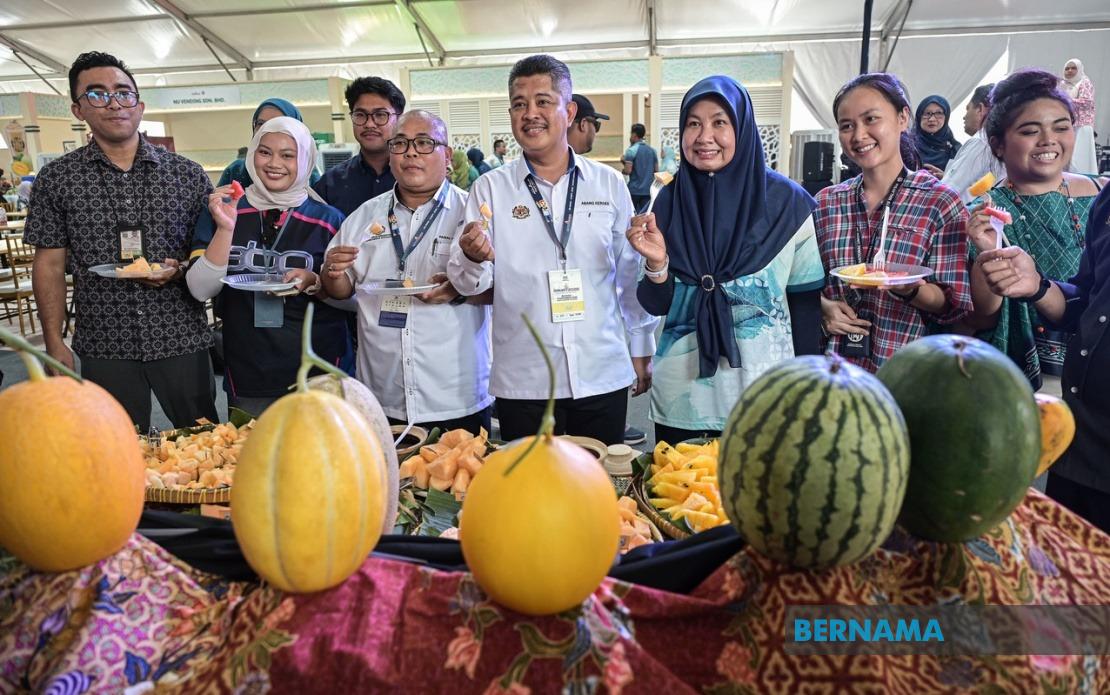
Malaysia's horticultural sector is preparing to showcase a significant advancement as the country's agricultural authorities introduce a newly developed melon variety at the opening of MAHA 2026 this week. The fruit, which will serve as the official symbolic icon for this edition of the Malaysia Agriculture, Horticulture and Agrotourism Exhibition, represents the culmination of a three-year research initiative spearheaded by the Federal Agricultural Marketing Authority (FAMA) in partnership with local farming entrepreneurs. Minister of Agriculture and Food Security Datuk Seri Mohamad Sabu will preside over the formal launch and reveal the variety's official name at the event's opening ceremony.
FAMA chairman Abang Ahmad Kerdee Abang Masagus emphasised the symbolic importance of introducing a signature fruit for MAHA 2026, noting that such an icon strengthens the exhibition's identity and reinforces the connection between the event and the nation's agricultural heritage. The new melon variety represents far more than merely a product launch—it embodies the collaborative efforts between government agricultural bodies and private sector entrepreneurs working toward innovations that resonate with domestic market dynamics. The selection of a melon as this year's symbolic fruit underscores the continued significance of horticulture within Malaysia's broader agricultural framework and consumer consciousness.
The newly developed variety demonstrates distinctive characteristics engineered specifically for Malaysian consumers and market conditions. Most notably, the melon achieves a Brix sweetness concentration level of 18, substantially exceeding the sweetness profiles of melons currently circulating through domestic retail channels. Beyond taste, the flesh maintains a notably crunchier texture compared to existing varieties, providing a superior eating experience that appeals to quality-conscious buyers. The compact size—approximately 1.3 kilogrammes—reflects a deliberate design choice aligned with contemporary household consumption patterns and the growing preference for smaller, individualised food portions.
The miniature format serves multiple strategic purposes within Malaysia's evolving consumer marketplace. Urban dwellers and younger demographic segments increasingly favour ready-to-eat products that fit modern lifestyles characterised by smaller household units and convenience-oriented purchasing decisions. FAMA director-general Faisal Sulaiman highlighted how three years of systematic market research enabled the authority and its entrepreneurial partners to translate emerging consumer trends into tangible product specifications. The resulting mini-melon addresses a genuine market gap, offering practicality alongside nutritional value—a combination that appeals across different income and age brackets.
Pricing strategy has been carefully calibrated to position the new variety within accessible reach for mainstream Malaysian consumers. At an anticipated market price of approximately RM15 per melon, the offering balances affordability with perceived quality, creating an attractive proposition for household shoppers making weekly produce purchases. This price point reflects consideration for Malaysia's diverse income distribution while maintaining sufficient margins for farming communities and agricultural intermediaries. The combination of enhanced quality, convenient size, and reasonable cost represents a conscious effort to strengthen the domestic value chain rather than simply introducing an exotic premium product.
The aesthetic design of the melon—featuring a decorative netting pattern across its skin—demonstrates attention to visual appeal that influences consumer purchasing behaviour at retail points. This surface characteristic, combined with the fruit's compact dimensions and demonstrated quality metrics, differentiates the new variety from imported competitors and existing domestic offerings. Such product differentiation becomes increasingly crucial as Malaysian consumers gain exposure to international horticultural options through growing cross-border trade and globalised food systems.
FAMA's organisational commitment to this melon launch extends beyond the single variety introduction. Throughout MAHA 2026, which runs across ten days at the Malaysia Agricultural Expo Park Serdang (MAEPS), the authority plans to supply more than 150,000 melon units spanning nearly one hundred local and international varieties. This expansive showcase strategy positions MAHA as a crucial marketplace nexus where farmers, entrepreneurs, wholesalers, and consumers converge around horticultural commerce. The exhibition format provides direct access to production innovations, technological applications, and market opportunities that smaller individual enterprises might struggle to access through conventional distribution channels.
Minggu ini's timing proves particularly significant, as MAHA 2026 unfolds during a period when Malaysian agriculture faces mounting pressures from climate variability, labour constraints, and intensifying regional competition. The introduction of locally-developed melon varieties signals that domestic research capacity and entrepreneurial innovation can generate products competitive with imported alternatives in both quality and market appeal. This narrative extends beyond horticulture into broader questions about Malaysian agricultural competitiveness and food security resilience within the Southeast Asian region.
The collaborative research model employed—combining FAMA's institutional resources with private entrepreneurial expertise—reflects a broader policy orientation toward public-private partnerships within the agricultural sector. Such arrangements distribute development costs while aligning incentives between government objectives around domestic food production and private sector motivations regarding market profitability. For farmers considering adoption of this new variety, FAMA's institutional backing provides assurance regarding market demand, quality standards, and distribution infrastructure support.
Beyond the immediate horticultural implications, this initiative carries significance for Malaysian consumers navigating choices between domestically-produced and imported produce. The new melon variety offers a tangible alternative grounded in local agricultural expertise and adapted specifically to Malaysian conditions and preferences. Consumer acceptance of locally-developed fruits potentially expands market opportunities for domestic growers while reducing reliance on imports for premium horticultural products—outcomes aligned with Malaysia's broader food security and agricultural development objectives.
The ten-day MAHA 2026 programme encompasses more than melon exhibitions, incorporating agrotech displays, state pavilions, farm-direct sales operations, and participation from hundreds of domestic and international agricultural enterprises. This comprehensive platform has evolved into Malaysia's primary biennial opportunity for showcasing agricultural achievements, technological innovation, and modern production methodologies. For regional observers, MAHA increasingly represents a barometer of Malaysian agricultural sector health and technological adaptation capacity amid shifting global food systems.

