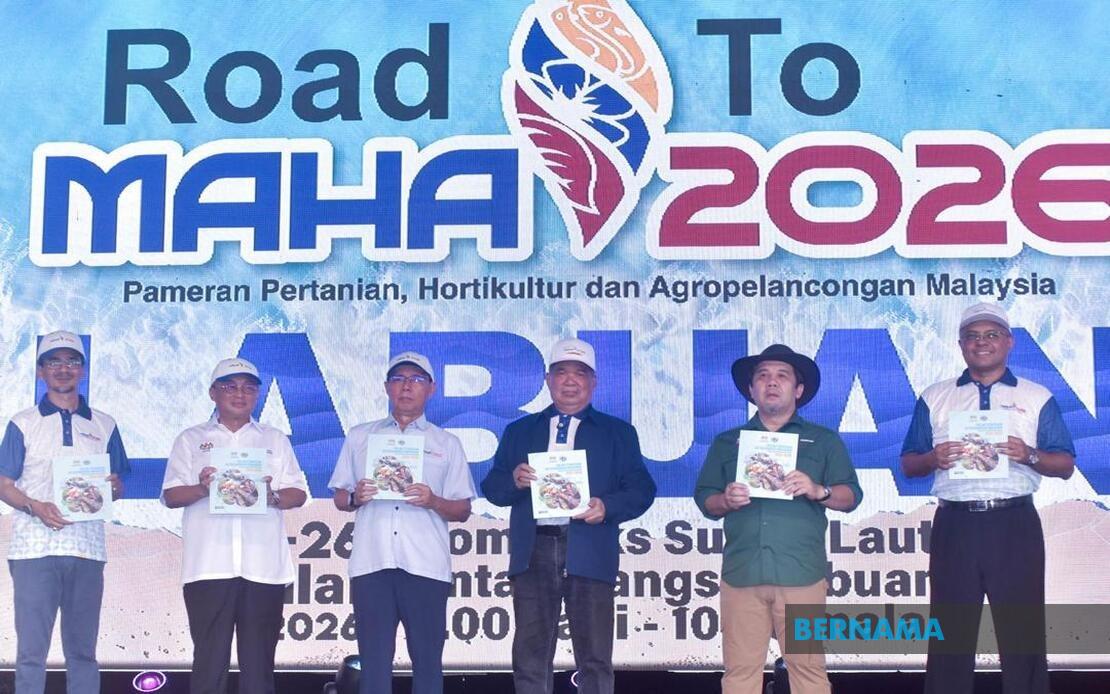
The maiden edition of Road to MAHA Labuan 2026 has outperformed organisers' initial projections, drawing 30,837 visitors during its first two days of operation and generating transactional value approaching RM800,000. This strong performance comes from an event staged by the Ministry of Agriculture and Food Security, the Department of Federal Territories (JWP) and Labuan Corporation (LC) across July 23–26, and signals robust public engagement with agricultural promotion initiatives in Malaysia's duty-free island territory.
The visitor tally exceeded the organisers' baseline expectation of 30,000 people, while the sales figure represents approximately half of the event's RM1.6 million target. Officials attributed the momentum to demonstrable community backing and the participation commitment of entrepreneurs showcasing diverse agro-based offerings. The Department of Federal Territories noted that this early trajectory suggests the event remains on course to achieve its broader commercial objectives before the five-day run concludes.
The exhibitor base comprises 184 agro-entrepreneurs, with 117 originating from Labuan itself and the remainder sourced from Sabah, Sarawak, Johor and Perak. This geographical spread reflects an attempt to build a regional agricultural showcase that brings interstate operators into dialogue with island consumers and business stakeholders. The product range spans conventional agricultural goods, processed food items, livestock offerings and innovation-driven agro-based enterprises, positioning MAHA Labuan as a venue for both established traders and entrepreneurial ventures exploring new market opportunities.
Livestock exhibitions have emerged as particularly compelling attractions for visitors. Sita Farm has supplied cattle and goat displays that have garnered substantial interest, suggesting that experiential components and tangible product demonstrations carry significant drawing power alongside traditional vendor stalls. This emphasis on live exhibitions differentiates MAHA Labuan from purely transactional trade shows and may explain the consistent visitor flow recorded during the opening period.
Beyond direct merchandise sales, the JWP recognised that MAHA Labuan generates substantial indirect economic stimulus across Labuan's service economy. The department estimated that roughly 20 per cent of visitor spending flows to accommodation providers, transport operators, food establishments and allied commercial enterprises within local supply networks. This multiplier effect—whereby incoming customers distribute spending across multiple sectors rather than concentrating it solely at the event venue—amplifies the economic footprint and demonstrates why regional administrations prioritise agricultural showcases as economic diversification tools.
For Malaysian policymakers, MAHA Labuan exemplifies a strategic approach to reinforcing food security and agro-entrepreneurship outside peninsular centres. Labuan's geographic positioning and duty-free status offer logistical advantages for regional agricultural commerce, yet the island historically struggled to translate these structural advantages into consistent economic dynamism. By hosting signature agricultural events, the Federal Territory attempts to position itself as a credible nexus for cross-border agro-trade and knowledge exchange, potentially attracting operators from neighbouring Brunei and Indonesian jurisdictions.
The overwhelming response also underscores evolving Malaysian consumer and business interest in agricultural value chains and food production transparency. Public enthusiasm for visiting exhibitions, observing livestock, and engaging with producers reflects broader regional concerns about food security, supply-chain reliability and the viability of local farming as an alternative to import dependence. In this context, MAHA Labuan functions not merely as a commercial platform but as a forum where consumers and entrepreneurs negotiate shared priorities around sustainable food systems.
The event programming extends beyond static exhibitions to encompass demonstrations and agricultural-focused activities designed to educate visitors and foster entrepreneurial networks. This pedagogical dimension differentiates MAHA Labuan from conventional trade expos and suggests organisers recognise that building sectoral momentum requires both transactional opportunity and capability development. Such programming may particularly appeal to younger entrepreneurs and students exploring agribusiness careers.
The five-day schedule running through the weekend positions MAHA Labuan to capitalise on weekend leisure travel patterns and family participation, potentially sustaining momentum through the closing period. The inaugural nature of the event also carries reputational implications; strong early performance establishes a foundation for positioning MAHA Labuan as an annual fixture on the regional agricultural calendar, potentially attracting larger international delegations and more geographically dispersed participants in future iterations.
For Labuan Corporation and the Federal Territory administration, this preliminary success validates investment in place-based economic positioning and suggests that targeted sectoral events can generate both immediate revenue and longer-term destination branding benefits. The challenge ahead involves sustaining organisational capacity, securing ongoing stakeholder commitment, and iteratively enhancing the offering to prevent visitor and exhibitor fatigue in subsequent years. Should MAHA Labuan achieve its full-event targets, it may serve as a blueprint for deploying agricultural events as economic development instruments across other Malaysian federal and state jurisdictions seeking alternatives to conventional industrial recruitment strategies.

