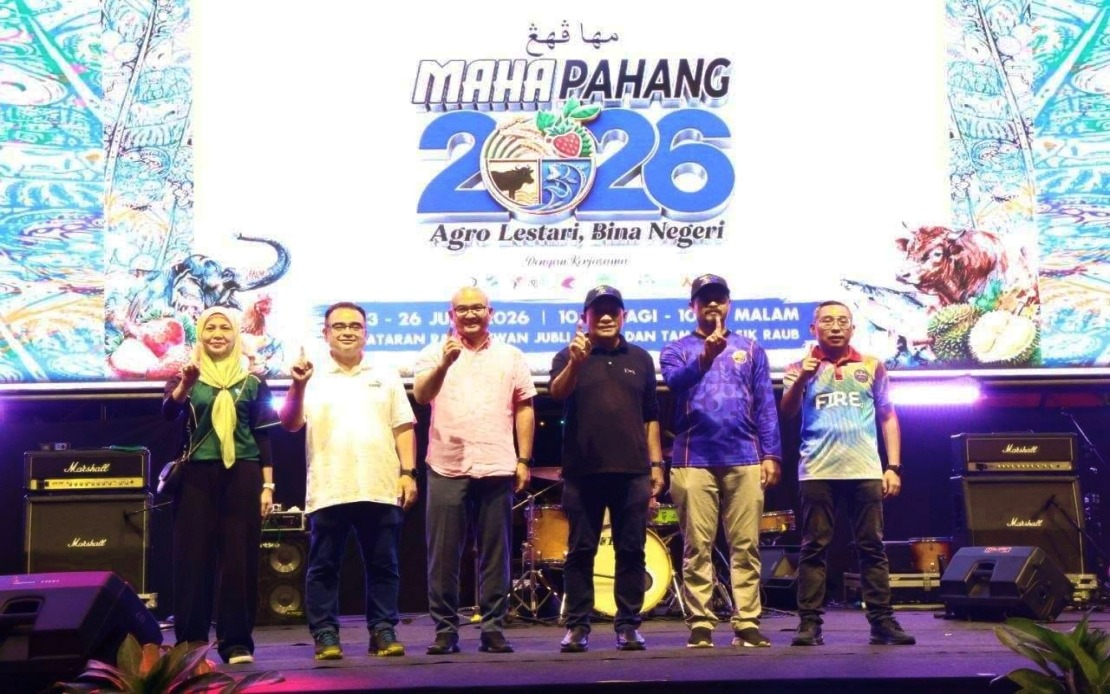
The agriculture and agri-food sector in Pahang has demonstrated considerable commercial vitality following the conclusion of MAHA Pahang 2026, an agricultural showcase that far surpassed organizers' expectations during its four-day run at Dataran Raub in Kuantan. The event welcomed 212,374 visitors, more than double the initial projection of 100,000 attendees, signalling strong public appetite for agricultural products and farm-based initiatives from the state's farmers and entrepreneurs. Beyond visitor numbers, the commercial performance proved equally impressive, with total sales reaching RM2.33 million—79 per cent above the conservative target of RM1.3 million.
The entrepreneurial participation also exceeded forecasts substantially, according to Datuk Seri Mohd Soffi Abd Razak, chairman of Pahang's Agriculture, Agro-based Industry, Biotechnology and Education Committee. A total of 220 entrepreneurs participated in the event, compared to the original estimate of 100 businesses, reflecting widening interest among the farming community and value-added processors in accessing the broader consumer market. This expansion in vendor participation underscores the growing confidence among agricultural producers that platforms like MAHA provide genuine commercial opportunities rather than mere promotional exercises. The doubling of expected participant numbers suggests that word-of-mouth success from previous similar events has encouraged more farmers, livestock breeders, fishermen and agri-processors to invest in market-facing activities.
For Pahang's state government, these results validate the strategic positioning of agriculture as a cornerstone economic pillar for the state's future development. In recent years, Malaysian states have competed vigorously to develop their agricultural sectors beyond subsistence farming toward commercial agribusiness models that generate export income and employment. Pahang's natural advantages—including arable land, favourable climate conditions, and established farming communities—have positioned it well within this competitive landscape. The MAHA Pahang 2026 outcome demonstrates that when the state government invests in proper infrastructure and marketing platforms, farmers respond with enthusiasm and the consuming public engages readily with locally-produced goods.
The scale of visitor turnout at Dataran Raub carries particular significance for the broader Malaysian agricultural narrative. Public participation in agricultural showcases, exhibitions, and farmers' markets has grown markedly across Southeast Asia in recent years, driven by rising consumer interest in food provenance, freshness, and supporting local producers. Pahang's ability to attract over 210,000 visitors to a four-day event reflects this regional trend and suggests that Malaysian consumers remain willing to patronise domestic agricultural products when presented with convenient, organised access to these goods. This finding contradicts periodic narratives suggesting that Malaysian consumers predominantly favour imported or mass-produced alternatives.
The financial outcome—RM2.33 million in direct sales—provides concrete evidence of transaction value generated through such platforms. For smallholder farmers and micro-enterprises operating within the agricultural sector, this represents tangible market access that might otherwise require individual navigation of complex supply chains, distribution networks, or retail relationships. When aggregated across multiple such events nationwide, these sales volumes constitute meaningful income opportunities for rural communities and farming families. The economic multiplier effects extend beyond the farmers themselves to transporters, packaging suppliers, and other service providers within the agricultural value chain.
Mohd Soffi's acknowledgement of contributions from multiple stakeholder groups—government departments, security personnel, farmers, livestock breeders, fishermen, and entrepreneurs—highlights the collaborative nature of successful agricultural promotion efforts. Such comprehensive coordination reflects governance approaches that recognise agriculture as a cross-sectoral concern requiring inputs from health, security, infrastructure, and education agencies alongside traditional agricultural departments. This holistic approach, increasingly common among state administrations managing rural economic development, tends to produce better outcomes than siloed governmental structures.
The results also carry implications for Malaysia's broader economic diversification agenda. While manufacturing and services sectors typically dominate policy discussion in Kuala Lumpur and other major urban centres, agricultural and agri-food activities remain economically significant in rural states like Pahang. MAHA Pahang 2026 provides empirical evidence that rural populations possess considerable purchasing power and commercial dynamism when given appropriate platforms and policy support. This evidence base should inform national agricultural policy decisions and resource allocation discussions at federal level.
For other Malaysian states, Pahang's experience offers instructive lessons regarding the design and execution of agricultural promotional events. The substantial visitor and participant overperformance relative to initial targets suggests that conservative projections may underestimate actual market demand in the agricultural sector. States considering similar initiatives might adjust their expectations upward and ensure adequate infrastructure, parking, security, and logistics capacity to accommodate larger crowds. The high sales outcome relative to visitor numbers indicates healthy conversion rates—suggesting that attendees arrive with genuine purchasing intent rather than merely browsing.
Looking forward, the momentum demonstrated by MAHA Pahang 2026 creates a foundation for scaling similar initiatives and exploring enhanced collaboration between state governments and agricultural stakeholders. Repeated successful events build brand recognition and consumer habit, gradually consolidating market relationships that transcend individual events. For Pahang specifically, sustained investment in agricultural infrastructure, farmer training, and product development will be necessary to convert one-off event success into sustained sectoral growth that supports rural livelihoods and state revenues.
The Pahang government's acknowledgement of public participation represents appropriate recognition of the role consumers play in agricultural sector development. Market demand ultimately drives production decisions; public enthusiasm demonstrated at MAHA Pahang 2026 signals to farmers that expanding production and developing new agricultural products aligns with consumer preferences. This demand signal, properly channelled through subsequent state policy and investment decisions, could catalyse significant agricultural sector transformation across the state and establish Pahang as a significant agricultural producer within the Malaysian economy and potentially the broader Southeast Asian regional market.

