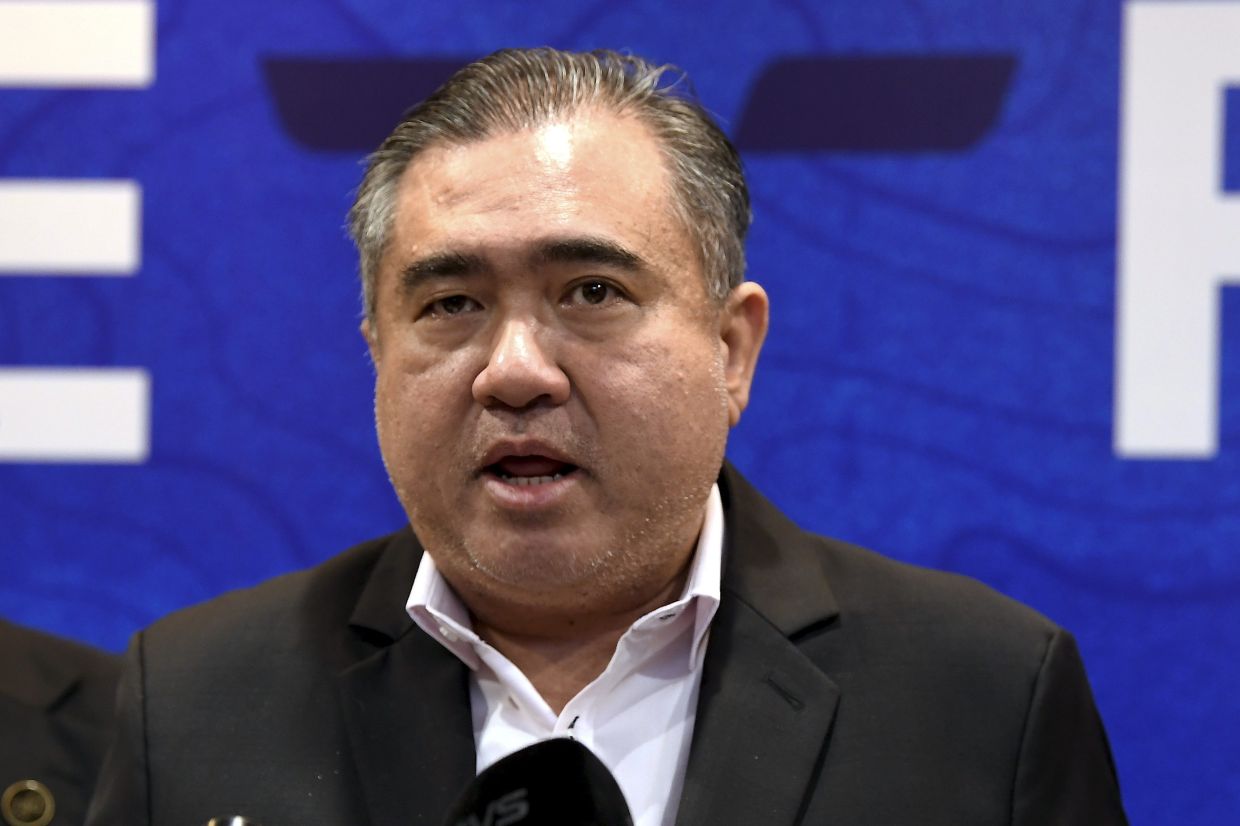
Malaysia Airports Berhad (MAHB) and Japanese real estate developer Mitsui Fudosan have joined forces to construct a RM80 million logistics complex dedicated to aviation services at Subang Airport, with Transport Minister Anthony Loke Siew Fook presiding over the groundbreaking ceremony this week. The partnership represents a deliberate strategy by MAHB to monetise its substantial land holdings at multiple airports by partnering with established international operators who bring proven expertise in developing and managing specialised industrial facilities.
Mitsui Fudosan brings considerable credentials to the venture, having successfully developed and operated comparable logistics complexes at Tokyo's Haneda Airport, one of Asia's busiest aviation hubs. This experience is expected to significantly reduce operational and developmental risks for Malaysia's airport operator, allowing the company to tap into global best practices while maintaining local oversight. Transport Minister Loke emphasised that the collaboration would strengthen Malaysia's position in the regional aviation and logistics sector, which increasingly depends on sophisticated infrastructure to remain competitive against neighbouring countries.
The facility, known as the Subang Maintenance, Repair and Overhaul (MRO) Logistics Complex Project, is being developed by MFMA Industrial Sdn Bhd, a 50-50 joint venture between Mitsui Fudosan (Asia) Malaysia Sdn Bhd and Malaysia Airports (Subang) Sdn Bhd. Situated within the Subang Aerotech Park, the complex will occupy 1.78 hectares and deliver approximately 254,420 square feet of gross floor area. Its design incorporates flexible tenancy arrangements to accommodate diverse operational needs from multiple aerospace and aviation service providers, reflecting the park's evolution as a specialised industrial cluster.
The complex's strategic positioning within the Subang Airport precinct offers tenants seamless connectivity to the established ecosystem of aerospace, aviation, and logistics operators throughout the Klang Valley region. This geographic advantage is crucial for businesses requiring rapid turnaround times and integrated supply chains. The facility will cater to the maintenance, repair, and overhaul sector, a critical but often overlooked component of aviation infrastructure that generates significant value and employment.
Construction is expected to conclude in the third quarter of 2027, with commercial operations commencing in the fourth quarter of that year. This timeline reflects the scale and complexity of the development, though it also underscores Malaysia's commitment to expanding air cargo and aviation support infrastructure before regional competition intensifies further. The project's multi-year development cycle will require coordination across multiple government agencies and private stakeholders.
Minister Loke's remarks revealed a broader government strategy to position Malaysia as a regional air cargo powerhouse. The government is simultaneously working to enhance operational capacity across several key airports, signalling a multi-hub approach rather than reliance on a single bottleneck facility. Kuala Lumpur International Airport (KLIA) is being positioned as ASEAN's designated regional air cargo hub through strategic collaboration with China, a development that could significantly enhance Malaysia's role in regional supply chains and e-commerce logistics.
Penang's dominance in Malaysia's air cargo sector—accounting for approximately 75 percent of national throughput—reflects the state's entrenched position as the country's semiconductor manufacturing and export centre. However, this concentration creates vulnerability; diversifying air cargo capacity across multiple facilities reduces systemic risk and allows other regions to benefit from logistics-related economic activity. The Subang development and parallel initiatives at Kota Kinabalu represent attempts to distribute this capacity more evenly.
The Kota Kinabalu International Airport (KKIA) initiative is particularly significant for East Malaysia's economic development. The government is collaborating with the Sabah state government to establish a dedicated air cargo hub by repurposing KKIA's Terminal 2, addressing long-standing infrastructure constraints in Sabah. This development could unlock opportunities for resource-rich Sabah to participate more effectively in regional and global supply chains, reducing dependence on traditional sea routes and improving competitiveness for time-sensitive exports.
The broader context for these investments reflects intensifying regional competition. Thailand, Vietnam, and Indonesia are simultaneously expanding their air cargo infrastructure, while Singapore continues to dominate as Southeast Asia's primary aviation hub. Malaysia's multi-pronged approach—leveraging private sector partnerships like the MAHB-Mitsui Fudosan venture, attracting foreign investment, and spreading capacity development geographically—represents a pragmatic response to these competitive pressures.
The involvement of the Embassy of Japan in Malaysia at the groundbreaking ceremony, represented by Minister Daisuke Nihei, underscores the diplomatic dimension of infrastructure partnerships. Japan's participation in critical Malaysian aviation projects strengthens bilateral economic ties while providing Malaysia access to Japanese technological expertise and capital. Japanese companies have increasingly positioned themselves as infrastructure developers across Southeast Asia, responding to regional demand for quality facilities and professional management.
For stakeholders in Malaysia's aviation and aerospace sectors, the Subang development opens new opportunities for facility consolidation and service expansion. The complex's design flexibility means businesses can scale operations without relocating, reducing transaction costs and operational disruption. This stability is particularly valuable for smaller to mid-sized operators who might otherwise struggle with Malaysia's limited specialised aviation infrastructure.
The project also carries implications for Malaysia's longer-term economic positioning. As global supply chains restructure away from China and manufacturing disperses across Southeast Asia, efficient air cargo networks become increasingly critical to competitiveness. Malaysia's investments in aviation logistics infrastructure—whether at Subang, KLIA, or Kota Kinabalu—are positioning the country to capture a larger share of regional logistics activity and high-value manufacturing services.
With construction beginning in earnest and operations anticipated within three years, the Subang MRO Logistics Complex represents tangible progress in Malaysia's aviation sector modernisation. However, success depends not merely on facility completion but on attracting quality operators and maintaining seamless integration with surrounding aviation ecosystem assets. The MAHB-Mitsui Fudosan partnership model, combining Malaysian airport expertise with Japanese operational excellence, offers a template that could be replicated across other MAHB properties, potentially catalysing broader infrastructure development across the country's airport network.

