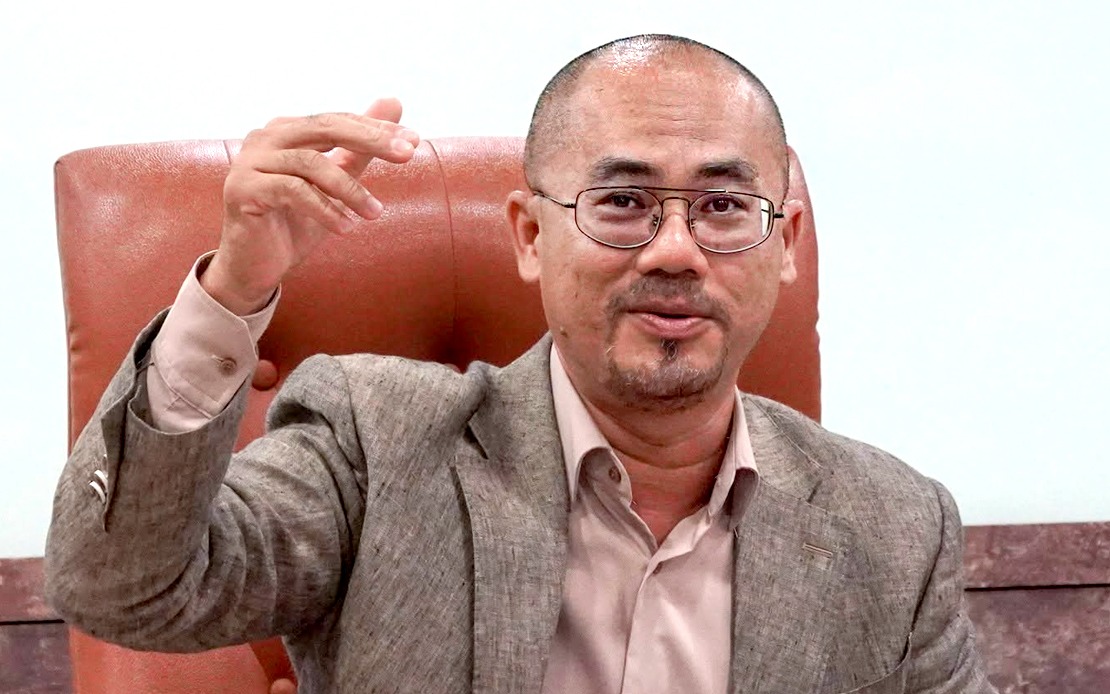
The Perak Islamic Religious and Malay Customs Council (MAIPk) has moved to quash allegations circulating on social media that it ordered traders to vacate a commercial premises along Jalan Panglima Bukit Gantang Wahab in Ipoh. The council's chief executive officer, Syamsul Hazeman Md Salleh, stressed that no eviction directive was issued, characterising instead a recent notice as a clarification of the institution's obligations and a transparency measure to protect its reputation from baseless claims.
Syamsul Hazeman explained that the notice was prompted by two longstanding technical and financial issues plaguing the site: a leaking main water pipeline and cumulative water arrears reaching approximately RM100,000. During an engagement session convened with the traders on July 14, officials outlined the necessity of a temporary water disconnection to enable repair operations and address the mounting debt. The framing of these operational requirements, he indicated, had been misinterpreted by a Threads user who alleged without evidence that traders faced sudden disconnection and implicit pressure to abandon their businesses.
The inheritance of these problems represents a significant headache for MAIPk, which acquired ownership of the land only in 2024. Upon taking possession, the council discovered that previous operators had left behind serious infrastructure complications rooted in the property's main distribution pipeline rather than individual user consumption. Syamsul Hazeman was keen to absolve the current traders of blame, noting that they had consistently honoured their monthly water bills according to their respective usage rates. The outstanding arrears stem entirely from systemic failures in the primary water supply network feeding the premises—a distinction crucial to understanding why the traders themselves should not bear the financial burden of repair.
The council's predicament reflects a broader challenge facing religious and community institutions across Malaysia when they assume stewardship of properties with hidden liabilities. MAIPk finds itself constrained by both regulatory and financial limitations; the council cannot legally deploy zakat or waqf funds—donations and endowments designated for religious and charitable purposes—to settle commercial water arrears, nor does it possess the technical or engineering capacity to resolve infrastructure problems of this magnitude independently. This reality underscores why the organisation has escalated the matter to the Perak Water Board, seeking collaborative solutions that acknowledge the complexity involved.
Beyond the immediate water crisis, MAIPk is engaging the state government for broader assistance and guidance. Syamsul Hazeman expressed measured confidence that a resolution could eventually be achieved, though he cautioned that reaching such an outcome would require patience and time. Once the outstanding amount is cleared and repair works are completed, the council intends to establish fresh rental agreements with the traders through updated contracts, normalising the commercial relationship on firmer financial and operational footing.
The longer-term trajectory of the site, however, remains uncertain and subject to state government timelines. MAIPk has been tasked with preparing the premises for what is described as the proposed construction of the Perak Islamic Religious Department Complex. Should this development proceed, current traders would be required to relocate to make way for the project. Syamsul Hazeman acknowledged this reality candidly, noting that traders would need to demonstrate flexibility and cooperation if implementation commences. Nevertheless, the council has no definitive timeline for when or whether the complex development will actually begin, as these decisions remain squarely within the purview of the state government's planning and budgetary frameworks.
This situation illustrates the often-precarious position of small business operators leasing space from government or semi-government bodies in Malaysia. Traders operating at the Ipoh location face dual uncertainties: the immediate technical crisis threatening their water access and, more ominously, an undefined future possibility of displacement for developmental purposes. The temporary nature of their tenure, combined with the council's limited capacity to resolve inherited infrastructure problems, creates a climate of instability that could discourage investment and planning by the merchants themselves.
The controversy also highlights how institutional communication failures can rapidly metastasise into reputational damage in the age of social media. A single unverified Threads post alleging eviction escalated into a situation requiring formal rebuttal by senior leadership. While MAIPk's clarification appears genuine—the council has furnished specific dates, amounts, and engagement details—the incident underscores how religious institutions must balance transparency with proactive community engagement to prevent misinformation from taking root among stakeholders and the broader public.
For policymakers and local authorities managing similar properties across Peninsular Malaysia, the case presents a cautionary lesson about due diligence during asset transfers. Comprehensive infrastructure audits and clear liability assessments should precede institutional handovers to prevent successor organisations from inheriting hidden financial obligations they are neither equipped nor permitted to address. The situation at Jalan Panglima Bukit Gantang Wahab demonstrates the real costs—both financial and reputational—of inadequate transition planning.
Looking ahead, the resolution pathway depends on coordinated action among MAIPk, the Perak Water Board, the state government, and the traders themselves. Each party must understand its respective obligations and limitations. The traders need reassurance that their immediate livelihoods are not under threat; the council requires external support befitting a problem beyond its mandate; and the water authority must address the underlying infrastructure defect. Without such coordination, the temporary disconnection intended as a corrective measure risks metastasising into permanent business closure for the affected merchants.

