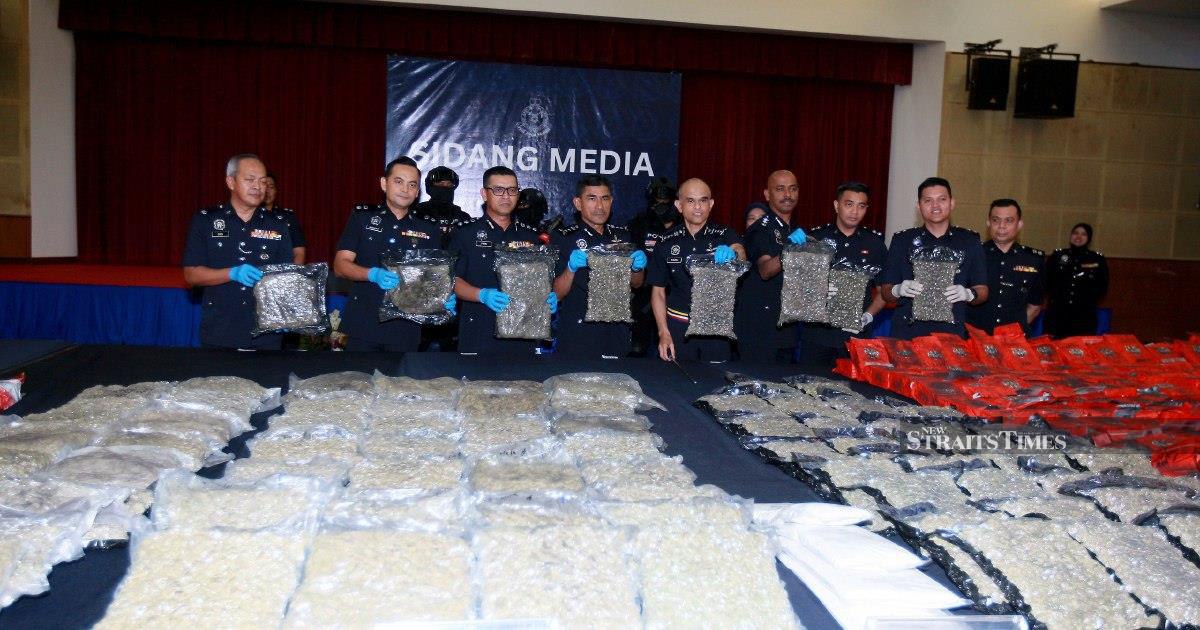
Law enforcement authorities in Selangor have dealt a significant blow to regional drug trafficking networks through a coordinated series of operations that resulted in the confiscation of approximately 600 kilograms of controlled substances and the arrest of 12 individuals across multiple locations. The estimated street value of the seized narcotics stands at RM37.5 million, underscoring the scale of criminal activity that authorities have disrupted.
The operations, conducted through coordinated raids across Selangor, represent a substantial enforcement success against organised crime in the region. Police successfully intercepted six separate drug trafficking attempts, suggesting a comprehensive response to what appears to be a sophisticated network of suppliers and distributors operating across the state. The diversity of arrest locations and the variety of drugs seized indicates that authorities are targeting different nodes within a broader supply chain rather than isolated cases of possession or small-scale dealing.
The seizure of such a substantial quantity of narcotics—600kg—demonstrates the volume of drugs circulating through Malaysian territory and destined for local and regional markets. For context, trafficking operations on this scale typically involve transnational criminal networks with connections across Southeast Asia, where Malaysia serves as both a transit point and significant consumer market. The coordinated nature of these raids suggests police have been conducting intelligence-led operations targeting specific trafficking routes and distribution hubs.
The inclusion of 12 arrests across these operations indicates that authorities have focused on dismantling operational structures rather than simply confiscating drugs. By detaining individuals at various levels of trafficking networks, law enforcement aims to disrupt supply chains that would otherwise quickly replenish themselves. These individuals likely occupy different roles within the criminal hierarchy, from transporters and warehouse operators to mid-level distributors, though the specific details of their roles remain under investigation.
The monetary value attributed to the seized drugs—RM37.5 million—reflects both the volume and the composition of the narcotics intercepted. This valuation provides insight into the profitability of drug trafficking operations and the potential scale of criminal proceeds that might otherwise have been laundered into the broader economy. For context, successful drug trafficking represents one of the most lucrative criminal enterprises in Southeast Asia, attracting organised crime groups and fuelling broader criminal ecosystems that include money laundering, corruption, and violence.
Selangor's significance as the target of these operations reflects its status as Malaysia's most densely populated state and its strategic location adjacent to Kuala Lumpur. The state's extensive transport networks, including major highways and ports, make it an ideal distribution hub for traffickers seeking to move drugs throughout Peninsular Malaysia and beyond. Additionally, Selangor's economic dynamism and large transient population provide cover for criminal activities that might be more readily detected in smaller communities.
These enforcement successes contribute to broader anti-narcotics initiatives within Malaysia, where drug trafficking remains a persistent challenge despite existing penalties that include capital punishment for trafficking large quantities. The Drug Enforcement and Rehabilitation Board, along with various police units, maintain sustained pressure on trafficking networks through intelligence gathering, surveillance, and coordinated raids. However, the continued large-scale seizures suggest that supply remains robust, likely sustained by high international demand for various narcotics and the substantial profit margins that justify the risks involved.
The implications for Malaysians extend beyond police statistics. Drug trafficking fuels associated crimes including robbery, theft, and gang violence as groups compete for market share and territory. Moreover, the drugs entering circulation through these supply networks contribute to addiction rates and associated social problems affecting families and communities. The enforcement actions undertaken by police therefore represent not merely criminal justice activities but interventions that potentially prevent significant harm to vulnerable populations.
Regionally, these operations reflect broader anti-trafficking efforts across Southeast Asia, where countries including Thailand, Indonesia, and the Philippines have implemented intensive drug enforcement campaigns with varying degrees of intensity and success. Malaysia's role in this regional context involves both intercepting drugs transiting through its territory and addressing domestic demand that itself drives international smuggling. Coordination between Malaysian authorities and counterpart agencies in neighbouring countries remains important, though enforcement challenges persist given the porous nature of land and maritime borders throughout the region.
Looking ahead, authorities will face ongoing challenges in maintaining pressure on trafficking networks that continue to evolve their methods and routes in response to enforcement actions. The sophistication evident in these six coordinated trafficking attempts—involving multiple locations and apparently diverse drug types—suggests that criminal organisations operating in Malaysia maintain substantial resources and operational capability. Sustained intelligence-led policing, improved coordination between agencies, and community awareness remain critical components of broader anti-drug strategies.
The success of these operations also depends on prosecution and conviction outcomes, which determine whether disruption proves temporary or contributes to dismantling networks more comprehensively. Malaysian courts have demonstrated willingness to impose substantial sentences for serious trafficking offences, providing law enforcement with tools to incapacitate key players within criminal hierarchies. These enforcement actions therefore represent only the initial phase of a process that will continue through the justice system in coming months.

