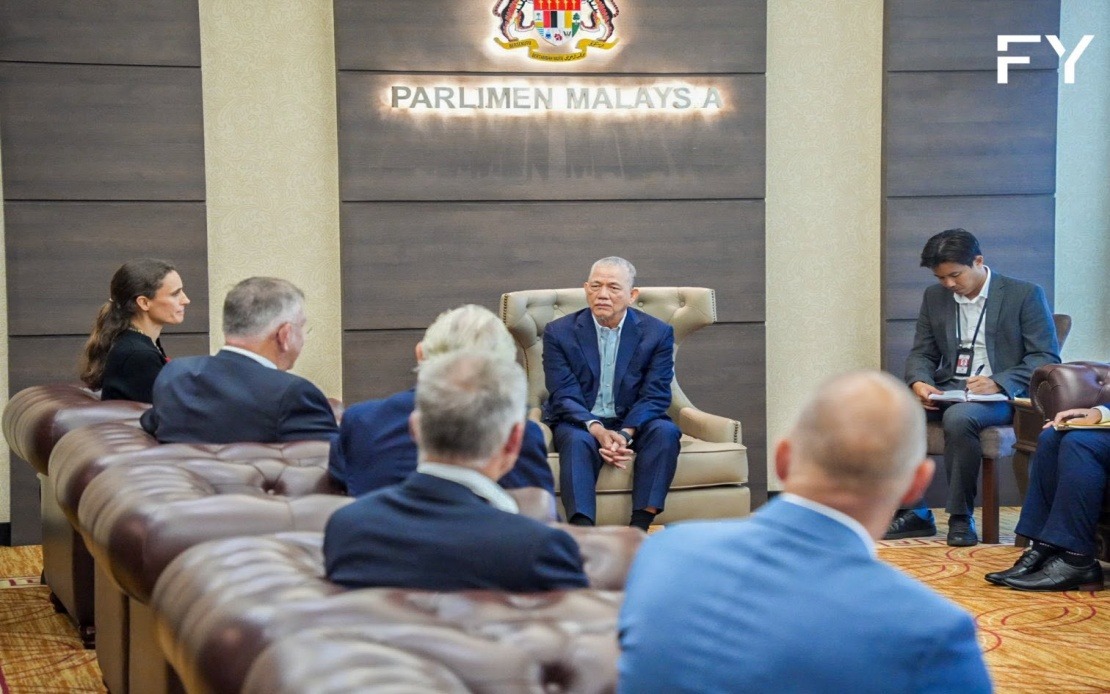
Malaysia is stepping up efforts to attract German small and medium-sized enterprises into its growing green technology sector, signalling a strategic pivot towards sustainable industries. Deputy Prime Minister Datuk Seri Fadillah Yusof conveyed the invitation during a parliamentary meeting with German Ambassador to Malaysia Silke Riecken-Daerr and representatives from the German SME Business Association, emphasising that such capital flows align with the country's long-term sustainability objectives. The overture reflects Kuala Lumpur's recognition that German expertise in clean technology could accelerate Malaysia's transition towards a lower-carbon economy while creating high-value employment opportunities.
The economic relationship between Malaysia and Germany runs considerably deeper than headline figures suggest. Fadillah noted that more than 800 German corporations currently operate within Malaysia's borders, spanning diverse industrial segments. This substantial presence underscores Germany's confidence in Malaysia as a manufacturing and investment hub, though the Deputy Prime Minister's specific appeal for SME capital in environmental sectors indicates a desire to diversify beyond traditional mechanical engineering and industrial manufacturing—sectors where German firms have historically concentrated their Malaysian operations. The invitation to German small businesses suggests Malaysia recognises that innovation in clean energy and water treatment often emerges from nimble mid-sized enterprises rather than large industrial conglomerates.
Green technology and renewable energy represent critical growth vectors for Malaysia's economy as regional and global environmental regulations tighten. Investors in solar power systems, energy-efficient industrial processes, and water purification technologies will find receptive market conditions in Southeast Asia's third-largest economy. Malaysia's abundant solar resources and government incentives for renewable energy deployment create favourable conditions for German companies seeking to expand beyond saturated European markets. For German SMEs specialising in these domains, Malaysia offers both a substantial domestic market and a potential production base for serving the wider ASEAN region, where infrastructure development and industrial expansion are generating surging demand for sustainable technologies.
Water management and treatment capabilities occupy particular strategic importance for Malaysia. The nation faces increasing pressure to manage water resources efficiently across its industrial, agricultural, and residential sectors, particularly given climate variability and rapid urbanisation. German expertise in water treatment systems, smart metering technology, and sewage management could address significant operational challenges faced by local utilities and manufacturers. By welcoming German SME investment in this domain, Malaysia positions itself as a potential regional centre of excellence for water technology, potentially serving neighbouring countries grappling with similar resource constraints.
Beyond capital investment, the meeting ventured into skills development and workforce preparation. Fadillah highlighted Germany's internationally recognised Technical and Vocational Education and Training framework as a potential model for Malaysian adoption. Germany's dual education system—which combines classroom instruction with apprenticeship placements—has consistently produced a workforce highly aligned with industry requirements. Malaysia's government has long prioritised TVET expansion as critical infrastructure for economic competitiveness, yet operational models have historically drawn from multiple sources rather than coalescing around a single proven methodology. Formalising knowledge transfer with German education authorities could strengthen Malaysia's ability to develop technicians and engineers capable of managing cutting-edge green technology installations and operations.
The strategic importance of this engagement extends to broader regional economic positioning. As Southeast Asia navigates energy transitions and climate commitments, countries that successfully attract leading-edge clean technology providers gain competitive advantages in industrial competitiveness and environmental governance. Malaysian leadership's active outreach to German SMEs demonstrates understanding that sustainable development cannot rely solely on domestic innovation capacity. International partnerships accelerating technology adoption and localised manufacturing reduce implementation timelines and costs while building regional supply chains for clean technologies.
Germany's track record as an exporter of high-performance industrial and environmental technologies makes it a natural partner for Malaysia's ambitions. The country's engineering tradition, quality standards, and commitment to sustainability-focused innovation align with where Malaysian policymakers want the economy to evolve. For German enterprises, Malaysia's large domestic market, ASEAN trade integration, and government support for green sectors create compelling business expansion opportunities. The complementary nature of these interests suggests genuine potential for substantive commercial collaborations rather than purely ceremonial diplomatic engagement.
Fadillah's confidence in strengthening bilateral relations reflects Malaysia's broader strategy of maintaining diversified international economic partnerships. Rather than concentrating foreign direct investment relationships within a handful of sources, Malaysia cultivates multiple technology and capital relationships to ensure resilience and access to varied expertise. Germany's engineering excellence, particularly in manufacturing efficiency and environmental management, provides capabilities that complement investments from other sources and enrich Malaysia's industrial ecosystem.
The concrete next steps remain to be elaborated, but the parliamentary meeting established foundational momentum. Fadillah's public endorsement, made through social media, signals that German SME investment will receive supportive treatment through government channels. Investment promotion agencies and sectoral regulators will likely be coordinating with German business associations to identify specific opportunities and streamline approval processes. For German SMEs evaluating Southeast Asian expansion, Malaysia's demonstrated openness to clean technology investment combined with existing German business networks creates a relatively low-friction entry point compared to other regional markets.
Looking forward, the success of this initiative depends on translating diplomatic courtesies into tangible commercial arrangements. Malaysian agencies must ensure that regulatory frameworks genuinely facilitate SME investment rather than creating bureaucratic obstacles. Equally, German enterprises require clarity regarding long-term policy commitment to renewable energy and water management sectors, as policy reversals or subsidy withdrawals have discouraged clean technology investment in various markets. If both sides follow through with substantive engagement, the partnership could position Malaysia as a regional hub for German green technology transfer while accelerating the country's sustainability transition.