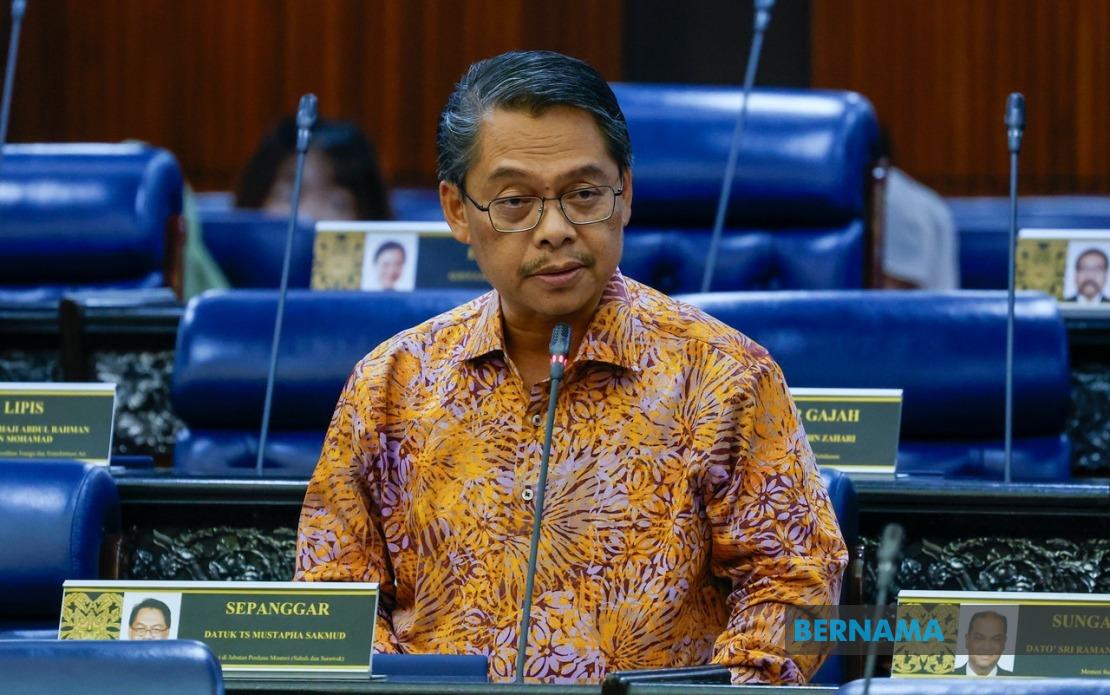
Steady but measured progress characterises Malaysia Agreement 1963 (MA63) negotiations, with half of the substantive issues now fully settled following technical discussions earlier this year. Minister in the Prime Minister's Department (Sabah and Sarawak Affairs) Datuk Mustapha Sakmud disclosed that thirteen of the twenty-nine matters under formal discussion have achieved complete resolution, while a further five have moved into interim or partial settlement status. This incremental advancement reflects ongoing dialogue between federal authorities and East Malaysian stakeholders, though critical questions remain unresolved after years of deliberation.
The thirteen resolved matters address foundational aspects of the historic 1963 agreement binding Sabah, Sarawak, and Malaya into the Malaysian federation. While Mustapha did not itemise each resolved issue in his parliamentary address, the breakthrough represents tangible movement on longstanding regional demands. The Technical Committee meeting held in March facilitated these resolutions, indicating that structured engagement within established institutional frameworks continues to yield results, even as larger structural questions persist.
Five additional matters have achieved what officials term interim or partial resolution—a classification suggesting framework agreements have been reached but implementation details remain to be finalised. Four of these interim issues carry particular significance for East Malaysian governance. They encompass expansion of state public service positions under Article 112 of the Federal Constitution, a critical concern given historical underrepresentation of East Malaysians in federal administrative hierarchies. Health and education sector governance modifications feature among these interim settlements, reflecting Sabah and Sarawak's emphasis on preserving constitutional autonomy in essential services. The Borneonisation initiative—aimed at increasing native representation in federal public service positions stationed within East Malaysian states—also falls within this interim category, addressing demographic imbalances that have characterised federal administrative structures since 1963.
Eleven outstanding matters continue under active review by the Sabah and Sarawak Affairs Division, which serves as technical secretariat for negotiations. These unresolved issues encompass questions spanning financial arrangements, resource rights, and administrative jurisdiction—the technical architecture upon which Malaysian federalism ultimately rests. The persistence of these matters indicates that while symbolic progress occurs, deeper structural questions require sustained negotiation. Federal and state government representatives maintain engagement through this secretariat mechanism, suggesting mutual commitment to eventual comprehensive settlement, though timelines remain uncertain.
The most contentious unresolved question concerns parliamentary representation. Sabah and Sarawak have persistently demanded increased seats in the Dewan Rakyat to achieve thirty-five percent quota of the total parliamentary body. This demand reflects decades of perceived underrepresentation relative to Peninsula Malaysia, despite East Malaysian regions comprising substantial portions of national territory and population. The matter carries profound implications for regional political influence and federal policy-making, as enhanced parliamentary representation would strengthen East Malaysian capacity to shape legislation affecting national development priorities.
Mustapha's explanation of parliamentary seat expansion obstacles reveals structural constraints embedded within Malaysia's constitutional framework. Only the Election Commission possesses legal authority to conduct electoral redistribution exercises, and constitutional convention permits such redelineation only following completion of an eight-year electoral cycle. This procedural requirement means that even if political consensus were achieved, implementation cannot occur until existing cycle parameters expire. The constraint illustrates how Malaysia's constitutional architecture, designed to balance competing interests, can inadvertently entrench historical arrangements even when stakeholders seek modification.
Constitutional amendment represents the ultimate requirement for parliamentary composition changes. Article 46 of the Federal Constitution specifies Dewan Rakyat composition, and altering this provision demands a two-thirds supermajority in parliament. This high threshold reflects constitutional architecture prioritising stability but making significant structural reforms extraordinarily difficult to achieve. For Sabah and Sarawak to secure enhanced representation permanently, federal lawmakers must marshal supermajority consensus—a political undertaking requiring buy-in from multiple peninsular constituencies and parties. Current parliamentary arithmetic does not obviously favour such consensus, though sustained regional advocacy may gradually shift calculations.
From a Southeast Asian perspective, the MA63 negotiation process carries broader significance. The agreement represents a federal arrangement negotiated among distinct political communities with separate constitutional histories. Malaysia's ability to maintain this negotiation framework decades after federation, while managing divergent interests through structured dialogue, suggests institutional resilience worth noting. Compared to other multinational states in the region, Malaysia's approach to managing regional grievances through technical committees and parliamentary review represents a relatively institutionalised method of addressing centrifugal pressures.
For Malaysian constituencies, the progress update underscores that federal-state dynamics remain contested terrain requiring ongoing engagement. Sabah and Sarawak residents observe tangible movement on some fronts—public service expansion, sector governance modifications—whilst confronting immovable institutional barriers on representational matters. This mixed picture reflects the inherent tension between federal consolidation and regional autonomy that has characterised Malaysian governance since 1963. As negotiations continue, the differential pace of resolution across categories reveals how technical issues yield to compromise more readily than questions touching fundamental constitutional structure.
The interim classification itself merits scrutiny, as it suggests partial settlements may require subsequent refinement before full implementation. This raises questions about whether interim resolutions genuinely address stakeholder concerns or represent temporary compromises awaiting renegotiation. The health and education governance arrangements, public service expansion frameworks, and Borneonisation initiatives all require practical implementation that may surface unforeseen complications. How federal and state authorities manage these interim matters during coming years will substantially influence whether current progress translates into meaningful governance improvement for East Malaysian populations.
Looking forward, the negotiation trajectory suggests several distinct pathways. The thirteen resolved matters may proceed toward implementation, though specific mechanisms and timelines require clarification. The five interim matters require definition of implementation procedures and resource allocations. The eleven outstanding issues will determine whether MA63 negotiations ultimately address comprehensive federal-state reconstruction or remain confined to incremental administrative adjustments. Parliamentary representation expansion, positioned as essential by regional advocates, appears structurally dependent on either Election Commission-initiated redistribution or constitutional amendment—both requiring external institutional action beyond negotiating parties' direct control. This structural constraint may ultimately require political decision-making transcending the technical committee process entirely.

