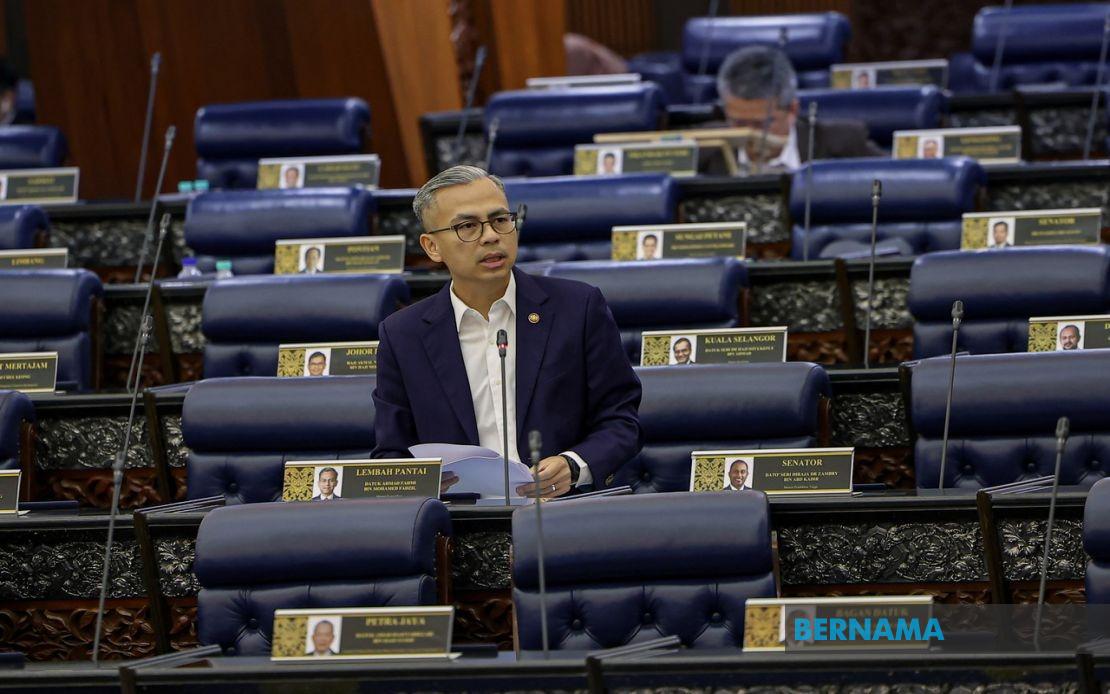
Communications Minister Datuk Seri Fahmi Fadzil has tabled the Communications and Multimedia (Amendment) Bill 2026 in Parliament, marking a significant shift in how Malaysia regulates its telecommunications and digital services sector. The legislation, which underwent its first reading in the Dewan Rakyat on July 13, represents an effort to weave national security considerations directly into the framework governing universal service provision across the country. The Bill is expected to proceed to second reading during the current parliamentary session, signalling the government's determination to advance this regulatory reform in the near term.
The proposed amendments target Section 202 of the principal Communications and Multimedia Act 1998, introducing two new subsections that fundamentally alter the Minister's powers over universal service provision. Under the new subsection 202(1A), the Communications Minister will gain explicit authority to direct the Malaysian Communications and Multimedia Commission (MCMC) to support national universal service initiatives related to network or application services whenever such measures are deemed necessary for national security purposes. This represents a notable expansion of ministerial authority in an area previously centred on consumer access and affordability rather than security considerations.
The determination of what constitutes a matter of national security under these new provisions will rest with the National Security Council, operating under the framework established by the National Security Council Act 2016. This institutional design ensures that security assessments remain centralised within Malaysia's highest security apparatus rather than distributed across multiple agencies, though it also raises questions about the transparency and scope of such determinations. The allocation of security judgment to the NSC reflects a broader governmental approach to treating telecommunications infrastructure as a critical national asset requiring coordinated oversight.
These amendments would enable the government to direct initiatives focused on network facility installation and the provision of network or application services specifically when such measures serve national security interests. The language is deliberately broad, allowing for a range of potential interventions spanning physical infrastructure deployment to digital service availability. This flexibility permits the government to respond to evolving security threats without requiring repeated legislative amendments, though it simultaneously grants considerable discretionary power to executive bodies.
The proposed subsection 202(1B) establishes an important constraint on these new ministerial powers by requiring that any national universal service provision initiative must remain consistent with the foundational objects of the Communications and Multimedia Act 1998. This requirement aims to prevent the national security framework from fundamentally distorting the original legislative intent behind Malaysia's telecommunications regulation, which has historically emphasised universal access, consumer protection, and industry development.
Under Subclause 2(b), the amendments further authorise the Communications Minister to establish regulations governing national universal service initiatives through Section 16 of the principal Act. This regulatory authority allows the government to translate the broad legislative framework into detailed operational guidelines without requiring further parliamentary approval, expediting implementation but also concentrating rule-making power in the executive branch. The regulations themselves will become the primary mechanism through which national security considerations translate into concrete industry requirements.
The government has explicitly stated that implementation of this legislation will impose no additional financial burden on the public treasury. This assurance aims to address concerns about the fiscal implications of expanding universal service obligations, suggesting that any enhanced service provision or infrastructure development would occur within existing budget allocations or through industry burden-sharing arrangements negotiated between the government and telecommunications providers.
The Bill's framing emphasises that these amendments respond to the evolution of Malaysia's communications and multimedia sector, technological advancement, and contemporary national security needs. The government's rationale suggests that existing universal service frameworks, designed primarily for voice telephony and basic broadband access, require updating to address modern threats affecting critical digital infrastructure. This perspective aligns with global trends where telecommunications regulators increasingly incorporate cybersecurity and infrastructure resilience into universal service obligations.
For Malaysian telecommunications companies, the amendments introduce a new category of regulatory obligation beyond traditional universal service requirements. Network operators and application service providers may face directives to prioritise certain infrastructure investments or service deployments based on national security determinations, potentially affecting business planning and resource allocation. The lack of clarity regarding what specifically triggers these security-based directives creates uncertainty that companies will need to navigate through regulatory engagement with MCMC and the NSC.
The amendments also reflect evolving thinking about how telecommunications infrastructure intersects with national security in Southeast Asia, where concerns about foreign technological dependence, supply chain vulnerabilities, and critical infrastructure protection have intensified. Malaysia's approach embeds these security considerations directly into universal service law rather than treating them as separate regulatory domains, creating an integrated framework where network expansion and security objectives become mutually reinforcing.
Industry observers will likely scrutinise how MCMC interprets and implements these new powers, particularly regarding the balance between security objectives and traditional consumer service goals. The regulatory body's previous focus on consumer protections and competition may shift as it incorporates national security assessments into its decision-making processes, potentially requiring new technical expertise and enforcement capabilities.
The timing of this amendment comes as Malaysia navigates increasing regional digital competition and seeks to strengthen its position in Southeast Asia's telecommunications landscape. By embedding security considerations into universal service provision, the government positions itself to support domestic technological development and infrastructure independence while maintaining the appearance of service expansion rather than protectionism.

