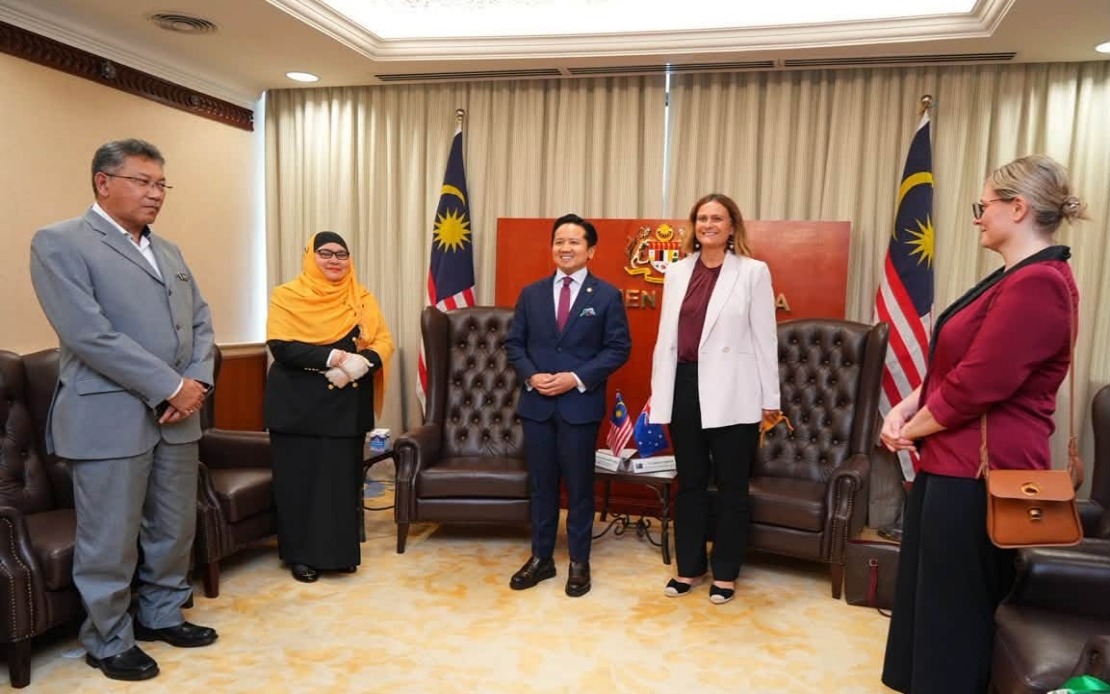
Malaysia and Australia are moving toward a more integrated partnership in rare earth elements and critical minerals, marking a significant shift in how the two nations approach resource security and industrial development. During a high-level meeting at Parliament between Natural Resources and Environmental Sustainability Minister Datuk Seri Arthur Joseph Kurup and Australian High Commissioner to Malaysia Danielle Heinecke, both governments identified rare earth processing and downstream manufacturing as priority cooperation areas that could reshape regional supply chains.
The strategic importance of this bilateral engagement cannot be overstated for Malaysia's industrial ambitions. The country has long aspired to develop a complete rare earth value chain extending from midstream processing through to finished products like neodymium magnets, which are essential components in electric motors, renewable energy systems, and defence applications. Australia's acknowledged technical expertise and established capabilities in the critical minerals sector position it as an ideal partner to help Malaysia achieve this goal while adhering to the frameworks outlined in the National Mineral Policy 3, Malaysia's guiding document for sustainable resource management and industrial development.
One particularly technical dimension of the proposed collaboration centres on the management of rare earth processing residues, specifically neutralisation underflow residue, commonly abbreviated as NUF. This byproduct presents both environmental challenges and economic opportunities; improper handling can contaminate soil and water, yet advanced processing techniques can recover valuable materials and reduce waste. By exchanging best practices with Australia, Malaysia can potentially adopt proven methodologies that minimise environmental impact while maximising resource recovery, creating a more circular and sustainable industrial ecosystem around rare earth activities.
The focus on neodymium magnet manufacturing deserves particular attention from a regional economic perspective. Neodymium magnets represent a critical component of the global clean energy transition, driving demand in wind turbines, electric vehicles, and energy storage systems. Currently, most neodymium magnet production occurs in China, which controls approximately 85 percent of global output. By developing domestic manufacturing capacity, Malaysia could capture significant value from these global supply chains while reducing dependence on single-source suppliers—a concern that has gained urgency among Western economies seeking supply chain resilience following geopolitical tensions.
This cooperation framework also reflects broader geopolitical currents reshaping resource diplomacy in the Indo-Pacific. As major economies compete for access to critical minerals essential for the energy transition and advanced technology development, bilateral and multilateral partnerships like the Malaysia-Australia arrangement serve as counterweights to concentrated supply chains. For Southeast Asia specifically, Malaysia's move to develop indigenous processing and manufacturing capabilities could establish a regional hub for rare earth value-added products, potentially attracting investment and expertise from allied nations concerned about supply diversification.
Beyond critical minerals, the ministerial discussion encompassed several complementary environmental and sustainability themes. Hazardous waste management, marine ecosystem conservation, and climate financing all featured prominently, reflecting the interconnected nature of modern resource governance. These discussions underscore a recognition that sustainable development in the rare earth sector cannot exist in isolation; it must be embedded within broader commitments to environmental protection and climate action. Malaysia's commitment to the United Nations Climate Change Conference, designated COP31 in future iterations, directly influences how industrial strategies are designed and implemented.
The institutional framework underpinning this expanded cooperation is the Malaysia-Australia Comprehensive Strategic Partnership, established in 2021. This agreement provides a formal structure within which governments can develop technical working groups, coordinate research initiatives, and align regulatory standards. For Malaysian policymakers and business leaders, this arrangement offers opportunities to access Australian expertise through structured mechanisms while maintaining sovereign control over resource extraction and industrial policy decisions.
The combination of Malaysia's commitment to developing sustainable resource management frameworks with Australia's proven technical capabilities creates a compelling proposition for competitive green economic growth. Both nations stand to benefit from this alignment: Malaysia gains access to world-class technical knowledge and operational standards, while Australia expands its influence in critical mineral value chains and secures relationships with a neighbouring major producer and processor. The partnership is explicitly positioned as delivering long-term benefits to both countries, suggesting this is not a temporary arrangement but rather the foundation for sustained institutional cooperation.
For Malaysian manufacturers and industrialists, this cooperation announcement signals government commitment to building domestic capabilities in a strategically important sector. Companies operating in electronics, automotive, renewable energy, and aerospace manufacturing will likely benefit from improved access to domestically produced neodymium magnets, reducing costs and supply chain vulnerabilities. Equally important, the development of rare earth processing expertise creates employment opportunities across multiple skill levels, from technical specialists to production workers.
The timing of this partnership also reflects Malaysia's positioning within broader regional competition for industrial investment and technological leadership. As nations throughout Southeast Asia compete for manufacturing opportunities tied to the clean energy transition, Malaysia's focus on rare earth and advanced materials positions it as a potential hub for technology-intensive industries. This move distinguishes Malaysian policy from purely extractive-focused approaches, instead emphasising value addition and downstream manufacturing—a model that generates greater employment and economic multiplier effects.
The initiative's success will depend heavily on implementation mechanisms and sustained political commitment from both governments. Critical next steps will include establishing technical working groups, harmonising regulatory standards, facilitating technology transfer agreements, and potentially attracting international investment from companies seeking supply chain diversification. The dialogue between Minister Kurup and High Commissioner Heinecke represents the diplomatic foundation; translating this into concrete industrial outcomes will require close coordination between government agencies, research institutions, and private sector actors in both countries.
Moving forward, Malaysian stakeholders should monitor developments in three specific areas: the establishment of technical cooperation frameworks, announcements regarding joint research initiatives, and any industrial projects jointly announced by government or commercial entities. These signals will indicate whether the strategic partnership translates into tangible economic outcomes or remains primarily aspirational in scope.

