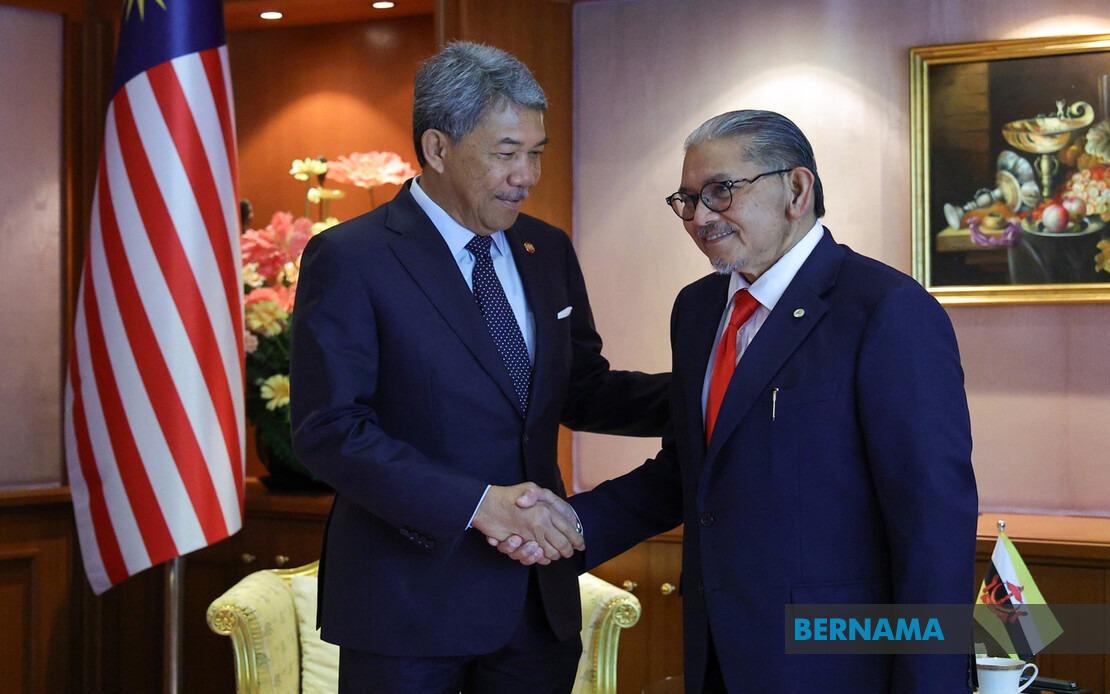
Malaysia and Brunei are pushing forward with their longstanding partnership through focused dialogue on territorial matters and regional security mechanisms. Foreign Minister Datuk Seri Mohamad Hasan, who co-chaired the 27th Meeting on the Implementation of the Exchange of Letters with Brunei Second Minister of Foreign Affairs Datuk Seri Setia Erywan Mohd Yusof in Bandar Seri Begawan, outlined the progress achieved on several critical fronts that affect both nations' strategic interests and people-to-people connections.
The boundary demarcation effort represents a particularly significant undertaking between the two neighbouring nations. According to Mohamad Hasan, Malaysia and Brunei have now completed approximately half of the demarcation process for their land boundary. This methodical approach reflects the complexity involved in mapping out shared borders, which extends beyond simply identifying where one nation's territory ends and another begins. The demarcation process accounts for various on-the-ground circumstances and environmental factors that must be documented and understood before final implementation can occur.
The work is being conducted in accordance with the 2009 Terms of Reference, a framework agreement that established the parameters for how both countries would approach this technical exercise. A specialized ground-level technical committee has been tasked with gathering detailed information about the border landscape and submitting comprehensive reports that will inform the final demarcation. This deliberate pace, while it may take time, ensures accuracy and prevents future disputes that could arise from hastily executed boundary work. For Malaysia, which shares land borders with multiple nations including Brunei within Sarawak and Sabah, such precision work is essential to maintaining clear territorial understanding with its neighbours.
Beyond terrestrial matters, the two countries have also focused on maritime boundary considerations during the talks. The Borneo island region, which both Malaysia and Brunei occupy, presents complex maritime geography with overlapping claims and resource interests in the South China Sea. Having a clear, mutually agreed understanding of maritime boundaries serves multiple purposes: it prevents accidental encroachment by fishing vessels and commercial operations, clarifies resource extraction rights, and reduces the potential for misunderstandings that could escalate unnecessarily.
A new institutional mechanism for search and rescue operations represents a significant practical advancement in bilateral cooperation. Mohamad Hasan indicated that both countries are preparing to formalize this arrangement through a memorandum of understanding. The South China Sea region and surrounding waters present genuine maritime hazards, and having coordinated search-and-rescue protocols between neighbouring nations can mean the difference between life and death when vessels encounter distress. This MoU would establish procedures for how Malaysian and Brunei authorities communicate and cooperate during emergencies, likely including coordination on resource deployment, communication protocols, and responsibility zones.
Facilitating easier movement for citizens of Brunei, Sarawak, and Sabah emerged as another priority discussion point. This reflects the historical and cultural ties between these territories—all share the island of Borneo and have long-standing people-to-people connections. Simplifying travel and movement procedures between these regions can boost tourism, strengthen family connections, and facilitate business activities. Given that Brunei is surrounded by Sarawak and Sabah on mainland Borneo, improved cross-border movement protocols have immediate practical value for residents and business operators on both sides.
The Exchange of Letters mechanism itself deserves recognition as an effective diplomatic instrument. By convening these meetings regularly—the 27th iteration indicates a sustained commitment spanning many years—Malaysia and Brunei have institutionalized dialogue on matters both countries deem important. This regularized engagement prevents misunderstandings from festering and ensures that issues receive consistent high-level attention from foreign ministry officials. For Southeast Asian nations navigating complex regional dynamics, such reliable bilateral channels prove invaluable.
The timing of these discussions also carries broader regional significance. As Southeast Asia grapples with maritime security challenges, resource management disputes, and the need to maintain stable inter-state relations amid great power competition, the Malaysia-Brunei model demonstrates how neighbours can work methodically through technical issues without allowing them to become sources of tension. The boundary demarcation work, while unglamorous, represents the kind of foundational work that prevents future conflicts.
For Malaysian interests specifically, strengthening ties with Brunei reinforces Malaysia's position within ASEAN and demonstrates commitment to positive bilateral relations across the region. Brunei, though small in population, holds strategic importance due to its location and its role as a founding member of ASEAN. Showing that Malaysia can work effectively with all its neighbours on practical matters enhances Malaysia's credibility as a responsible regional actor.
Looking ahead, the completion of the remaining boundary demarcation work will require continued cooperation from both technical teams and political leadership. The next 50 per cent of the work may present new challenges or clarifications that the first phase did not reveal. Nevertheless, the demonstrated progress—reaching the halfway mark—suggests that both countries maintain the political will to see this process through to completion. Such follow-through on commitments builds trust that extends beyond the specific issue of boundaries to the broader health of bilateral relations.

