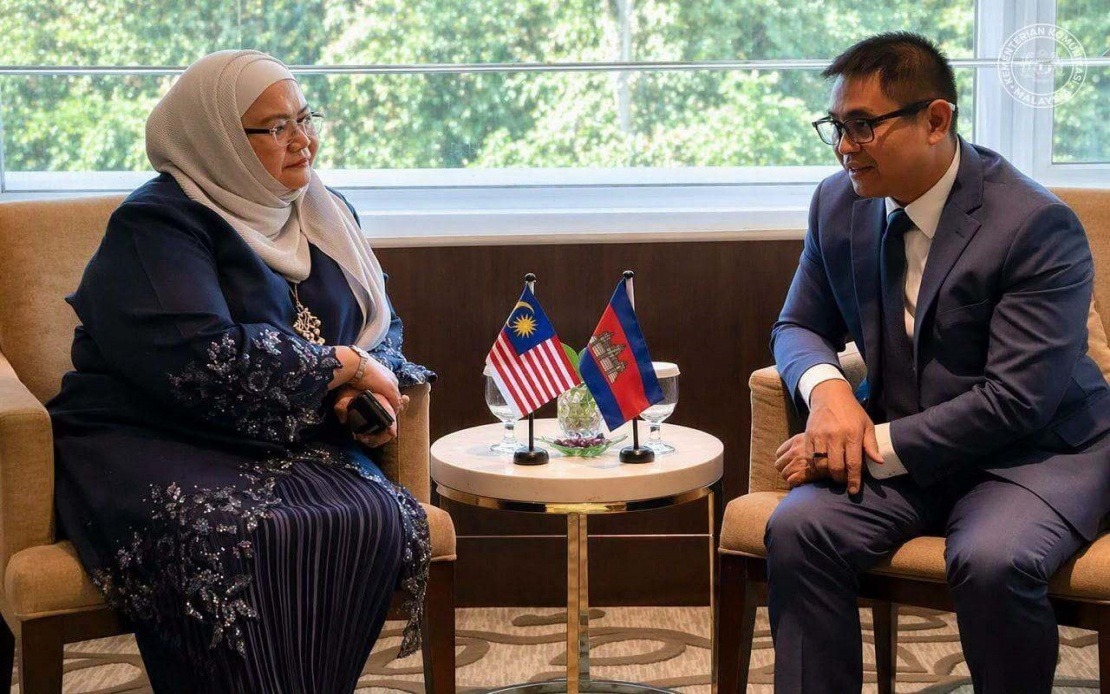
Malaysia and Cambodia have begun the crucial work of translating their newly signed media cooperation agreement into concrete action, meeting in Brunei this week to chart the implementation pathway for an accord that promises to reshape information-sharing practices across Southeast Asia. The bilateral discussion, which occurred on the margins of the 23rd ASEAN Senior Officials Responsible for Information Meeting in Bandar Seri Begawan, represents the first formal step toward operationalising the Memorandum of Understanding on Information and Media Development Cooperation that the two nations inked on June 20. The timing underscores the prioritisation both governments place on deepening ties at a moment when media landscapes across the region face mounting complexity and contestation.
The Malaysian delegation was led by Datuk Bahria Mohd Tamil, Deputy Secretary-General for Strategic Communications and Creative Industry, while Cambodia's contingent was headed by Prak Thaveak Amida, Secretary of State at the Information Ministry. This senior-level representation signals the strategic importance accorded to the partnership by both administrations. The selection of officials responsible for creative industries and strategic communications on the Malaysian side demonstrates Kuala Lumpur's intention to embed this cooperation within broader digital economy ambitions, not merely as a ceremonial exchange. Cambodia's dispatch of a senior state official similarly reflects Phnom Penh's recognition that information governance and media development now rank among core state functions requiring high-level coordination.
The MoU itself was signed just days prior, during National Journalists' Day celebrations in Penang, and subsequently formalised ad referendum by Malaysia's Communications Minister Datuk Fahmi Fadzil and Amida on behalf of Cambodia's Information Minister Neth Pheaktra. This dual-signature arrangement acknowledges that while preliminary agreements can be reached during high-profile public events, formal ratification requires the involvement of senior ministerial figures. For Malaysia, the accord represents an extension of its broader ASEAN media diplomacy strategy, positioning the country as a convener of regional standards around information practices. For Cambodia, the agreement offers a pathway to tap Malaysian expertise in media development and digital infrastructure at a time when Phnom Penh is investing heavily in modernising its information sector.
Discussions during the Brunei meeting encompassed information exchange protocols, media sector development initiatives, and digital transformation pathways—indicating that the cooperation envisioned extends well beyond ceremonial arrangements. Both delegations specifically focused on information integrity challenges, a topic of acute relevance across Southeast Asia where disinformation, foreign interference, and computational propaganda have become endemic concerns. The emphasis on integrity suggests that Malaysian and Cambodian officials recognise information as a security matter requiring coordinated responses, not merely a cultural or commercial domain. This framing positions the bilateral engagement within broader ASEAN security architecture discussions, particularly as member states grapple with protecting democratic processes and public trust in media institutions.
Digital transformation emerged as a central pillar of the partnership discussions. For Malaysia, which has positioned itself as a regional digital economy leader, sharing technological infrastructure expertise with Cambodia offers strategic advantages while building goodwill. For Cambodia, access to Malaysian experience in media digitalisation, broadcast modernisation, and online safety frameworks addresses genuine capacity gaps as the Kingdom seeks to upgrade its information infrastructure. The transformation agenda also connects to ASEAN's wider digitisation aspirations, making the bilateral cooperation a microcosm of regional digital development efforts. This dimension is particularly significant for Malaysian technology and media companies that could benefit from partnership opportunities within Cambodia's expanding digital media market.
The bilateral setting within the broader ASEAN Senior Officials forum is strategically significant. Rather than conducting this discussion at a standalone bilateral venue, both nations chose to advance their conversation amid a gathering of ASEAN information officials. This approach allows Malaysia and Cambodia to model cooperative practices for other member states while accessing peer insights on common challenges. It also prevents bilateral engagement from appearing insular, instead positioning it within the collective ASEAN project of strengthening information governance. Regional observers will likely interpret the prominence given to the Malaysia-Cambodia discussion as evidence that bilateral partnerships constitute the building blocks through which ASEAN advances its information security agenda.
For Malaysian stakeholders, the partnership creates multiple opportunities. Journalists and media organisations could pursue professional exchange programmes with Cambodian counterparts. Tech companies specialising in media infrastructure or digital safety tools may find entry points into Cambodia's market. Universities and research institutions focused on media studies can develop academic cooperation frameworks. The broader communications ecosystem benefits from Malaysia's positioning as a trusted partner in Cambodia's information sector modernisation. These concrete benefits complement the diplomatic gains of strengthening bilateral relations with a fellow ASEAN member and important neighbour whose stability and prosperity directly affect Malaysian interests.
Cambodia's perspective on this cooperation reflects its own strategic calculations. As the Kingdom positions itself within competing spheres of influence in Southeast Asia, deepening ties with Malaysia around information matters offers a way to balance relationships while accessing non-aligned expertise. Malaysian cooperation on media and information development carries less perceived geopolitical baggage than similar assistance from extra-regional powers, making it particularly attractive to Phnom Penh. Additionally, Cambodia's investments in media modernisation require technological and institutional knowledge that Malaysian institutions can credibly provide, having themselves undergone similar transformations.
The implementation phase now becomes critical. Both nations must establish working groups to operationalise specific initiatives outlined in the MoU. This could include personnel exchanges, joint training programmes for journalists and media professionals, technology transfer arrangements, and coordinated responses to disinformation threats. Success will require sustained political commitment beyond the initial signing ceremony and bilateral meeting. Previous media cooperation agreements in ASEAN have sometimes foundered when implementation structures lacked adequate resources or political priority, so observers will be watching whether Malaysia and Cambodia move beyond declarative statements to concrete project execution.
The broader regional implications deserve consideration. This Malaysia-Cambodia partnership contributes to ASEAN's ongoing efforts to establish shared norms around information governance, media freedom, and digital safety. It demonstrates that bilateral partnerships can advance collective security objectives when member states coordinate strategically. Other ASEAN pairs may follow this model, gradually creating an interconnected network of media cooperation agreements that collectively strengthen the region's information resilience. From a Malaysian perspective, leading such efforts positions the country as a credible convener and thought leader within ASEAN, enhancing its soft power precisely at a moment when information governance has become central to international relations.

