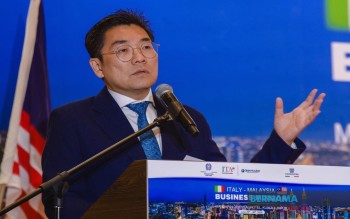
Malaysia and the European Union are progressing steadily towards establishing a comprehensive free trade pact, with negotiators having sealed agreements on five substantive chapters of the Malaysia-European Union Free Trade Agreement (MEUFTA). The two sides are targeting completion of the entire accord by 2027, marking a significant milestone in economic cooperation between the Southeast Asian nation and the world's largest trading bloc. Deputy Investment, Trade and Industry Minister Sim Tze Tzin announced the developments following the conclusion of the fourth negotiation round, held in Kuala Lumpur from June 8 to 12, which produced breakthroughs on three critical trade matters.
The momentum gathered during recent talks reflects the expanding ambitions of both parties to deepen economic ties. Three chapters were finalised at the fourth round: Customs and Trade Facilitation, Trade Remedies, and Good Regulatory Practices—all foundational pillars for effective commerce. These advances build on earlier achievements, including the Transparency chapter concluded in the second round and the Small and Medium Enterprises chapter sealed during the third round. The structured progression suggests a methodical approach to addressing complex trade issues, with negotiators alternating between technical regulatory matters and provisions designed to support businesses of different scales. Rather than rushing towards a superficial agreement, both Malaysia and the EU appear committed to establishing durable frameworks that will withstand scrutiny and deliver tangible benefits.
The upcoming fifth round, scheduled for September 21 to 25 in Brussels, Belgium, will provide the next opportunity to advance remaining negotiations. The decision to hold discussions in the EU capital signals the formal nature of these talks and allows Malaysian delegations to engage directly with European institutions. The Brussels venue also facilitates coordination among EU member states, ensuring that agreements reflect the collective interests of all 27 members. This diplomatic choreography underscores the complexity of negotiating with the EU as a unified bloc rather than individual nations, requiring consensus-building across diverse economic interests.
Deputy Minister Sim characterised the forthcoming MEUFTA as transformational for Malaysia's economic positioning. He emphasised that the agreement would serve as a gateway to Europe's vast single market while opening pathways in high-technology services, renewable energy, and digital commerce—sectors increasingly critical to Malaysian economic diversification. The framing of MEUFTA as a "game-changer" reflects Malaysia's strategic recognition that traditional advantages in commodity exports require supplementation by participation in value-added industries. For Malaysian policymakers, deeper integration with European supply chains and consumer markets represents a hedge against overreliance on any single trading partner and an opportunity to upgrade the country's industrial capabilities.
Bilateral trade performance with Italy, one of Europe's largest economies, demonstrates the potential of enhanced EU engagement. Malaysia's commerce with Italy surged 14.2 percent year-on-year to approximately RM17 billion in 2025, elevating Italy to Malaysia's fifth-largest European trading partner. Malaysian exports to Italy climbed 12.7 percent to RM7.6 billion, driven substantially by palm oil and derivative products alongside electrical and electronics goods, iron and steel, and industrial equipment. This growth trajectory predates formal MEUFTA completion, suggesting that removing remaining tariff and regulatory barriers could accelerate exchange further. Italian imports into Malaysia—primarily sophisticated machinery, precision instruments, chemicals, and electronics—highlight the complementary nature of the two economies, with Malaysia supplying raw materials and semi-processed goods while Italy exports capital equipment and advanced manufactured items.
The breadth of Italian manufacturing investments already embedded in Malaysia provides additional perspective on potential MEUFTA outcomes. Over 80 Italian industrial projects valued at US$442 million have been implemented across Malaysian soil, spanning food processing, chemicals, machinery manufacturing, and aerospace sectors. These existing ventures reveal that Italian enterprises perceive Malaysia as a reliable production hub combining geographic advantage, developed infrastructure, and established supply chain networks. An operational MEUFTA would likely cement Malaysia's position further by reducing trade friction and facilitating cross-border movement of components, finished goods, and personnel. Italian companies' continued confidence in Malaysia as an investment destination reflects confidence in the country's macroeconomic stability and industrial governance.
Deputy Minister Sim articulated a vision of deepened Malaysia-Italy cooperation particularly within electrical and electronics manufacturing, where both nations possess mature ecosystems. Malaysia has developed world-class capacity in semiconductor assembly, testing, and packaging, while Italy excels in precision machinery and automated manufacturing systems. The intersection of these strengths suggests untapped collaborative potential, from co-producing sophisticated components to establishing integrated supply chains serving European and Asian markets. Such partnerships could position both nations advantageously within global technology supply networks increasingly concerned with geographic diversification away from single-source dependencies.
Malaysia's semiconductor ambitions feature prominently in the government's trade negotiating agenda. The New Investment Incentive Framework, which became operational in March this year, provides tax benefits and grants to stimulate capital deployment in advanced manufacturing, front-end semiconductor fabrication, and integrated circuit design. These measures target the high-value end of electronics production, where Malaysia seeks to graduate from assembly-focused activities to design and engineering leadership. European technology partners and investors could prove instrumental in this transition, bringing advanced methodologies and market access to Malaysian semiconductor ventures. The framework explicitly supports both foreign corporations and Malaysian companies, demonstrating a deliberate policy choice to foster homegrown industrial champions capable of competing internationally.
Deputy Minister Sim's emphasis on equitable treatment of Malaysian and international investors addresses persistent perceptions that Malaysia reserves incentives exclusively for foreign enterprises. This clarification matters significantly for domestic industrialists considering capital commitments in priority sectors. By signalling that government support mechanisms apply universally, Malaysian policymakers attempt to encourage local entrepreneurs to invest in cutting-edge manufacturing rather than remaining confined to traditional sectors. The message also shapes external investor perceptions, suggesting that Malaysia offers a level playing field where competitive advantage flows from genuine comparative strengths rather than preferential subsidies. This credibility proves essential when negotiating with demanding partners like the EU, which scrutinise trade agreements for distortionary incentive schemes.
The 2027 completion target for MEUFTA reflects realistic assessment of negotiating complexity balanced against genuine political commitment. Trade agreements of this scope typically require three to five years of sustained discussion, during which technical experts resolve disputes over intellectual property, environmental standards, labor protections, and market access schedules. The target completion date provides sufficient runway for thorough vetting without indefinite delay, establishing pressure points that encourage compromises while allowing negotiators flexibility when unanticipated obstacles emerge. For Malaysian stakeholders, this timeline offers reasonable visibility into when tariff reductions and regulatory harmonisation will commence, enabling business planning and investment decisions.
For Southeast Asia more broadly, MEUFTA's progression signals Malaysia's strategic positioning as both an ASEAN anchor and an independent trader capable of negotiating complex bilateral arrangements. The accord complements other Malaysian trade initiatives, including ongoing discussions with the United Kingdom and existing commitments within the ASEAN-led Regional Comprehensive Economic Partnership. A Malaysia-EU pact potentially influences how other ASEAN members approach European engagement, as regulatory standards and market access terms negotiated with Malaysia may establish templates for neighbours. The demonstrated willingness of the EU to pursue deep trade relationships with individual ASEAN members, rather than insisting on bloc-wide negotiations, creates both opportunities and pressures for competing ASEAN economies seeking European market access.
The business mission context underscoring these trade negotiations merits attention as well. The event organised in Kuala Lumpur following Prime Minister Anwar Ibrahim's July visit to Italy represents the practical dimension of diplomatic engagement, converting political rhetoric into concrete commercial connections. Such missions facilitate introductions between enterprises, nurture relationships that support larger deals, and generate momentum for government-level negotiations. The participation of senior Malaysian ministers and Italian business delegations creates informal channels where solutions to regulatory impediments can be explored before they become formal negotiating sticking points. This pattern of alternating formal talks and business-focused missions reflects modern trade diplomacy's recognition that commercial actors ultimately determine agreement success.
Ultimately, MEUFTA represents Malaysia's attempt to secure preferential access to European markets and investment capital while offering the EU reliable supply chains and production capacity within Southeast Asia. The 2027 timeline provides sufficient urgency to drive progress without permitting indefinite stalling, while the five completed chapters establish momentum suggesting genuine possibility of achieving the stated objective. For Malaysian readers, the agreement's likely outcomes include lower consumer prices for European goods, expanded opportunities for Malaysian exporters, and improved technology transfer prospects for domestic manufacturers willing to engage with EU partners. The broader implication suggests Malaysia continues pursuing diversified economic partnerships rather than concentrating reliance on any single region, positioning the nation to navigate geopolitical uncertainties while pursuing prosperity-generating trade expansion.

