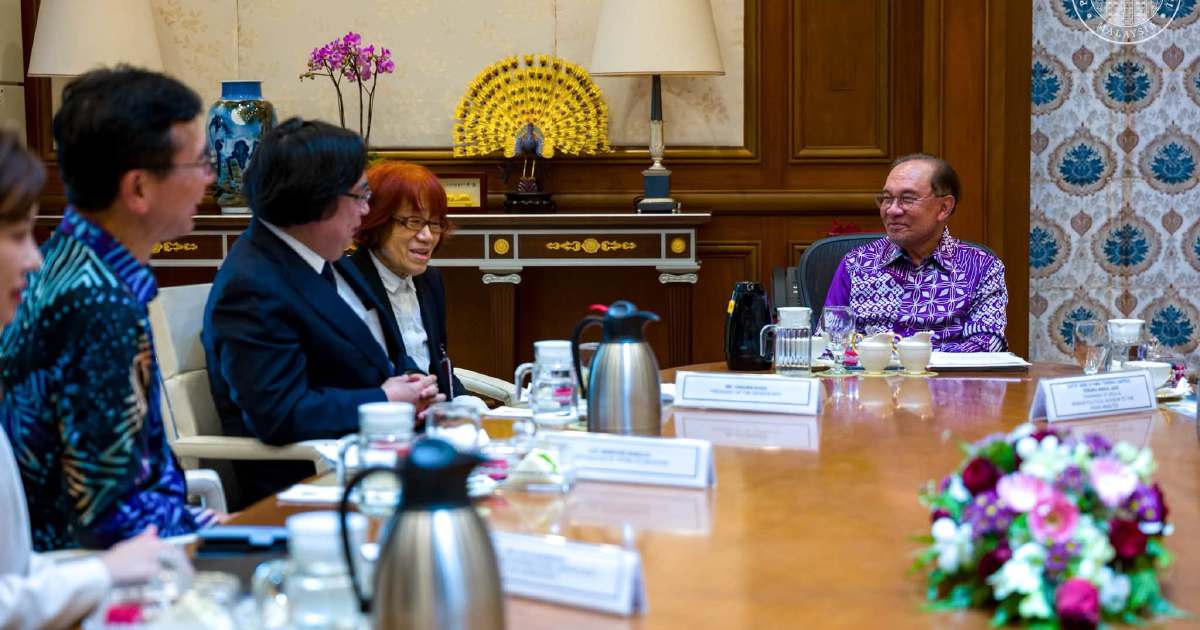
Prime Minister Datuk Seri Anwar Ibrahim has underscored Malaysia's commitment to deepening its engagement with Japan through a courtesy visit from Genron NPO president Yasushi Kudo, signalling renewed momentum in bilateral strategic cooperation between the two nations. The exchange, held in Kuala Lumpur, centred on mechanisms to fortify existing diplomatic channels and explore fresh avenues for collaborative initiatives across multiple sectors.
Genron NPO, formally known as the Japan Research Institute, serves as one of Japan's most influential think tanks and civil society organisations, wielding considerable sway in shaping policy discourse and public opinion within Japan. The organisation's commitment to fostering international dialogue makes such engagement particularly significant for Malaysia, as it provides an opportunity to influence Japanese perspectives on Southeast Asian interests and concerns. Kudo's presence in Malaysia reflects the institution's recognition of the region's geopolitical importance and economic dynamism.
The bilateral relationship between Malaysia and Japan has historically been anchored in robust economic interdependencies, shared regional security interests, and cultural affinities. Japanese investments in Malaysia remain substantial, spanning manufacturing, technology, and energy sectors, whilst Malaysian professionals and businesses maintain deep connections across Japan. This economic foundation provides a natural springboard for expanding strategic dialogue beyond traditional commerce into areas including security cooperation, climate action, and technological innovation.
The timing of this engagement carries particular relevance given the evolving regional architecture in Southeast Asia. Both nations face common challenges emanating from geopolitical tensions, global supply chain vulnerabilities, and the urgent imperative to address climate change. Japan's technological prowess and Malaysia's regional connectivity position both countries to play complementary roles in addressing transnational issues that transcend bilateral boundaries. Enhanced dialogue between policymakers, academics, and civil society figures like those represented by Genron NPO can crystallise these potential synergies into concrete outcomes.
Strategic dialogue frameworks serve as critical instruments for countries seeking to move beyond transactional relationships towards deeper institutional partnerships. By establishing regular channels for substantive conversations involving not just government officials but also intellectual and business communities, Malaysia and Japan can build mutual understanding on complex policy challenges. This multi-stakeholder approach helps insulate bilateral relations from short-term political fluctuations and creates durable foundations for cooperation.
For Malaysia specifically, strengthened engagement with Japan carries implications for regional influence and economic positioning. Japan remains a technology leader and significant investor in Southeast Asia, and deepening ties with Tokyo enhances Malaysia's attractiveness as a hub for Japanese regional operations. Moreover, closer strategic coordination with Japan provides Malaysia with an additional avenue to articulate its interests within regional forums and to contribute meaningfully to discussions on rules-based regional order and maritime security in contested waters.
Genron NPO's involvement amplifies the significance of this engagement. As a respected voice in Japanese policy circles, the organisation's participation signals that Malaysia-Japan ties resonate beyond government-to-government channels and command attention among influential constituencies shaping Japan's international outlook. This suggests that discussions likely touched upon substantive policy matters rather than mere ceremonial exchange, potentially including perspectives on regional security architectures, economic integration pathways, and responses to global challenges.
The emphasis on strengthening strategic dialogue also reflects broader global trends wherein nations increasingly recognise that effective international relations demand continuous engagement at multiple levels simultaneously. Governments alone cannot navigate the complexity of contemporary global affairs; success requires ongoing conversation with academic institutions, business communities, and civil society organisations. By facilitating such exchanges, Malaysia demonstrates diplomatic sophistication and commitment to building multidimensional relationships.
Looking forward, the outcomes of such engagements often materialise incrementally rather than through immediate announcements. Nevertheless, conversations between senior Japanese figures and Malaysian leadership plant seeds for future collaboration initiatives. These might encompass joint research projects, enhanced cultural exchanges, expanded educational partnerships, or coordinated responses to regional crises. The relationship between Malaysia and Japan possesses sufficient depth and mutual interest to generate substantive returns from sustained strategic dialogue.
For Malaysian observers, this engagement underscores the government's continued investment in nurturing relationships with major regional and global powers. In an era characterised by shifting alignments and emerging geopolitical complexities, maintaining strong bilateral ties with economically advanced, technologically sophisticated nations like Japan serves Malaysia's long-term national interests. The willingness of both sides to engage in substantive strategic dialogue suggests confidence in the relationship's enduring importance and mutual benefits from continued partnership development.

