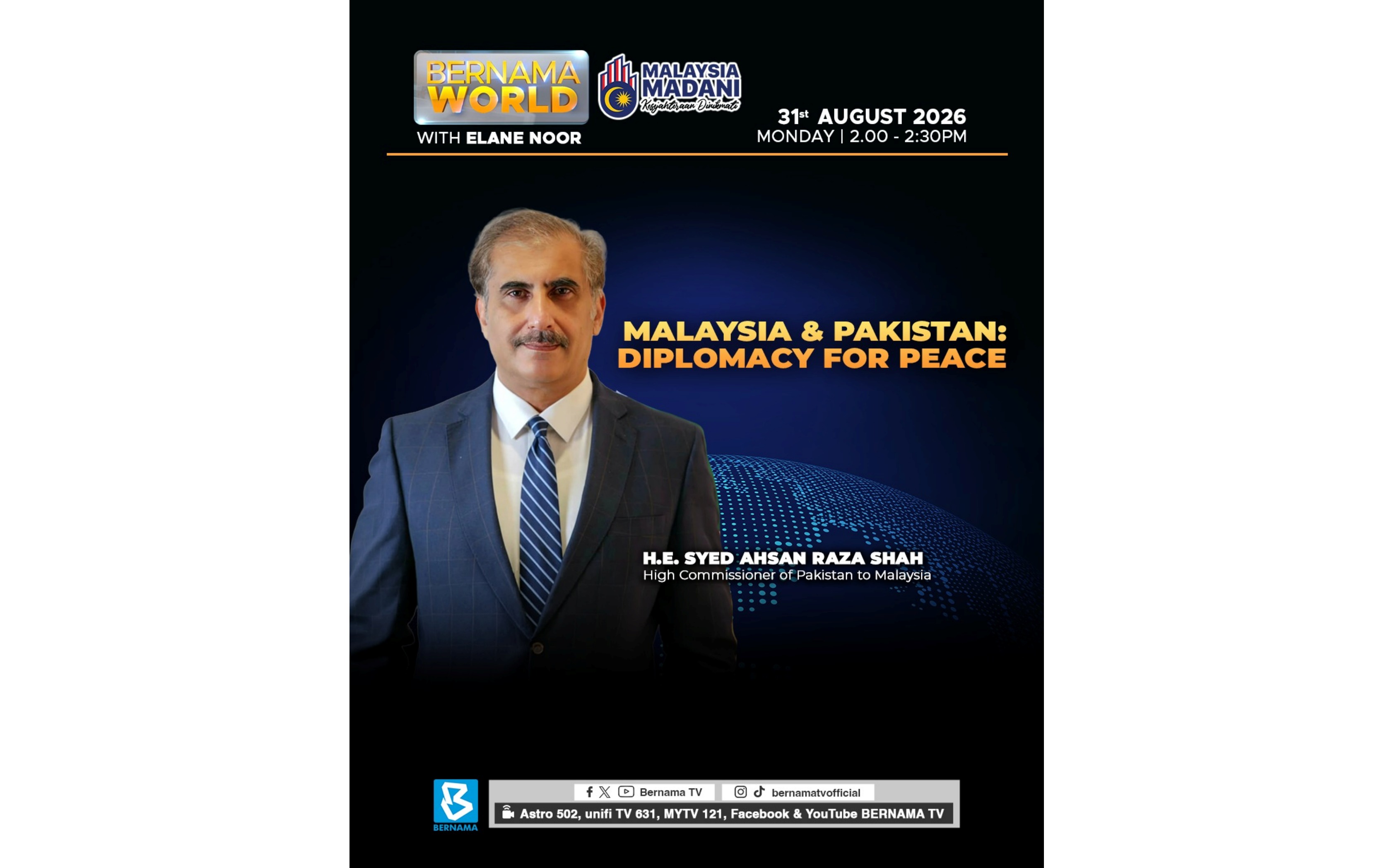
As geopolitical tensions continue to destabilise international relations, Pakistan High Commissioner to Malaysia Syed Ahsan Raza Shah has called for deeper cooperation between the two countries on conflict resolution and mediation practices. Speaking in an interview, he emphasised that such collaboration represents a "strategic necessity" for nations positioned at critical junctures in global affairs, particularly given their demonstrated track records in facilitating peace processes across different regions and between major powers.
Both Malaysia and Pakistan have emerged as respected voices in international diplomacy, each bringing distinct advantages to mediation efforts. Malaysia, under Prime Minister Datuk Seri Anwar Ibrahim's leadership, played a decisive role in addressing the Cambodia-Thailand border tensions when ASEAN's traditional mechanisms faced strain. Pakistan, meanwhile, leveraged its geographical proximity to Iran and its longstanding ties with the United States to facilitate dialogue between Washington and Tehran during periods of heightened hostility. These experiences, according to Syed Ahsan, provide valuable lessons that could be systematically shared to enhance both nations' capacities in future disputes.
The High Commissioner highlighted Malaysia's intervention in the Cambodia-Thailand conflict as particularly instructive. When tensions escalated and conventional ASEAN mechanisms appeared inadequate, Anwar Ibrahim's administration maintained a calm and measured approach that ultimately contributed to a ceasefire and the signing of the Kuala Lumpur pact. This diplomatic achievement demonstrated how personal leadership qualities and regional positioning could translate into tangible peace dividends, setting a precedent for how middle powers could punch above their weight in international affairs.
Pakistan's role in US-Iran mediation similarly underscores the importance of geographic and historical positioning in conflict resolution. As Syed Ahsan explained, Islamabad's unique relationship with both nations—its historical and neighbourhood ties with Iran coupled with its strategic partnership with the United States—positioned it uniquely to bridge seemingly irreconcilable positions. When bilateral tensions appeared intractable, Pakistan's intervention through what became known as the Islamabad accord demonstrated that even deeply polarised conflicts require trusted intermediaries willing to engage persistently and creatively.
Beyond recounting specific successes, Syed Ahsan articulated a broader philosophy about mediation in what Prime Minister Anwar has termed "post-normal times." The diplomatic landscape has shifted dramatically, requiring nations to continuously recalibrate their approaches to conflict and negotiation. This evolving reality demands that countries engaged in peacemaking share best practices systematically rather than operating in isolation. Such cooperation allows diplomatic services to learn from each other's successes and failures, creating institutional knowledge that transcends individual personalities or administrations.
The High Commissioner emphasised several foundational principles that undergird effective mediation, beginning with the primacy of trust. In any negotiation, all parties must view the mediator as acting in good faith and without hidden agendas. Without this fundamental confidence, even well-intentioned interventions founder. Building such trust often requires sustained engagement and consistency over time, rather than ad-hoc diplomatic gestures. Furthermore, Syed Ahsan stressed that mediators must adopt an incremental approach to conflict resolution, recognising that breakthrough moments rarely materialise in single meetings. Progress accumulates through patient, persistent dialogue where each small agreement builds foundation for larger ones.
Mediation also demands psychological resilience and diplomatic composure. Negotiators will encounter inflammatory rhetoric and apparent setbacks that tempt abandonment of efforts. Effective mediators must remain unmoved by such provocations, maintaining focus on long-term objectives rather than reacting to short-term rhetorical flourishes. This temperament, combined with genuine belief in the possibility of resolution, distinguishes successful mediators from those whose efforts collapse at first resistance.
Syed Ahsan also attributed Malaysia's diplomatic successes partly to Anwar Ibrahim's personal qualities, specifically his ability to establish genuine rapport with international leaders across ideological and geopolitical divides. This interpersonal dimension of diplomacy often receives insufficient recognition in policy discussions, yet it proves crucial when bringing hostile parties to negotiating tables. When leaders trust each other personally, they prove more willing to take risks for peace and more likely to communicate honestly about constraints and opportunities.
The broader strategic context for Malaysia-Pakistan cooperation lies in the interconnected nature of modern conflicts. Syed Ahsan warned that contemporary disputes cannot remain geographically contained. A conflict in one region generates economic disruptions, refugee flows, and strategic complications that ripple across continents. Regional conflicts in the Middle East, South Asia, or even eastern Europe ultimately affect Southeast Asian economies through trade disruptions, energy price volatility, and security implications. This spillover effect means that nations like Malaysia with significant economic exposure to global trade and investment flows have direct interests in resolving distant conflicts.
For Malaysian readers, the implications are significant. As a middle power with substantial economic interests globally and regional leadership responsibilities within ASEAN, Malaysia benefits from developing sophisticated mediation capabilities. By learning from Pakistan's experiences and sharing its own, Malaysia can enhance its diplomatic toolkit and strengthen its role as a peacemaker. This positioning carries soft power advantages, as nations that successfully mediate conflicts gain international prestige and influence disproportionate to their military or economic size.
The call for Malaysia-Pakistan cooperation also reflects recognition that traditional great power mediation has become less effective. When conflicts involve multiple stakeholders with competing interests, mediation by countries perceived as neutral or as responsible regional actors often succeeds where superpower involvement generates suspicion. Malaysia and Pakistan, as significant but non-hegemonic powers in their respective regions, occupy advantageous positions for such roles.
Implementing such cooperation practically might involve institutionalised exchange of diplomatic personnel, joint training programmes for conflict resolution specialists, and coordinated diplomatic initiatives on shared concerns. Regular dialogue between Malaysian and Pakistani foreign ministries could identify opportunities for parallel mediation efforts or coordinated positions in multilateral forums.
Ultimately, Syed Ahsan's remarks reflect a recognition that effective mediation constitutes a valuable strategic asset in an unstable world. By sharing approaches and learning from each other, Malaysia and Pakistan can strengthen both their individual diplomatic capabilities and their collective contribution to regional and global stability—a necessity as geopolitical competition intensifies and conflict risks multiply.

